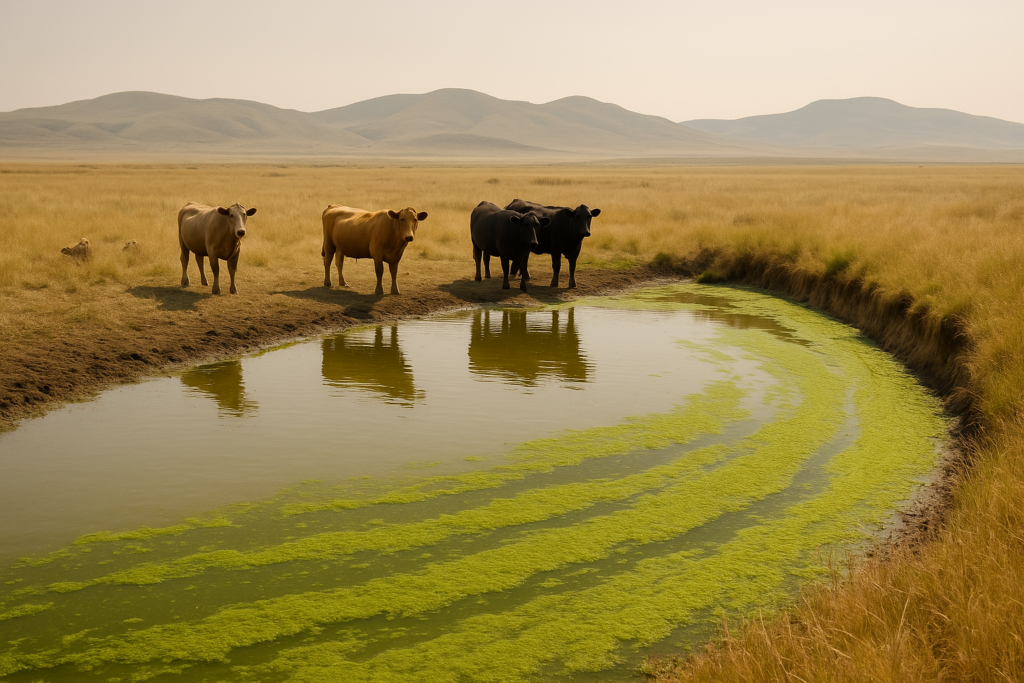
By the middle of June the reservoirs and dugouts start to warm up, the wind lays down for a few days, and the runoff that kept them turning over all spring quits coming. That’s the setup for a bloom. What looks like spilled paint or a green scum pushed against the downwind bank isn’t just ugly water. Some of those blooms are cyanobacteria, and a few of them make toxins strong enough to kill a cow that drinks her fill on a hot afternoon.
Most Montana producers have walked past a green pond a hundred times without losing anything. That’s the trap. The same pond can be harmless in June and deadly in late July, because the organisms that cause the trouble come and go with the heat, the sun, and the nutrients washing in off the surrounding ground. You can’t tell a toxic bloom from a harmless one by looking, and that’s the part worth sitting with.
What a bad pond actually looks like
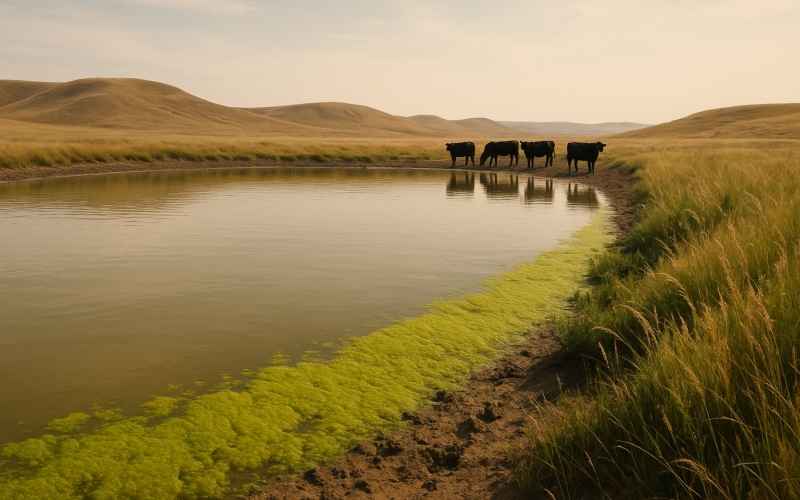
The classic warning sign is water that looks like somebody dumped green paint in it, or a thick scum the color of split-pea soup gathered on the shore the wind is blowing toward. It can be bright green, bluish, sometimes almost turquoise where the scum breaks down. It settles into windrows and streaks. A true algae mat you can lift on a stick — filamentous stuff — is usually the less dangerous kind. The blooms that worry you look more like a suspension, like the water itself has gone thick and cloudy green.
Blooms build where the water is warm, shallow, slow-moving, and fed by nutrients. A dugout below a corral, a reservoir catching runoff off fertilized hay ground, a stock pond where the cattle have been standing and loafing in the water all summer — those load up on the nitrogen and phosphorus that feed a bloom. Add a stretch of hot, still weather and it can go from clear to green in a matter of days. The scum concentrates on the downwind side, which is exactly where thirsty cattle wade in.
How it hits the cattle
The toxins don’t work slow. Depending on which type the bloom is throwing, a cow can go down within minutes to a few hours of drinking. Some toxins hit the liver, some hit the nervous system. What you’re likely to find is dead animals near the water, sometimes still close enough to the bank that it’s obvious where they’d been. There often isn’t a sick stage you get to treat. That’s why prevention beats everything here — by the time you’ve got a problem, you’ve usually already got a loss.
Other stock and your dogs are at risk too. Working dogs that swim and then lick the scum off their coats have died from it. If you find dead waterfowl or dead fish around a pond in hot weather, treat that as a loud warning about the water.
What to do before you lose one
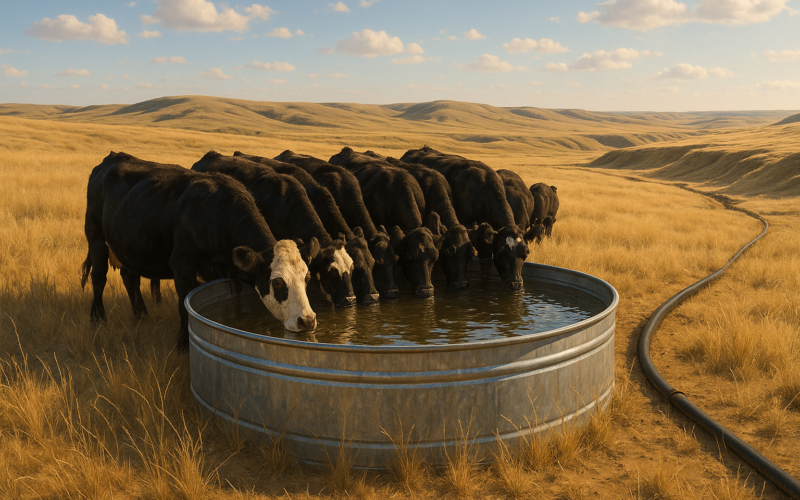
The cheapest fix is fencing cattle off the worst ponds and giving them water somewhere else — a tank fed by a well, a spring development, or a different reservoir that keeps turning over. A nose pump or solar setup pulling from deeper, cleaner water below the surface scum beats letting them drink straight off a bloomed shoreline. If you’ve got a pond that greens up every summer in the same corner, that’s the one to plan around now, in June, not after you’ve hauled a dead cow out of the mud.
- Walk your summer water in the heat, not just at turnout. A pond that was fine in May can be dangerous in July.
- Watch the downwind bank, where the scum piles up and the cattle drink.
- Keep loafing cattle and corral runoff out of the ponds you count on — the more manure and fertilizer that reaches the water, the worse the blooms.
- If you suspect a bloom, keep everything off that water until you know more. State labs and your vet can help sort out whether a bloom is the toxin-producing kind.
Copper-based treatments can knock a bloom down, but killing the cells all at once dumps the toxin into the water and can make things worse for a stretch, so that’s a call to make with somebody who knows the pond and the product. For most outfits the practical answer is simpler: move the cattle off the green water and give them something clean.
A green pond in a dry summer is common country out here. The mistake is assuming the one you’ve always watered on is the same water it was in the spring. Look at it hard when the weather turns hot and still, because that’s the pond that can cost you a cow between morning check and dark.