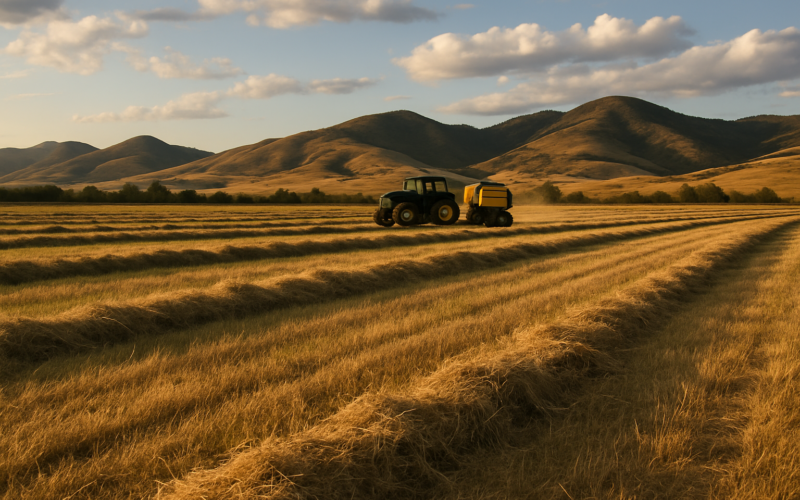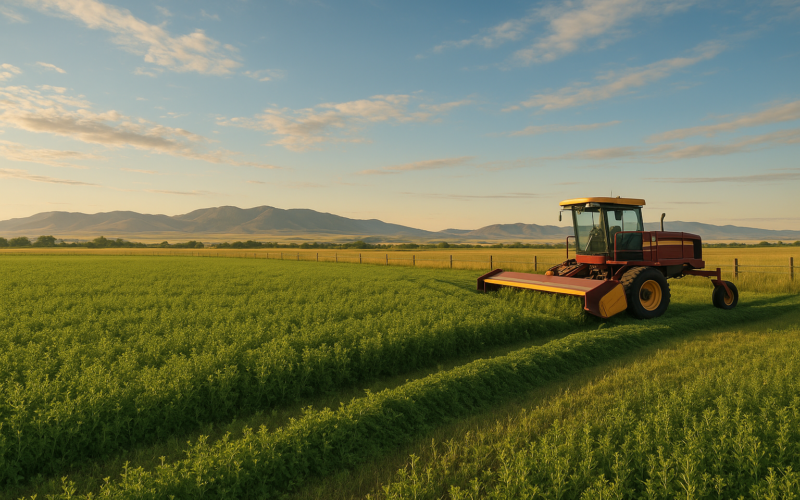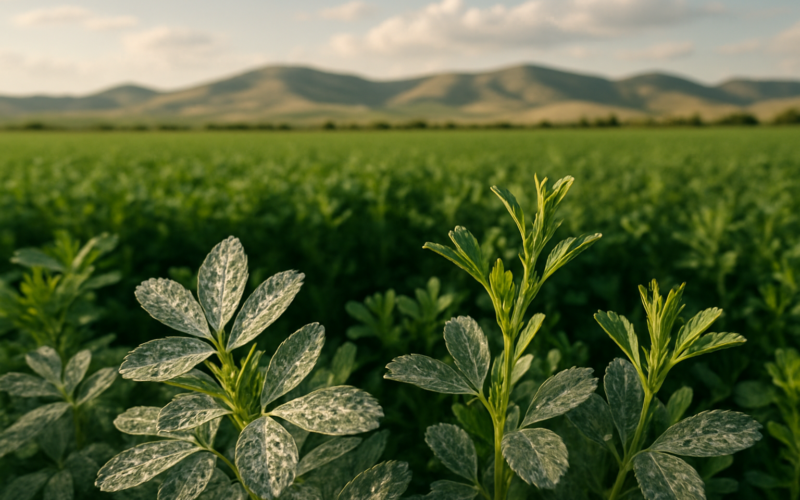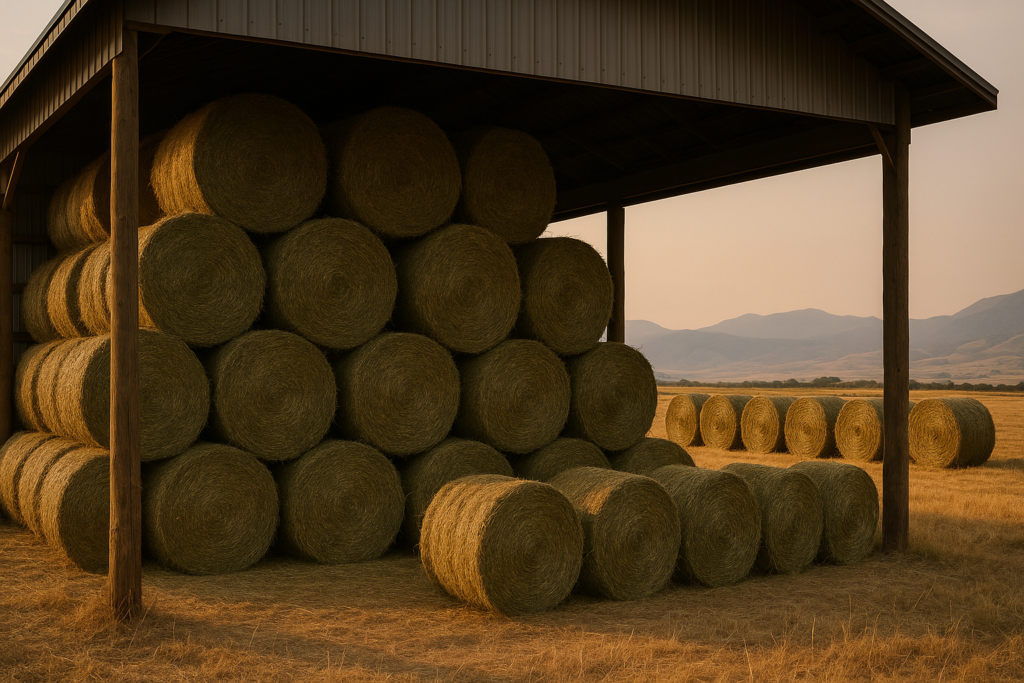
First cutting always comes with a clock on it. You’ve got alfalfa going into bloom, a forecast that won’t hold, and a swather that finally runs after somebody greased it. So you bale a little tough, tell yourself it’ll be fine, and stack it tight in the shed to get it out of the weather. Three weeks later the middle of that stack is hotter than a truck hood in July, and you’re standing there in the dark wondering if you’re about to lose the building.
Wet hay doesn’t just mold. It ferments, and fermentation makes heat. Bacteria and plant respiration keep working inside a bale long after the baler quits, and if there’s enough moisture packed in tight enough, that heat climbs instead of settling. Loose in a field, it dries. Stacked eight high in a closed shed with no air moving, it cooks. The danger window isn’t the day you bale — it’s the two to six weeks after, right when you’ve moved on to second cutting and quit thinking about it.
Know your number before the baler hits the windrow
Small squares want to be under about 18 percent moisture. Big round and big square bales pack denser and hold heat better, so you want them drier — mid-teens is safer, and the bigger and tighter the package, the less margin you have. Those aren’t magic figures, but they’re the line where trouble starts, and the denser the bale, the less room you have to fudge.
The trouble is you can’t tell by grabbing a handful in the field. Alfalfa stems dry slower than leaves, and a windrow that feels crisp on top can be green underneath where it laid on the ground. A hand-held moisture tester on the baler, or a probe you jab into a few finished bales, beats guessing every time. Bale in the cool of the morning when there’s still dew and you’ll trap moisture; the better window is afternoon once the windrow has dried down, even if that means baling later than you’d like.
If you’re stuck baling tough because rain’s coming, you’ve got a decision to make. A little rain on a cured windrow is a quality hit you can live with. A green bale in the stack is a fire you can’t. Sometimes the right move is to let it lay another half day and take the weather.
Watch the stack, not the calendar
Newly baled tough hay will heat some no matter what — that’s normal, and it settles back down as the bales finish curing. What you’re watching for is heat that keeps climbing. Check your stacks for the first month, especially the big dense bales in the middle of a tight pile where air can’t move.
You don’t need fancy gear to start. If the stack smells sharp and sweet, like caramel or pipe tobacco, it’s heating hard. If you can see steam or vapor coming off it on a cool morning, or the bales feel hot and damp to the hand, take it seriously. A long metal rod or a compost thermometer pushed into the center tells you more than your nose. General guideposts:
- Under about 120°F: normal curing heat, keep an eye on it.
- 140 to 150°F: it’s climbing — pull bales apart to get air in and check it twice a day.
- 160°F and rising: hot spots are forming and combustion is on the table. Move the good bales away from the heating ones and don’t stack them back tight.
- 175°F and up: call the fire department before you open anything.
That last point matters. A stack that’s been cooking can flash when you tear it open and hit it with oxygen. Firefighters have watched hay sit at black-char temperature and then light up the second the pile got moved. If it’s that hot, get help before you play with it, and have water on hand.
Give green bales somewhere to breathe
If you had to bale a little tough, don’t do it any favors by cramming it into a closed shed the same afternoon. Set those bales outside or in a single row where air moves through them for a couple weeks before you stack tight. Space between rows, or a stack only a few bales high, lets the heat escape instead of feeding on itself. Round bales left on end with a gap between them will finish curing without ever getting dangerous.
Preservatives — propionic acid products — buy you a few points of moisture if you’re set up to apply them, and plenty of outfits run them on a wet first cutting. They’re a tool, not a cure, and they don’t fix hay baled soaking wet. The cheaper insurance is still a moisture tester and the patience to wait for the windrow.
First cutting is usually your best hay of the year and the load that hurts most to lose. It’s worth baling a day late to keep it, and worth walking the stack a few extra mornings to make sure June’s green bale doesn’t take the shed down in August.