Turnout onto forest allotments and foothill summer country puts your cows in the same drainages as grizzlies and wolves, and both of them are on the move in June. A bear coming off winter denning is looking for calories anywhere it can find them. A cow that dies of bloat, lightning, or a bad calving is a meal that requires no work. The problem isn’t just the one carcass. It’s what a bear learns from it.
A grizzly that finds a dead animal in a certain draw remembers that draw. It comes back. And a bear that has fed on beef once treats the next slow calf or bogged cow as the same easy meal. The line between a scavenger and a killer is thinner than people think, and a carcass left in the open on summer range is what moves an animal across it.
Where the trouble starts is with the dead one you already have
Every outfit loses a few head over the summer. What you do with them matters more on open range than it ever does at home. Dragging a dead cow into a coulee out of sight feels like handling it, but you’ve just built a bait station. Same with a bone pile behind the corrals at the summer camp. Bears and wolves both key on those spots, and once they’ve fed there a couple times they start working the whole area for more.
If you can get a carcass to a rendering route or a landfill that takes deadstock, that’s the cleanest answer. When you can’t reach one on the mountain, get it as far from live cattle, water, trails, and camp as you can, and out of the brushy bottoms where predators travel. Report a suspected depredation before you move anything if you think a bear or wolf killed it. Montana has depredation programs, and the investigation depends on the site being intact. Once you’ve dragged it, you’ve lost your case for compensation.
Check your bunch, and check it where the cattle actually are
On big summer country it’s easy to count the pairs at the salt or the water and call it good. Predators don’t kill at the tank. They cut a calf in the timber or catch a cow that’s off by herself calving late. The pair you don’t see for two weeks is the one you need to find. A cow bawling and hunting a calf, a bunch that’s balled up and won’t spread out to graze, cattle that have quit a whole side of the pasture for no reason you can see — those are the tells that something is working them.
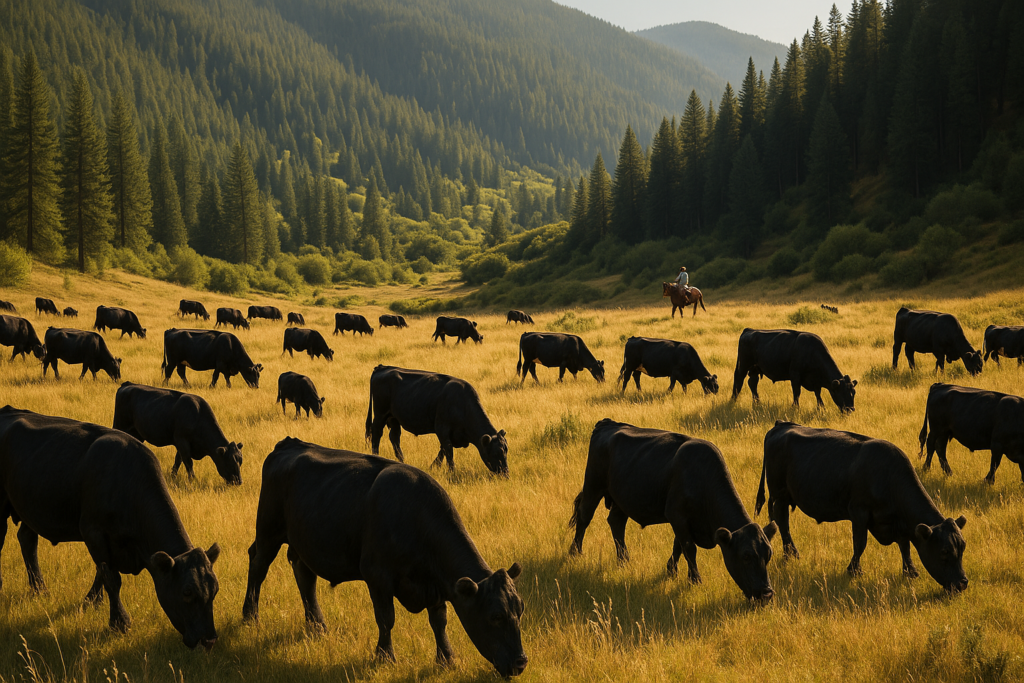
Riding the country regularly does more than find dead ones. Human presence keeps predators honest. A bear that runs into a rider every few days on a given allotment tends to give that ground a wider berth than one that never sees anybody from turnout to gathering. On outfits that run in heavy bear or wolf country, a range rider whose only job is to be out among the cattle has paid for itself more than once, just in the losses that never happened.
Little things that stack up in your favor
Calving out on the summer country, or holding late-calvers in a bottom near timber, puts your most vulnerable animals right where predators hunt. If you can, get calving done before turnout and push the late ones onto open ground. Bunched cattle in more open country are harder to pick off than scattered pairs in the brush.
Clean up around the summer camp the same way you’d bear-proof a hunting camp. Grain, cake, mineral, the gut pile from an elk last fall — anything that draws a bear to where your cattle live teaches it to associate the two. Electric fencing around a calving lot or a boneyard is cheap insurance and it works on bears when it’s built and maintained right.
None of this makes a grizzly or a wolf disappear. The point is to not hand them a reason to stay. The carcass you handle right, the bunch you actually ride through, the camp you keep clean — that’s the difference between losing one this summer and training a predator to check your country the rest of the season.