Drive any bench or coulee in Montana in the middle of June and you can spot the trouble from the pickup. Leafy spurge lights up bright yellow-green when the bracts open, spotted knapweed is bolting toward flower, and houndstongue is putting up those coarse leaves along the trail heads. All of it is grabbing water and ground your cool-season grass needs, and most of it is a lot easier to kill right now than it will be in three weeks.
The mistake people make isn’t ignoring the weeds. It’s spraying them on the wrong calendar. A patch hit at the right growth stage can be cut back hard for the price of one pass. That same patch sprayed after it sets seed just got a head start on you for next year, and you paid for the privilege.
Hit them at the stage, not the date
Every one of these plants has a window where herbicide moves down into the roots instead of just burning the top. For leafy spurge that’s the true-flower stage in June, when the yellow bracts are out, and again in fall regrowth. Spurge lives on a deep, spreading root system, so a top burn does almost nothing. You want the plant actively pulling product down.
Spotted and diffuse knapweed are best in the rosette to early-bolt stage, before the purple flowers open. Once knapweed flowers and starts throwing seed, you’ve lost the cheap fight. Canada thistle responds best in the bud stage or on fall regrowth. Houndstongue is a biennial, so the first-year rosettes are the target, not the tall second-year stalks that have already committed to seed.
The point is simple: walk the patch and look at the plant, not the number on the calendar. A cold, late spring on the Hi-Line pushes everything back a couple weeks compared to a warm year down in the valleys. Spray when the weed is at the stage that works, even if that’s not when you planned to be out there.
Use the right tool for the size of the fight
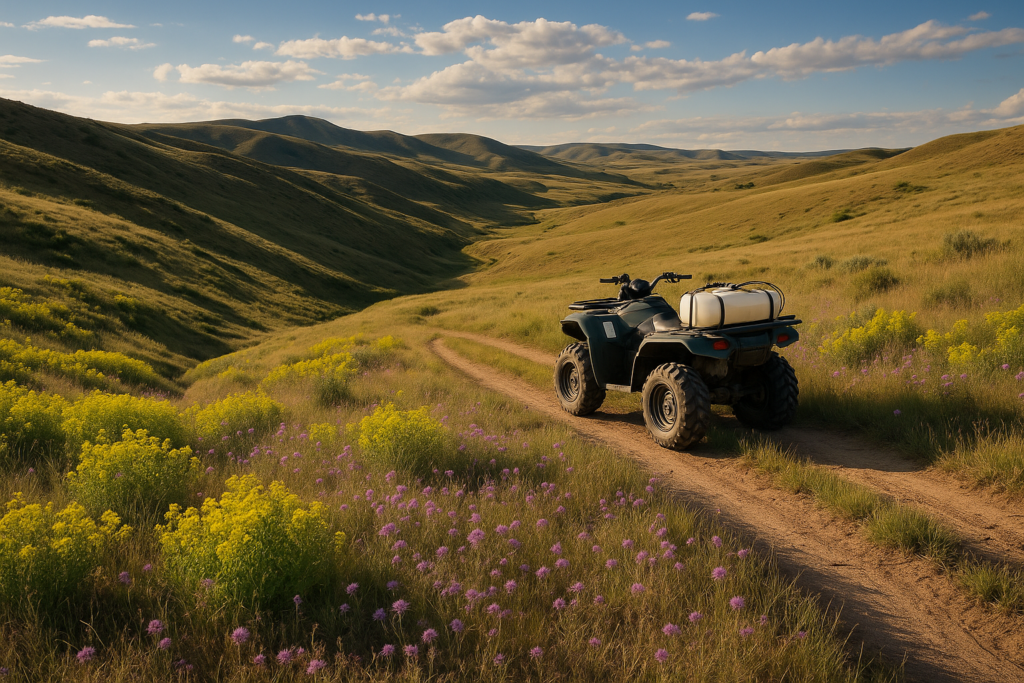
A few scattered plants along a fence line or a stock trail are a spot-spray job with a backpack or an ATV boom and a wand. Get on them before they seed and you might keep a small infestation from ever becoming a real one. Talk to your county weed district or an extension agent about what’s labeled and legal for your ground and near your water, and read the grazing and haying restrictions on the label before you mix anything. Some products carry a wait before you can turn cattle back on treated pasture or cut hay off it.
Big, established stands are a different animal. Broadcast spraying a forty-acre spurge patch every year gets expensive fast, and it can knock back your desirable forbs and legumes right along with the weed. That’s where the biological tools earn their keep. Flea beetles have done real work on leafy spurge across a lot of Montana rangeland once a colony gets established, and there are approved insects for knapweed too. They won’t wipe a patch out, but they’ll wear it down and take the pressure off your spray budget. Sheep and goats will graze spurge and knapweed hard where cattle won’t touch it, and running them through a bad patch a couple times a summer is a legitimate control, not just a novelty.
Mowing has a place, mostly to keep knapweed and thistle from setting seed if you can’t get to them with a sprayer in time. Cut them right at bud and you buy a year. Cut them too early and they just branch out and bloom lower.
Don’t spread it while you’re fighting it
The fastest way to seed a clean pasture is to drive a haybine or a pickup straight from a weed patch into it. Knapweed and houndstongue seed hitchhikes in mud on tires, in the undercarriage, on the dog, and in the manure of cattle that grazed a seeded patch. Clean equipment before you move it to clean ground. If you’re buying hay in a dry year, know that you can import a weed problem in a bad bale, so watch where feed comes from.
Keep a rough map, even if it’s just marks on a pasture sheet, of where the patches are and what you sprayed and when. Weed control isn’t one big kill; it’s the same coulees checked and hit year after year until the seed bank runs down. The stand you spray at bloom this June and follow up on in the fall is the one that’s smaller next June. The one you drive past because you were busy is the one that’s yellow clear across the draw in three seasons.