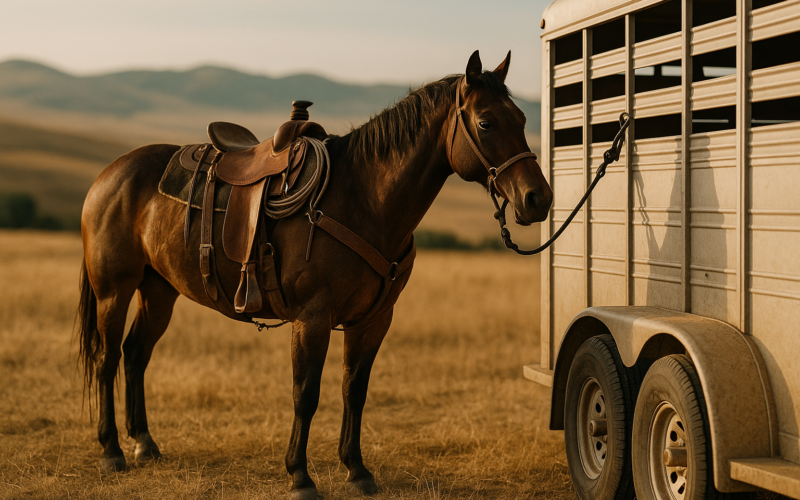
Branding wrapped up a couple weeks back and the crew went home. The horses that hauled you through three long days in the pen got turned out and mostly forgotten. Trouble is, June and July are when you ride the hardest — moving pairs to summer country, riding fence, doctoring foot rot and pinkeye out on the range. The horse you neglect now is the one that comes up short on a hot afternoon ten miles from the trailer.
Ranch horses take a beating this time of year, and a lot of what goes wrong is the slow kind you don’t notice until you’re stuck. Worth walking through what actually matters before the real riding starts.
Feet first, because everything else rides on them
A horse ridden hard through branding on rocky or dry ground wears his feet down fast. If you shod him in April and figured that’d last, check again. Six weeks is about all you get out of a set before the toe grows long, the angle changes, and he starts landing wrong. A long toe and low heel puts strain up the whole leg, and that’s how a horse that was fine at branding turns up ouchy in June.
Barefoot horses need looking at too. Dry Montana ground in a hot spell hardens up like pavement, and a foot that’s worn short bruises easy on the gravel. If you’re crossing a lot of rock going to summer pasture, that’s the horse that’ll be gimping by the time you get there. Pull his feet, check for a stone bruise or the start of a crack, and if he’s tender, either shoe him or stay off the rough stuff for a week.
Wet years bring the opposite problem. A muddy corral or a spring that runs across the trap breeds thrush — that black, stinky rot in the frog. It doesn’t lame most horses right off, but let it eat far enough and it will. Cleaning feet out and getting him onto dry ground handles most of it.
Water and heat on the long circle
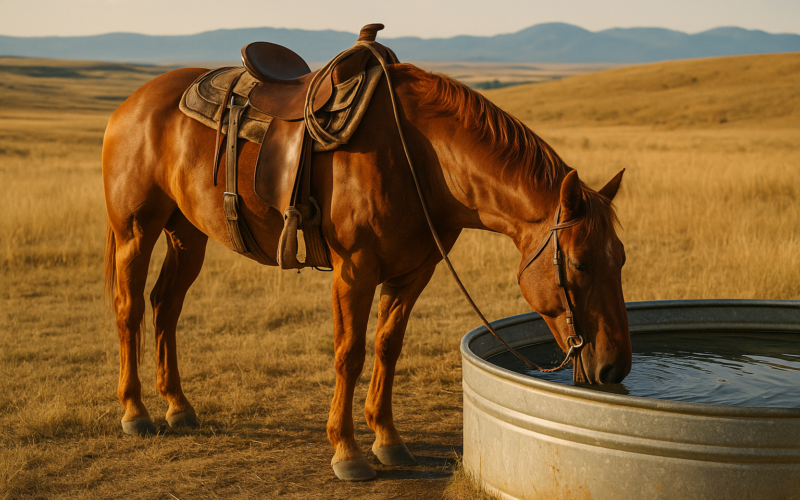
A horse working in June heat sweats out a lot more than people give him credit for, and he loses electrolytes with it, not just water. A horse that quits mid-morning, feels dull, or won’t drink when you finally hit a stock tank is telling you he’s short. Some outfits add a little loose salt or an electrolyte to feed when they’re riding hard in the heat, and it does help a horse keep drinking. A horse that keeps drinking keeps working.
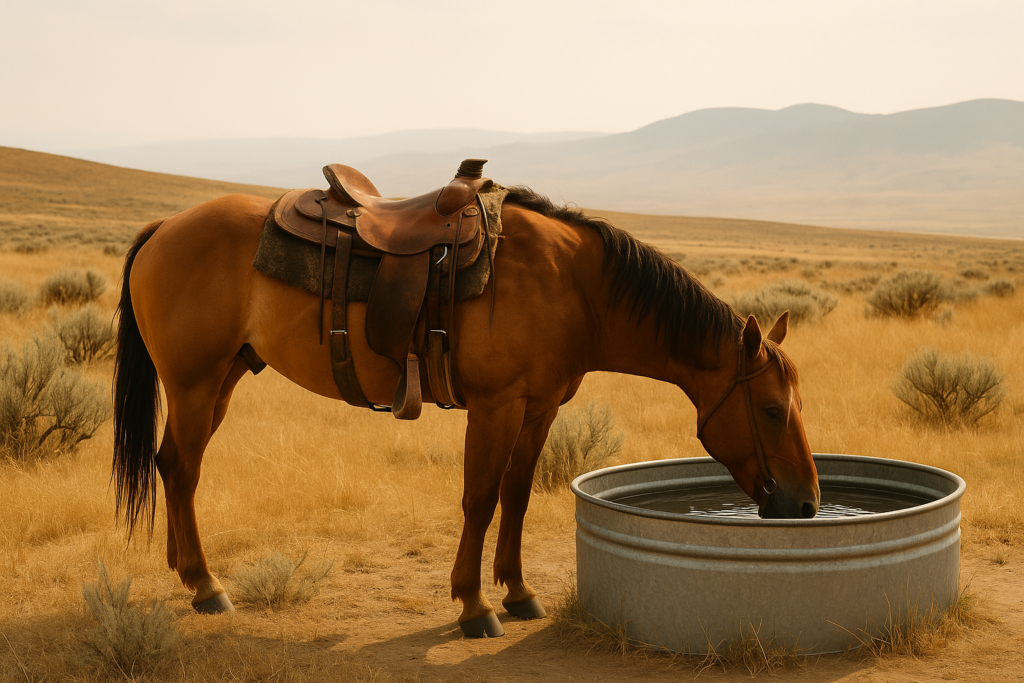
Plan your circle around water when you can. Know where the live creeks and the good tanks are, and let him drink when you pass one instead of pushing him past. A horse held off water all morning and then let down to a full tank will slug it down, and that’s its own kind of trouble. Better to let him drink a little, often.
Tying-up is the one that scares people, and for good reason. A soft horse that’s been standing in the pasture, then gets hauled out and rode hard on a hot day, can cramp up bad through the hindquarters — stiff, sweating, doesn’t want to move. If it happens, stop. Don’t force him to walk it off. Get him cool, get water into him, and get a vet if he’s locked up hard. The way you avoid it is by legging horses up gradually instead of jumping straight from pasture pet to a forty-mile week.
The rig and the back under it
Saddle sores and cinch galls sneak up in summer. A wet saddle blanket that dries stiff and salty, a cinch caked with old sweat, a saddle that never fit quite right — ride enough long days and it’ll rub a raw spot. Once you’ve got open skin on a horse’s back, he’s out until it heals, and that can be a couple weeks in the middle of your busiest riding.
Beat the blankets out and let them dry. Feel a horse’s back with your hand after you pull the saddle, checking for heat, swelling, or a spot that flinches. Catching a sore place while it’s just tender, before the hair rubs off, saves you the horse.
None of this is complicated. It’s the kind of upkeep that’s easy to let slide when there’s hay down and fence to fix and everything’s pulling at you at once. But a lame or worn-out saddle horse in the middle of summer doesn’t just cost you that horse — it costs you the work you needed him for, on the day you needed it most.