Grasshoppers don’t announce themselves. You notice them the way you notice a slow leak — one dry afternoon in late July you look at a hillside that ought to have grass on it and it’s chewed to the crown, and the little devils lift off in a cloud when you walk into them. By then they’ve got wings, they’re laying eggs for next year, and there’s not much you can do about it that pencils out.
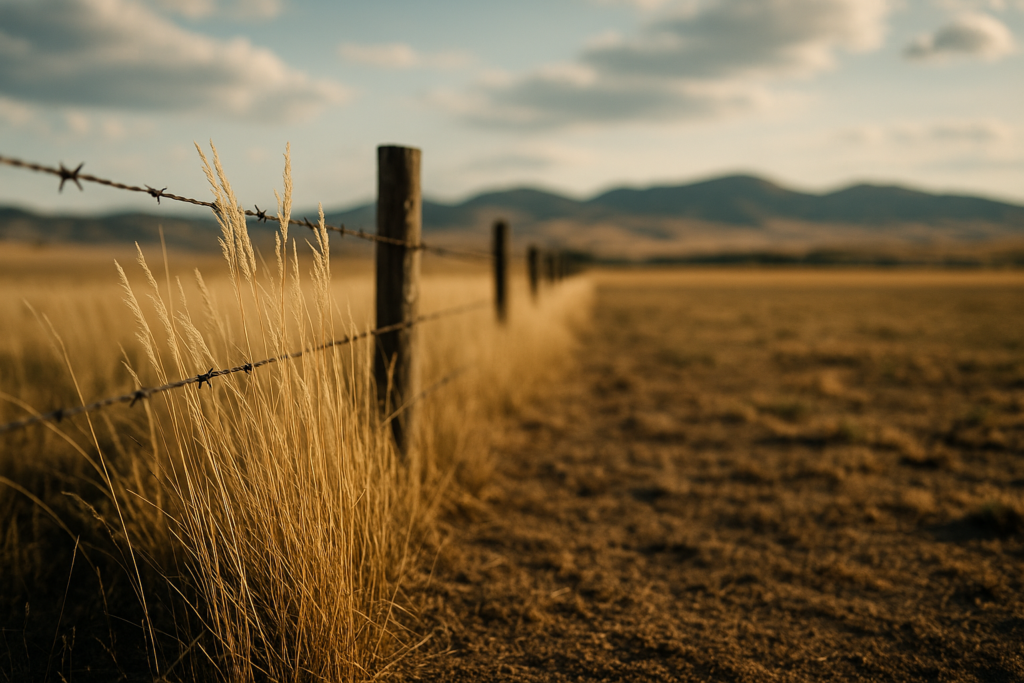
The time to look is now. Mid-June, a lot of the hatch is already on the ground in the warm, bare spots where the females laid last fall — south-facing knobs, the margins of stubble fields, roadside borrow pits, overgrazed corners, and the undisturbed ground along fence lines. That’s where the eggs sit through winter, and that’s where the first nymphs show up. They start small and they start concentrated. That concentration is the whole opportunity.
Scout the edges, not the middle
Walk the field borders and the hard-grazed knobs before you worry about the interior. Young grasshoppers can’t fly. They hatch, they feed on whatever’s closest, and they move outward slowly as they grow and as the green burns off around them. So in June you’ll find them bunched where they came out of the ground, often heaviest in a band a few yards wide along an edge. The center of a good stand of grass might be nearly clean while the margin is crawling.
Get down and count. The old rule of thumb is to look at a square-foot patch — a few times, in different spots — and get a rough sense of how many hoppers you kick up per step. A handful per square yard on a field margin in June is worth watching. When you’re flushing dozens with every step and they’re already half-grown, you’ve got a problem building. The number that justifies spending money is a judgment call that depends on how much grass you’ve got and how dry the summer’s shaping up, but the point is you can’t make that call from the pickup in August. You make it on foot in June.
Small and clustered is cheap; big and scattered is expensive
Everything about controlling grasshoppers gets harder as they grow. Nymphs are easier to kill than adults, they’re still bunched on the edges instead of spread across the whole pasture, and they haven’t laid the eggs that set up next year’s hatch. Wait until they’ve got wings and they’ll move onto sprayed ground from the neighbor’s, from the county road, from the piece you couldn’t reach — and you’re chasing them across open country instead of hitting a strip.
The other reason early beats late: you can often treat just the hatching beds and the field borders rather than the whole pasture. Knocking down the concentration on the margins before the nymphs mature and disperse does more per acre than a blanket spray after they’ve scattered. That’s the difference between treating a few hundred yards of edge and treating a section. If you do go the chemical route, read the label for the product cleared for rangeland and for any grazing or haying restrictions — some carry a waiting period that matters if you’re about to cut or turn cattle in.
A bad hopper year steals feed you already counted on
The reason to care isn’t the crawling itself. It’s that a heavy population competes directly with your cows for the same grass, and they do it right through the hottest, driest stretch when the range has quit growing and can’t replace what’s lost. On a dry year, hoppers and drought pull in the same direction and you end up short on fall feed twice over. They’ll also work the edges of an alfalfa or grass hayfield and clip a border strip before you notice.
Montana runs on a hatch cycle that builds over consecutive warm, dry summers and crashes when a cold wet spring drowns the young nymphs. You don’t control the weather. But you can walk your ground in June, know whether you’re sitting on a light year or the front edge of a bad one, and decide with your eyes open instead of finding out when the grass is already gone.