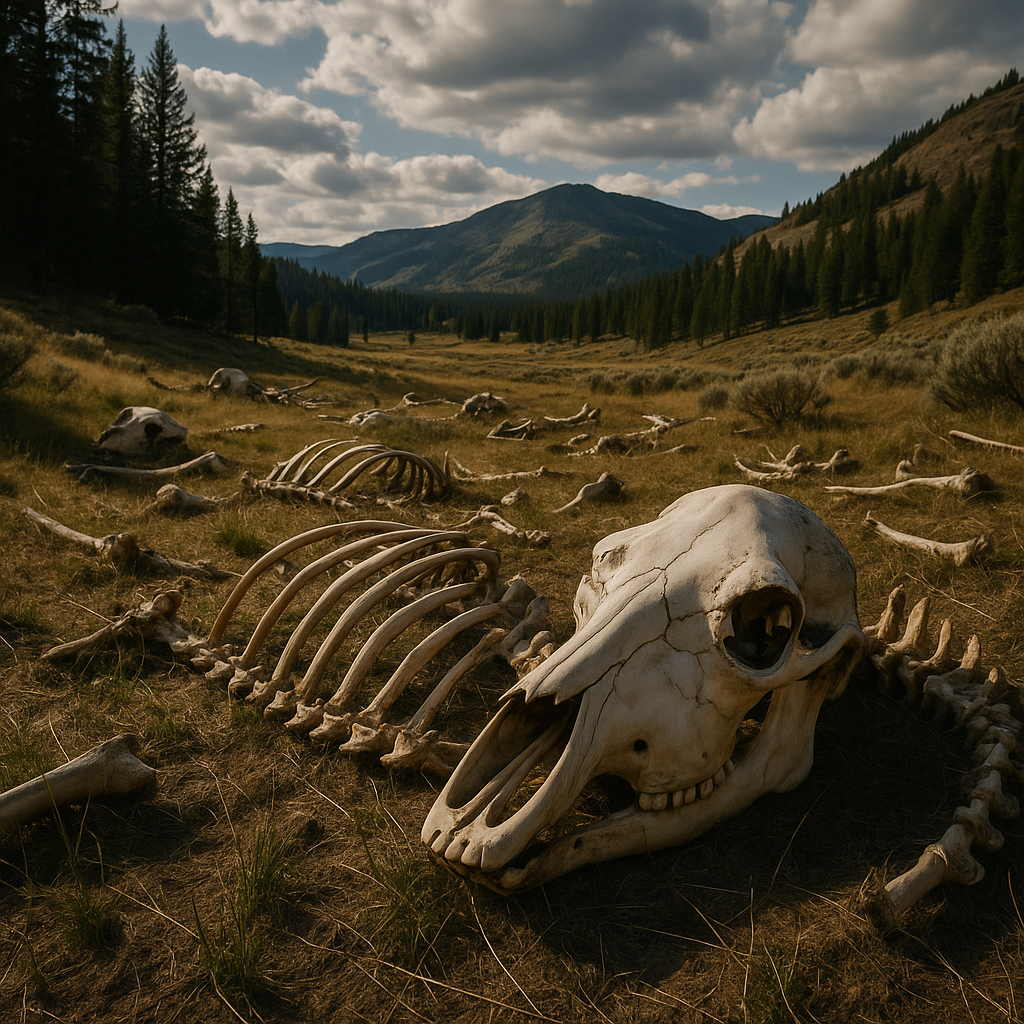
Hunters, ranchers, and anyone who’s spent time in big country knows certain places seem to “hold” bones. In and around Yellowstone, reports indicate there are remote pockets where elk and other animals commonly end up dying—leaving a landscape that can look like a natural boneyard. It’s not a spooky mystery so much as ecology doing what ecology does: winter severity, terrain, water, predation pressure, and simple animal behavior can funnel wildlife into the same few drainages year after year.
Quick takeaways
- Carcasses can cluster in specific drainages due to winter conditions, terrain traps, and repeated migration routes.
- Scavengers—from ravens to bears—recycle most of the “evidence” quickly, but bones can persist for years in dry, cold settings.
- These areas can be important food sources for predators and scavengers, especially in late winter and early spring.
- In Montana, similar patterns show up on winter ranges and along migration corridors—worth considering for hunting plans and livestock risk.
Why wildlife deaths can concentrate in one place
In a park as large and rugged as Yellowstone, it’s easy to assume animals die “everywhere.” They do—but not evenly. Several forces can stack up to create repeat die-off zones:
- Winter range bottlenecks: Elk and deer often move to lower-elevation winter range where wind scours slopes and exposes forage. If deep snow, ice crusts, or prolonged cold hits, animals may be forced into the same limited areas, increasing stress and mortality.
- Terrain traps: Steep-sided basins, dead-end drainages, or cliffy country can limit escape routes. Animals weakened by winter can have trouble climbing out of deep snow or navigating icy slopes.
- Water and thermal features: In Yellowstone, warm ground and open water can influence where animals linger. That doesn’t mean thermal areas “cause” deaths, but they can shape animal distribution—especially when other water sources freeze.
- Predator-prey dynamics: Wolves, cougars, bears, and coyotes tend to hunt where prey concentrates. Over time, successful hunting areas can overlap with winter stress zones, increasing the number of carcasses in a relatively small footprint.
- Migration memory: Ungulates are creatures of habit. If a route worked last year, many animals repeat it. That consistency can unintentionally guide them into the same risky conditions when weather turns harsh.
Importantly, a “boneyard” look doesn’t necessarily mean a sudden mass die-off. It can be the accumulation of many years of normal mortality, with bones persisting where decomposition is slow and scavengers drag remains into concentrated spots.
What happens after an elk dies: the scavenger clean-up crew
Out on the landscape, nothing goes to waste for long. A carcass becomes a high-value resource that supports a whole chain of life—some of it visible, some of it microscopic.
Depending on season and access, a carcass may be used by:
- Ravens, magpies, and eagles that locate carrion quickly and can open hides or pick at exposed tissue.
- Coyotes and foxes that feed and also drag pieces away, scattering bones.
- Wolves and cougars if the animal was killed or found soon after death.
- Bears in spring, when winter-killed animals can be an important early-season food source.
- Beetles, flies, and bacteria that do most of the long-term recycling, returning nutrients to soil and plants.
In cold, dry, or high-elevation conditions, decomposition can be slow. That’s one reason bones can remain visible for a long time, especially if they’re not buried by vegetation or washed away by runoff.
Is a “boneyard” a sign of disease?
Not automatically. Winterkill, predation, accidents (like falls), and old age can all create carcasses without any disease involvement. Still, wildlife managers pay attention to mortality patterns because disease can change the picture.
In the Greater Yellowstone Ecosystem, agencies monitor for concerns like brucellosis in elk and bison and chronic wasting disease (CWD) in cervids. As of recent public reporting, CWD has been detected in parts of Montana and Wyoming, and management responses can vary by region. If you want the most current Montana information, check the Montana Fish, Wildlife & Parks CWD page: https://fwp.mt.gov/conservation/wildlife-management/chronic-wasting-disease.
If you encounter multiple fresh carcasses in a small area outside the park, the cautious move is to note the location and report it to local authorities (FWP in Montana). Avoid handling carcasses, and keep dogs from chewing bones or hides.
What this means for Montana
Montanans don’t need to look to Yellowstone to see how death concentrates on the landscape. Similar “bone zones” can develop anywhere animals are funneled by weather, feed, and terrain—especially along winter ranges and migration corridors.
For hunters:
- Reading the country matters. Saddles, benches, windblown ridges, and south-facing slopes can be life-saving winter habitat. Those same features can also be where weakened animals concentrate.
- Scavengers can be a clue. Circling ravens, clustered magpies, or heavy coyote sign can indicate a carcass nearby. That doesn’t guarantee live elk are close, but it can suggest a travel corridor or a winter stress area.
- Be bear-aware in spring. In Southwest Montana and the park-adjacent country, winterkill can draw bears as they come out of dens. Give carcass sites space, especially in April and May.
For ranchers and farmers:
- Predator presence can spike around carrion. When carcasses are available, coyotes and wolves may spend more time in an area. That can elevate risk for calving pastures or lambing grounds nearby.
- Carcass management reduces conflict. If you have livestock losses, prompt removal or proper disposal (following county and state guidelines) can reduce scavenger attraction. Practices vary by location—check with your local extension office or FWP conflict prevention resources.
- Fence lines and draws matter. Winter-stressed wildlife often travel the path of least resistance. Those paths can intersect haystacks, feedgrounds, or fence corners, increasing both damage potential and disease-contact concerns.
For anyone recreating near Yellowstone or in Montana’s wild country:
- Don’t treat bones like souvenirs. Besides ethics, there can be legal restrictions depending on land status and species. In national parks, removing natural objects is generally prohibited.
- Give scavengers room. If you find a fresh carcass, assume something is using it—or will soon. Back out the way you came and keep your group tight.
How these sites fit into Yellowstone’s bigger story
Yellowstone is often discussed in terms of predators, tourism, and iconic herds, but the less glamorous truth is that death is part of what keeps the system running. Carcasses feed scavengers and predators, enrich soils, and can even influence where plants grow more vigorously in future years.
That’s also why these areas can feel so striking to people. We’re not used to seeing the full cycle laid out in one place. In a working landscape like Montana’s—where we’re managing livestock, hunting seasons, and wildlife populations—those same cycles are happening, just often out of sight.
If you find a carcass while hunting or working
A few practical, common-sense steps can keep you out of trouble:
- Don’t approach closely if it’s fresh; predators may be bedded nearby.
- Keep dogs leashed and away from bones and hides.
- Wash hands and tools if you had any contact with remains (better yet, avoid contact altogether).
- Report unusual clusters of recent deaths to Montana FWP, especially outside Yellowstone where management action may be appropriate.
In the end, a remote “boneyard” isn’t a horror story—it’s a reminder that the land is always balancing the books. Winter takes its share, predators take theirs, and scavengers finish the job. For Montanans who live close to wildlife, understanding where and why those patterns show up can help with everything from hunting strategy to protecting a calving pasture.
Inspiration: “yellowstone national park” – Google News (link)