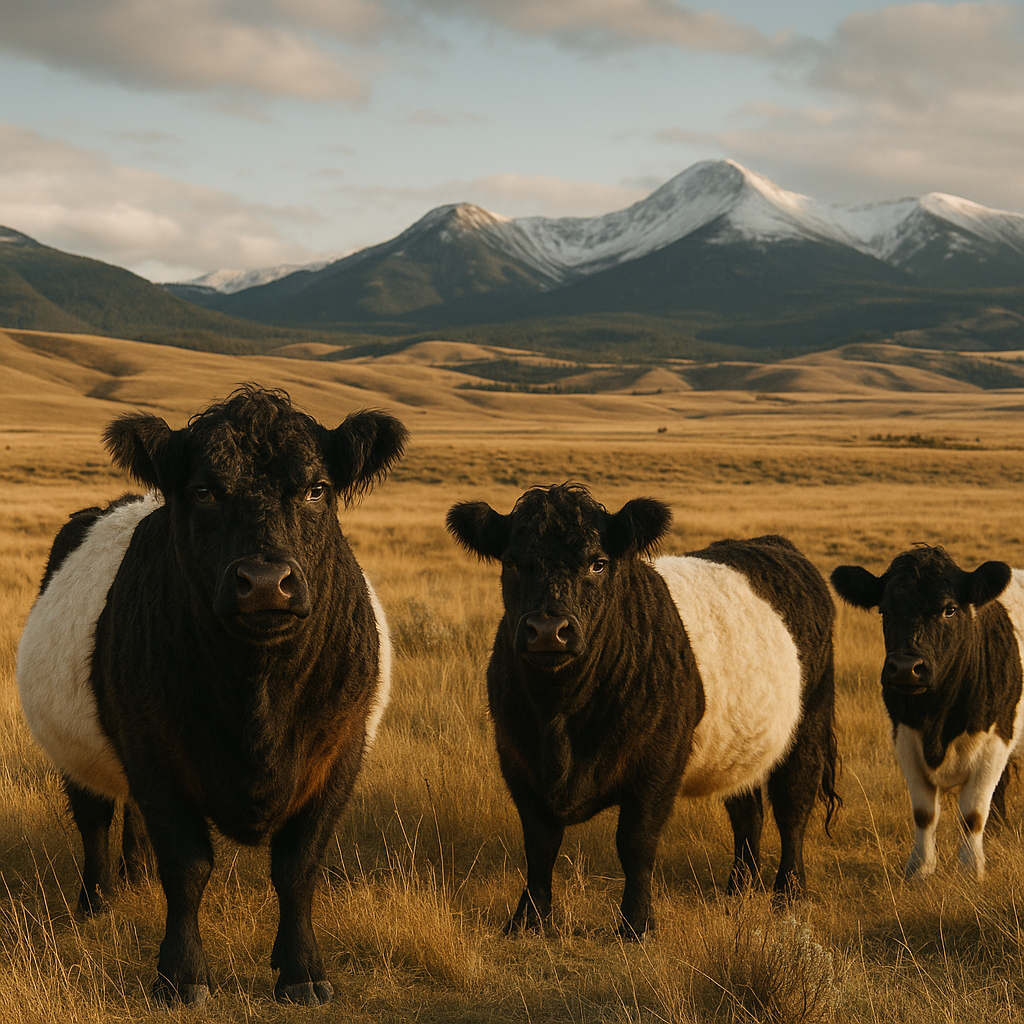
Drive any Montana backroad long enough and you’ll see the full range of cattle types that make sense here: big-bodied Angus and Hereford, tough range cows, and plenty of crossbreds built for winter, grass, and long distances to water. Lately, another breed has been getting more conversation across the Northern Plains—Belted Galloways, the black cattle with the white “belt” around the middle that folks sometimes call “Oreo cattle.”
Reports indicate Belted Galloways are drawing interest in nearby states for their hardiness, efficient grazing, and a niche beef market angle. That doesn’t automatically mean they’re the right answer for every Montana outfit. But they’re worth a closer look—especially for smaller ranches, direct-to-consumer beef programs, and producers who want cattle that can handle weather and rough country.
Quick takeaways
- Belted Galloways are known for hardiness and a thick hair coat—traits that can be attractive in Montana’s winter and shoulder seasons.
- They tend to be moderate-framed, which may help match cow size to grass in tighter years.
- Marketing often leans niche: the look stands out, and some producers sell beef directly on “heritage” and eating-quality messaging.
- They’re not a magic bullet. Calf market acceptance, carcass specs, and local buyer preferences still matter.
- Crossbreeding may be the on-ramp for commercial herds that want to test fit without overhauling everything.
What are Belted Galloways?
Belted Galloways trace back to Scotland’s Galloway region. They’re typically black with a wide white belt, though other color variations exist. The signature look is the first thing people notice, but the breed’s reputation is built more on function than fashion: thick hair, strong foraging ability, and an ability to maintain condition in harsher environments.
Like any breed, there’s variation between herds and breeders. The best way to evaluate them is the same way you’d evaluate any bull or replacement females: look at feet and legs, udder quality, disposition, fertility history, and performance data where available.
Why the breed is getting attention
Across the Plains and Upper Midwest, producers looking at Belted Galloways often cite a few practical reasons:
- Cold tolerance: A heavy hair coat and thick hide are commonly mentioned as advantages in cold, windy conditions.
- Forage efficiency: Reports indicate they can do well on grass-based systems and may be good “doers” on lower-input programs.
- Moderate size: In an era when inputs are high and grass can be short, moderate-framed cows can be easier to winter and maintain.
- Niche marketing: The belt makes them memorable, which can help with agritourism, farm branding, and direct beef sales.
That said, “attention” doesn’t equal “fit.” Montana’s cattle industry is built around large-scale, commercial marketing channels. Any breed decision has to pencil out in your environment and your market.
How Belted Galloways might fit Montana conditions
Montana is not one uniform ranching environment. A cow that thrives in the Hi-Line might not be the best match for irrigated ground in the Yellowstone Valley or timbered country in the west. Still, there are a few Montana-specific considerations where Belted Galloways could make sense.
Winter, wind, and maintenance needs
Montana winters test everything: cattle, equipment, and the person breaking ice before daylight. A breed known for hair and weather tolerance can be appealing, especially for operations that calve later and rely on stockpiled forage, swath grazing, or extended grazing seasons.
However, winter success is more than hair coat. Body condition going into winter, mineral program, water access, and storm shelter (natural or built) still drive outcomes. If a ranch is already set up for hardy, range-adapted cattle, Belted Galloways may align well. If an operation relies on higher-energy rations and tighter calving windows, the breed’s advantages may matter less.
Grass-based production and stocking decisions
Moderate-framed cattle can help match cow requirements to forage supply. That’s not unique to Belted Galloways—many producers accomplish the same goal with careful selection inside Angus, Hereford, or composites. But if you’re looking for cattle that hold flesh without pushing feed, the breed’s reputation is part of why it gets a look.
Montana ranchers also have to think about travel: distance to water, long drifts to winter range, and rough ground. Any cattle brought in should be evaluated for soundness and ability to cover country. If you’re buying breeding stock, ask direct questions about the kind of terrain they’ve been run on and how they’ve been managed.
Marketing reality: sale barn vs. direct beef
This is where the conversation gets practical fast. If your calves go to the local auction and then into a conventional feeding and packing pipeline, buyer preference matters. Even if Belted Galloways grade well, the market often rewards uniformity and familiarity. A pen of black-hided calves that fit common specifications can be easier to sell than a set that looks different—even if the cattle perform.
On the other hand, if you’re selling freezer beef, halves and quarters, or branded beef, the belt can be an advantage. Customers remember it. The story is easy to tell. And for some operations, that brand recognition helps capture value that isn’t available through commodity channels.
For producers exploring direct marketing, it’s smart to do homework on processing capacity and scheduling, labeling requirements, and customer demand. In Montana, that often means planning well ahead with a USDA-inspected facility and building a reliable customer list before you expand.
Helpful starting points for producers include the USDA’s overview of meat and poultry labeling and claims: FSIS labeling guidance.
Crossbreeding: a practical entry point
For commercial herds, crossbreeding is often the most realistic way to test a new breed’s fit without betting the ranch on it. Using a Belted Galloway bull on a set of cows can let you evaluate calving ease, vigor, growth, and how the calves sell or finish—while keeping the rest of the program stable.
Crossbreeding can also bring heterosis (hybrid vigor), which may improve fertility and longevity—two traits that matter in Montana’s wide-open country. Still, the marketing question remains: if the calves are headed to the sale barn, talk to your buyer about what will and won’t get discounted in your area.
Management considerations to ask about
If you’re considering Belted Galloways—purebred or cross—these are the kinds of questions that help cut through the internet noise:
- Mature cow size and maintenance: What do mature cows weigh in that herd, and what does winter feeding look like?
- Calving ease and birthweights: What’s typical, and how are heifers managed?
- Disposition: Are they calm in a working facility? Temperament matters for safety and efficiency.
- Udder quality: Especially if you’re keeping daughters. Ask to see older cows, not just first-calf heifers.
- Feet and legs: How do they hold up on rock, gumbo, and long walks to water?
- Carcass and growth data: If available, what do they do on a grid? Any retained ownership results?
Also consider the basics: vaccination protocols, biosecurity, and how incoming animals will be quarantined. Montana’s cattle are too valuable to gamble with preventable health problems.
What this means for Montana
For Montana ranchers, the Belted Galloway conversation is less about novelty and more about strategy. As weather swings, input costs, and pasture variability continue to pressure margins, many operations are re-checking whether their cow herd matches their grass and their marketing plan.
Belted Galloways may appeal most to:
- Smaller ranches that can capture value through direct beef sales and on-farm branding.
- Grass-focused operations that prioritize moderate cow size and extended grazing.
- Producers looking for hardy genetics in colder, windier country—especially if calving is later and inputs are controlled.
They may be a tougher fit for outfits that depend on selling large, uniform groups into conventional channels where buyer expectations are narrow. That doesn’t mean it can’t work—it just means the marketing plan should be as deliberate as the breeding plan.
In the end, Montana ranching has always been about matching cattle to country. If you’re curious, the best next step is simple: go look at a herd in person, ask hard questions, and run a small, measurable trial before making big changes.
Inspiration: “cattle,livestock” – Google News (link)