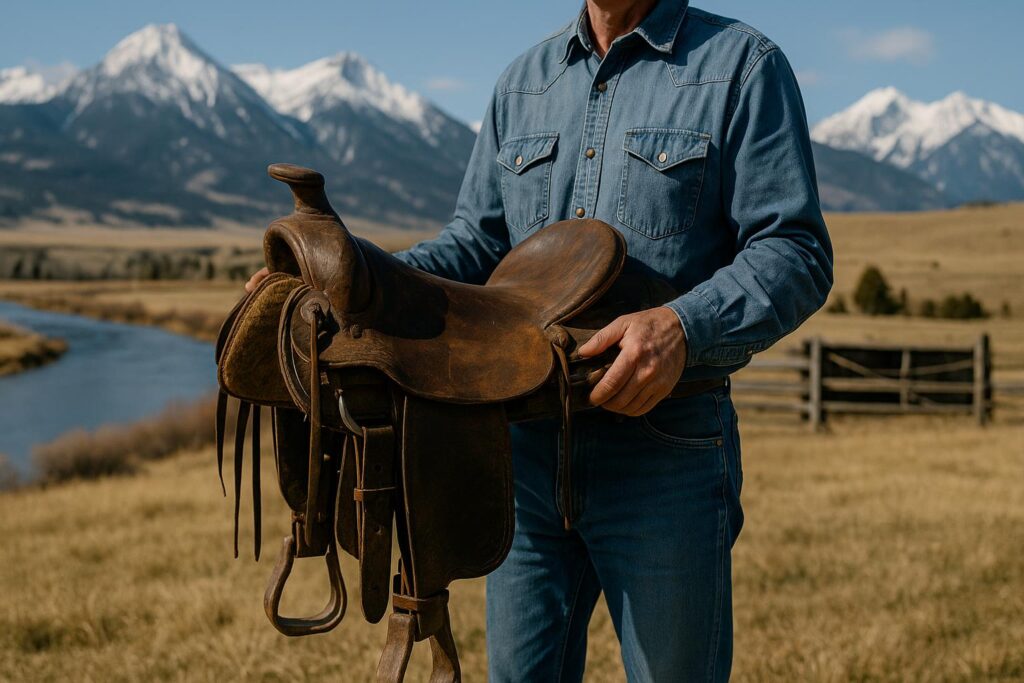
Across Montana, an old saddle often carries more than a rider—it carries a family story. It might have packed fence tools on a July day near Miles City, held steady in the Bridgers, or made the long walk back to the trailer after a wet October gather. That kind of history can make a saddle feel “worth a fortune.”
But market value and personal value don’t always match. Collectors, working cowhands, and tack dealers tend to price saddles by maker, condition, materials, and provenance—not by sentiment. If you’ve ever wondered what that well-used saddle in the tack room is actually worth, here’s a practical, Montana-friendly way to size it up without getting taken for a ride.
Why “worth” depends on who’s asking
Start by deciding what you mean by value. The same saddle can have three different price tags depending on the situation:
- Replacement value (insurance): What it would cost to replace with something similar today, often higher than resale.
- Fair market value (sale): What a willing buyer will pay in a normal sale, given condition and local demand.
- Sentimental value (family): Real, but usually not something the market pays for.
In Montana, working saddles are still working tools. That means heavy use is common—and heavy use usually lowers resale value unless the saddle is from a sought-after maker or has documented history that matters to collectors.
What drives saddle value in the real world
When appraisers and experienced tack sellers talk value, they tend to circle the same factors. Here are the big ones.
1) Maker and build quality
A respected maker name can boost value, but only if the saddle is genuinely from that shop and built to a known standard. Look for maker stamps on the fenders, latigos, skirts, or under the jockey. Some saddles also have serial numbers or shop marks.
If you’re not sure who built it, don’t guess in a listing. A “looks like” claim can backfire if a buyer disputes it. Instead, photograph any marks and ask for opinions from reputable sources.
2) Tree condition: the make-or-break issue
A saddle with a broken tree can be nearly worthless as a riding saddle, even if the leather looks good. Tree problems can be hard to spot unless you know what to check.
- Listen for creaks or pops when you gently flex the horn and cantle (without forcing it).
- Check for uneven twist or a “wobble” when set on a flat surface.
- Look for cracking around the fork and swell cover, or separation at the rigging.
If you suspect a tree issue, consider having it evaluated by a qualified saddlemaker or repair shop before you spend money on cleaning, new strings, or fresh latigos.
3) Leather condition and repairs
Montana weather is hard on tack—dry heat, cold snaps, and long storage in a barn can all take a toll. Value usually drops with:
- Deep cracking, rot, or stiff, brittle leather
- Loose rigging, torn skirts, or badly stretched billets
- Heavy oiling that leaves leather spongy or darkened unevenly
- Repairs that are functional but not cleanly done
That said, a professional repair can preserve value on a good saddle. Save receipts and document who did the work.
4) Original parts vs. “ranch fixes”
Many ranch saddles have honest modifications: replaced conchos, new latigos, swapped stirrups, or a different cinch setup. For a working rider, those changes may be a plus. For collectors, originality can matter.
If you’re selling, list what’s been replaced and when. Transparency builds trust and reduces returns or disputes.
5) Fit and function in today’s market
Even a well-made saddle can be tough to sell if it doesn’t fit common horse types or modern preferences. In many Montana circles, buyers look for practical rigs that fit stock horses and handle long days: solid rigging, comfortable seat, and reasonable weight. Specialty saddles (certain show styles, very narrow trees, or uncommon seat sizes) can take longer to move unless you find the right buyer.
A step-by-step way to estimate value
You don’t need to be a collector to get a realistic number. Here’s a process that works for most owners.
Step 1: Identify the saddle
- Photograph maker stamps, serial numbers, and any unique marks.
- Take clear photos of the front, back, both sides, underside, rigging, and seat.
- Write down seat size, rigging style (full, 7/8, 3/4), and any notable features.
Step 2: Compare to real sales (not asking prices)
Online listings can help, but asking prices can be wishful. Look for completed or sold listings when possible. Reputable consignment shops and auction results can also provide clues. If you’re browsing marketplaces, compare saddles with similar maker, condition, and style—not just “same color and shape.”
For Montana readers, local demand matters. A saddle that sells fast in a ranching-heavy county might sit longer in a more urban market, and shipping costs can change what buyers are willing to pay.
Step 3: Get a hands-on opinion
For higher-end saddles or anything with a notable maker mark, it’s worth visiting a saddlemaker, tack shop, or experienced consignment seller. They can often spot tree issues, hidden repairs, or replaced parts that photos miss.
For a starting point on care and safety checks, the American Association of Equine Practitioners has general horse health resources at aaep.org, and Montana horse owners can also find local contacts and events through groups like the Montana Horse Council.
Step 4: Decide your goal—sell, insure, or keep
If you’re insuring ranch assets or settling an estate, you may need documentation. For a sale, you may prioritize speed and simplicity. If you’re keeping it, you might focus on safe repairs and storage instead of resale value.
Common mistakes Montana sellers make
- Over-cleaning or over-oiling: Aggressive products can damage stitching and darken leather, sometimes lowering value.
- Skipping tree checks: A buyer who discovers a broken tree will walk or demand a steep discount.
- Claiming a maker without proof: “I was told it’s a ____” is fine if you say it that way and show the stamp.
- Ignoring shipping and payment safety: For online sales, use secure payment methods and document packing.
Where to sell (and what to expect)
Different venues fit different saddles:
- Local tack consignment: Good for mid-range working saddles; you’ll pay a commission but gain foot traffic and credibility.
- Ranch and estate auctions: Can move items quickly; final price depends heavily on who shows up that day.
- Online marketplaces: Wider audience, but more questions, more tire-kickers, and more risk if you don’t document condition.
- Collector channels: Best for documented, high-quality maker saddles; may require appraisal and detailed provenance.
As a rule, a clean, accurately described saddle with sharp photos sells faster than a “mystery saddle” with one dim barn picture.
What this means for Montana
Montana’s ranch culture produces a lot of saddles with real miles on them. That’s something to be proud of—but it also means many family saddles are valued more for service than for collectability. The practical takeaway is simple: if you’re counting on a saddle to fund a new rig, pay a vet bill, or split an estate fairly, get a reality check early.
For working ranch families, a quick evaluation can also prevent wrecks. A saddle with failing rigging or a compromised tree isn’t just a financial issue—it’s a safety issue for the rider and the horse. And for folks trying to keep a piece of family history in use, a good repair plan and proper storage can keep that saddle riding for another generation.
A final word on “priceless”
Some saddles are worth more than money to the people who rode them and the country they covered. The market doesn’t always recognize that. But with a careful look at maker marks, condition, and comparable sales, most Montana owners can land on a fair number—one that respects the story without inflating the price.
Inspiration: westernhorseman.com