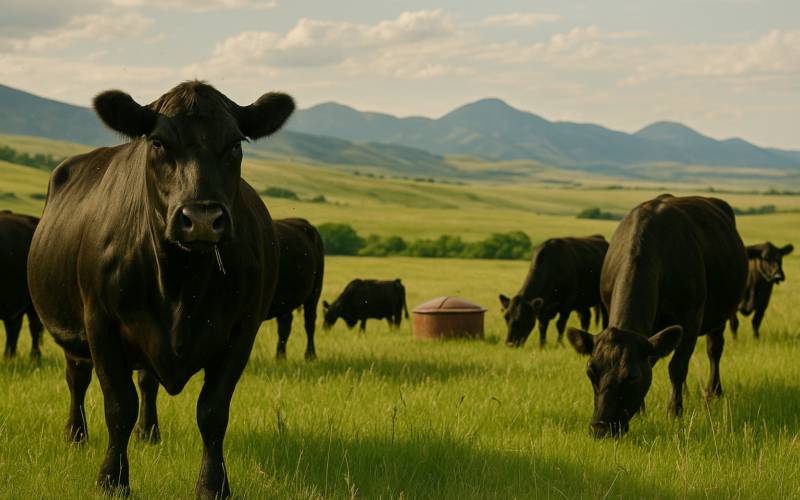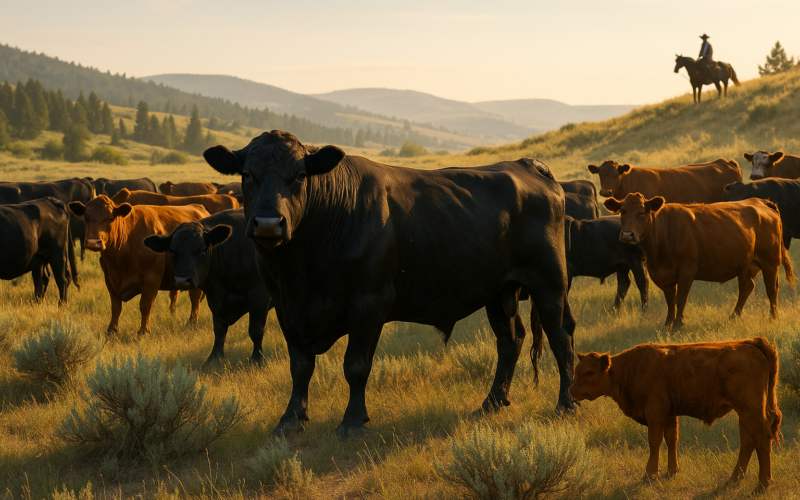
People think of heat stress as a feedlot problem in Kansas or Nebraska, not something a Montana cow-calf operation needs to worry about. That’s a mistake. We get stretches in July and into August where afternoon temperatures climb into the 90s, the wind dies, and the humidity sneaks up after a thunderstorm rolls through. Cattle on grass don’t have shade in half the pastures in this state, and a black-hided cow standing in the open at three in the afternoon is carrying a load you can’t see from the truck.
The damage isn’t always dramatic. Sometimes a cow dies, and that gets your attention. More often it shows up as breeding cows that don’t settle, calves that quit gaining for a week, and bulls whose semen quality takes a hit you won’t find out about until you preg-check in the fall. By then it’s too late to do anything but count the opens.
What heat stress actually looks like
Cattle handle heat differently than we do. They don’t sweat much, so they shed heat mostly by breathing it off. The first thing you’ll notice is faster breathing — a cow standing with her sides moving quick, mouth closed. As it gets worse the breathing turns into open-mouth panting, sometimes with the tongue out and drool hanging. Cattle will bunch up, crowd water, and stand instead of lying down because lying down traps heat against the ground.
One thing worth understanding: cattle don’t cool off the second the sun goes down. They store heat through the day and dump it overnight. If the nighttime low doesn’t drop far enough — say it stays in the upper 60s or low 70s after a hot, still day — they start the next day already behind. Two or three of those days stacked together is when you run into real trouble. The cattle that look worst in the morning, before it even gets hot, are the ones already cooked from the day before.
Black cattle, heavy cattle, and anything fighting foot rot or pneumonia are the most vulnerable. So are fat cull cows and bulls in working condition. Fescue, if you’ve got any, makes it worse by interfering with their ability to shed heat.
Water, shade, and timing
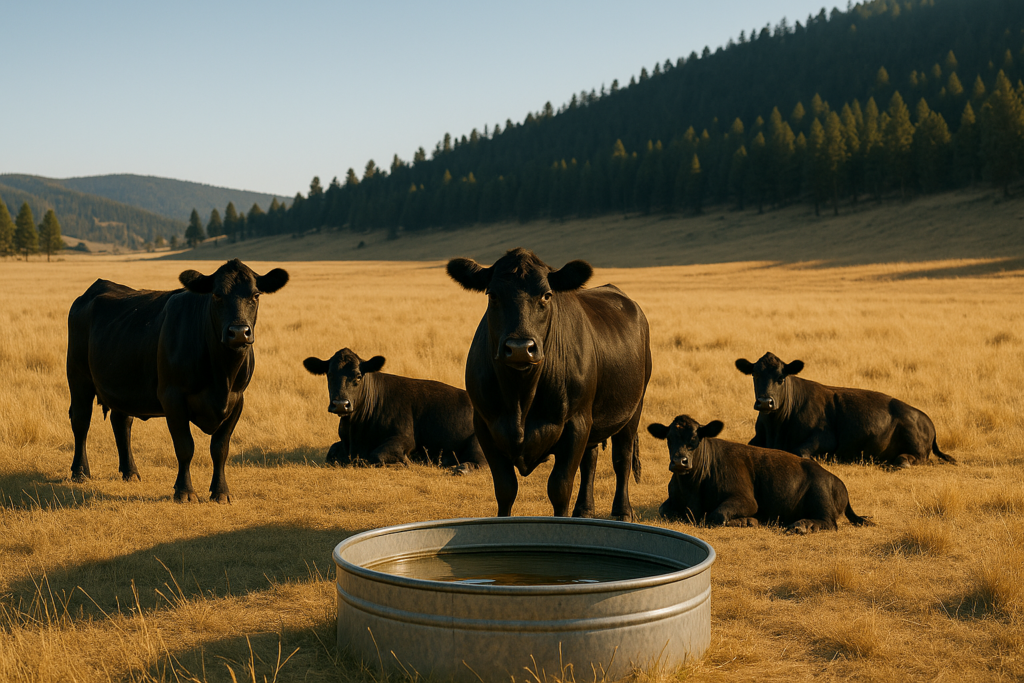
Water is the first and biggest lever. A cow’s water intake can roughly double in hot weather, and a tank that kept up fine in May can run dry by mid-afternoon in July when the whole herd hits it at once. Check your fill rates now, before the heat, not during it. If cattle are crowding a tank and the back of the herd can’t get in, you’re losing animals’ ability to cool down even if the tank technically holds enough over a day. More tank space and faster recovery beat one big tank every time.
Shade helps where you’ve got it — tree lines along a creek bottom, a windbreak, even a low ridge that throws afternoon shadow. You can’t grow trees by August, but you can think about which pastures have relief and save those for the hottest stretches. If you’re running yearlings on bare summer range with no shade at all, that’s worth a hard look.
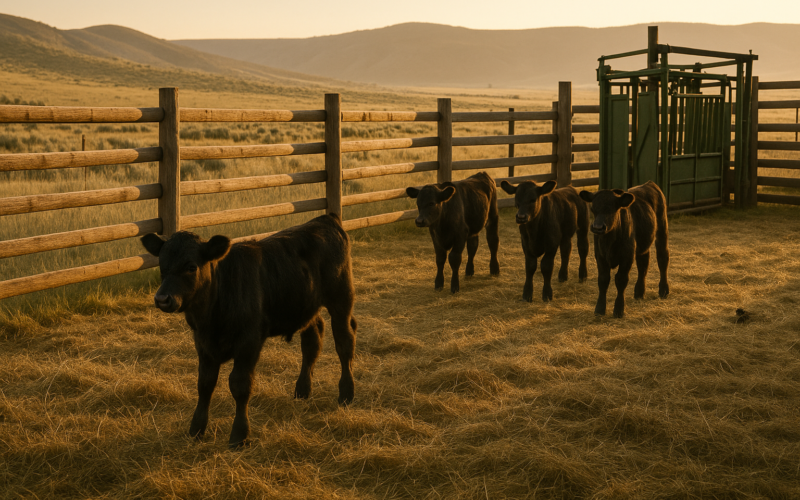
Timing matters more than most folks realize. Don’t work, sort, haul, or move cattle during the heat of the afternoon. Do it early — first light if you can. A bunch of cattle pushed through a corral at two in the afternoon in July can pile up fast, and you’ll have a wreck on your hands before you understand what’s happening. Same goes for trucking: load and haul in the cool of the morning, and don’t let a loaded trailer sit parked in the sun.
Plan around the forecast, not the thermometer
The useful trick is to watch the forecast a couple days out, not just react to today. When you see a run of hot days coming with little overnight cooling and no wind, get ahead of it. Move cattle to the pasture with water and shade before the heat hits, not in the middle of it. Make sure tanks are full and floats are working. Hold off on any handling you’d planned. If you’ve got cattle you know are at risk — fat culls, anything sick — keep an eye on them specifically.
None of this is complicated, and most of it costs nothing but attention. The producers who lose cattle to heat are almost never the ones who got caught by a freak day. They’re the ones who hauled at noon, ran a tank dry, or pushed a sick cow through the chute when it was 95 out. Pay attention to the cattle and the calendar, and a hot Montana summer stays an inconvenience instead of a loss.