You spot it on a routine ride through the pasture. One calf hanging back, head turned away from the sun, a wet streak running down its face. By the time you get back two days later, three more are squinting and the first one has a white spot the size of a dime in the middle of its eye. That’s how pinkeye works. It rarely shows up as one sick animal and stays there.
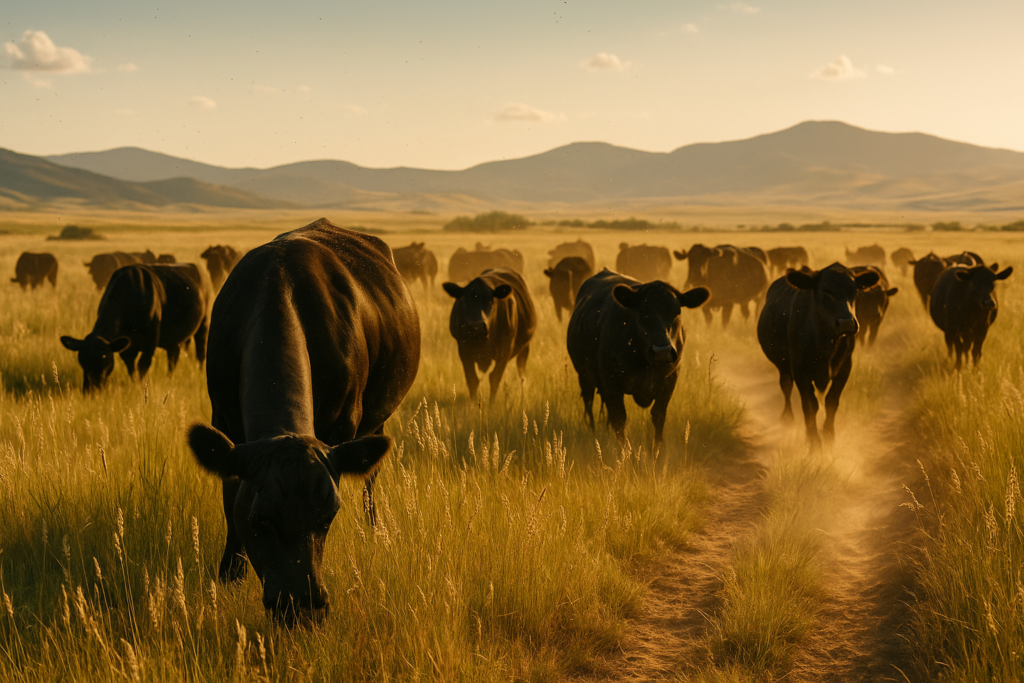
Infectious bovine keratoconjunctivitis—pinkeye—hits hard in June and July because everything that drives it peaks at once. Face flies are out feeding around the eyes. The grass has shot up and gone to seed, so cattle grazing through it catch awns and stiff seedheads right in the eyeball. Add bright sun, dust off the trails, and the wind we never run short of, and the eye gets irritated enough for the bacteria to take hold. Once one animal is shedding it, the flies move it down the line.
Catch the squint, not the scar
The early signs are easy to miss if you’re just counting head. Watch for a calf that won’t face the light, excessive tearing, a wet or matted cheek, and blinking or holding the eye partly shut. That’s stage one, and it’s the cheapest animal you’ll ever treat. Run it through and you can knock the infection back before the cornea is damaged.
Let it ride and the eye clouds over—first a hazy blue-gray, then a raised white ulcer in the center. At that point the calf is in real pain, it’s not eating like it should, and you’re looking at lost gain even if the eye eventually heals. The worst cases rupture and the animal loses the eye entirely. A calf with a scarred-over or missing eye sells at a discount every time, and the buyers don’t forget.
The standard treatment for an active case is a long-acting antibiotic labeled for pinkeye—talk to your vet about which product and dose fits your operation. Two things matter as much as the shot itself. Get them caught early, and get the affected eye out of the sunlight. A glued-on eye patch, or even a stitched third eyelid in a bad case, takes the pain down and lets the eye start to heal. It also keeps that animal from acting as a flag for every face fly in the pasture.
The flies are doing the spreading
You can treat sick calves all day and still lose ground if the fly load is heavy. Face flies feed on eye secretions, then carry the bacteria from animal to animal. Knock that population down and you slow the whole outbreak.
Most outfits run some combination of these, and stacking a couple of methods works better than leaning on one:
- Fly tags in both ears, put in around turnout. Rotate the chemical class year to year so the flies don’t build resistance, and pull spent tags in the fall.
- Dust bags or oilers hung where cattle have to use them—at a mineral feeder, a water gap, or a gate they pass through daily. Forced use beats free-choice every time.
- Pour-ons or sprays when numbers spike, especially on the worst-affected groups.
Don’t overlook the grass. If you’ve got pastures gone rank with mature, seedy growth, the seedheads themselves are scratching eyes and opening the door. Grazing those paddocks before they get coarse, or clipping the worst of it, takes one irritant out of the equation.
The boring stuff that actually prevents it
Pinkeye loves a run-down animal. A good mineral program with adequate trace minerals—copper, zinc, selenium in our deficient country—supports the immune response and the health of the eye tissue itself. Cattle short on those fight off infection worse and heal slower. The mineral tub you set out for breeding season is pulling double duty here.
There are pinkeye vaccines on the market, and some operations swear by them. They’re worth a conversation with your vet, but go in clear-eyed: the bacteria has several strains, and a vaccine only covers what’s in it. If you’ve had wrecks year after year, your vet may be able to culture the bug off your own cattle and build an autogenous vaccine that matches what’s actually living on your place.
The other quiet prevention is simply moving cattle and keeping pairs where you can see them. An outbreak that gets ahead of you in a section of brush and coulees you only check weekly costs a lot more than the same bug in a pasture you ride every couple of days. Pinkeye rewards the operator who’s looking. Catch the first squint, patch it, hit the flies, and you keep a nuisance from becoming a fall full of one-eyed feeder calves.