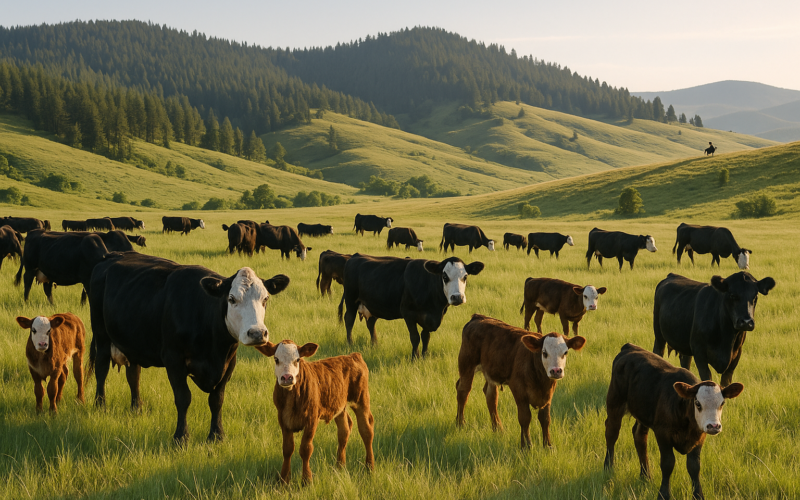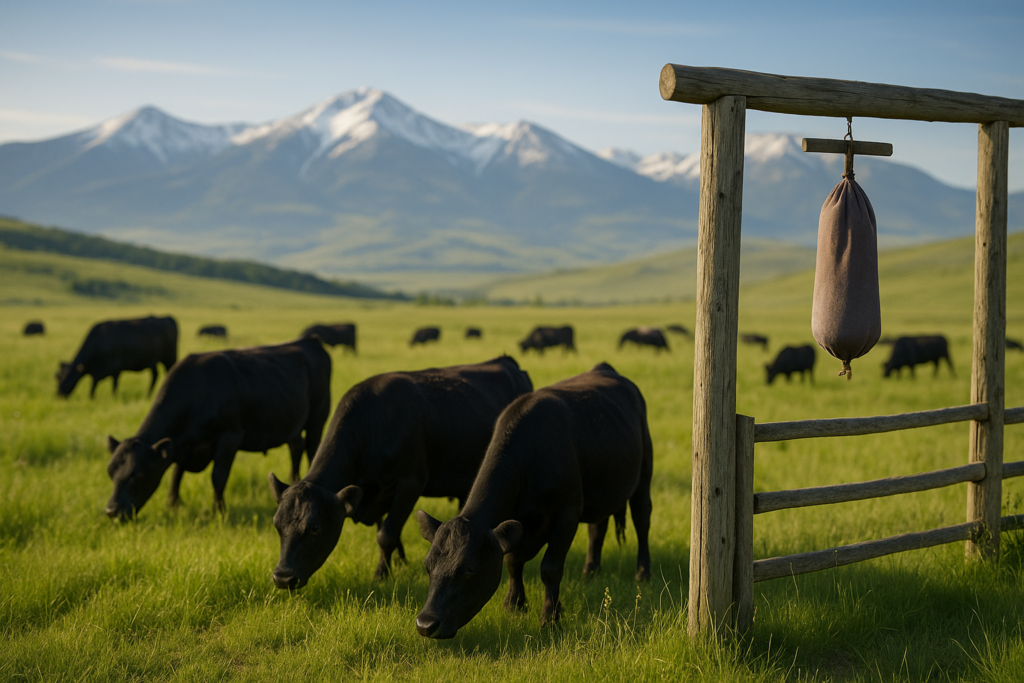
By the middle of June you can see them from the truck. A black crust of flies riding the back and shoulders of every cow, lifting in a cloud when she swishes her tail. Those are horn flies, and they are not just an annoyance. They feed on blood, dozens of times a day, and a heavy load pulls weaning weight off calves and condition off cows right through the part of summer when grass should be putting it back on.
The frustrating part is that most outfits do something for flies, and most of those programs quit working by August. Either the product wore off, or the flies got tough enough to shrug it off. A little planning in June changes that.
Know which fly you’re fighting
Horn flies are the small ones that cluster on the topline and belly and stay on the animal almost all the time. They’re the ones that matter most economically because they bite so often. Face flies are bigger, hang around the eyes and muzzle, and don’t stay put — they’re the ones that move pinkeye and pinworms around. Stable flies bite the legs and show up worse near old hay feeding sites and wet, manure-packed ground.
You treat them differently. Most pour-ons, tags, and rubs are aimed at horn flies. Face flies are harder because they aren’t sitting on the animal soaking up insecticide, which is part of why sanitation and dust bags by the mineral matter for them. Knowing what’s on your cattle keeps you from blaming a product for failing at a job it was never going to do.
Pick a method that fits how you handle cattle
The tools haven’t changed much, and they each have a catch.
- Insecticide ear tags are convenient if you’re already running cattle through a chute, but timing is everything. Tag too early and they’re spent before fly season peaks. The general rule is to wait until you actually see flies building, usually well into June, rather than tagging at branding out of habit. Pull the old tags in fall so you’re not leaving a low dose out there breeding resistance.
- Pour-ons knock flies down fast and are easy to apply, but the kill is short — a few weeks at best. They fit a herd you’ll see again, or a quick reset when numbers spike.
- Dust bags and back rubbers work well if you force the cattle under them, hung in a gateway or by the only water or mineral. Hang them where cattle can dodge them and you’ll get nothing. Keep them charged; a dry rubber is just a rope.
- Feed-through products (an IGR in the mineral) stop fly larvae from developing in fresh manure. They only touch the flies your own cattle produce, so a neighbor’s herd next fence over will keep reinfesting you. Best as part of a program, not the whole thing.
Whatever you choose, the target most people use is roughly 200 flies per animal before treatment pays — below that you’re spending money to chase a problem that isn’t costing you much yet. You don’t have to count exactly. A side of a cow that’s solid black with flies is well past the line.
Rotate chemistry or breed your own super-fly
This is where good programs go wrong year after year. Horn flies cycle fast, many generations in one summer, and they develop resistance when they meet the same class of insecticide over and over. The two big families in tags are pyrethroids and organophosphates. If you ran pyrethroid tags last year and the flies came roaring back, switching to the same class again is throwing money at a fight you already lost.
Rotate the class of chemistry between years, not just the brand name on the bag — read the active ingredient. Pull tags in the fall so flies don’t spend September feeding on a weak dose and learning to survive it. And lean on the non-chemical tools, because flies can’t build resistance to a clean lot or a well-placed back rubber.
One more thing worth a look: some cows in every herd carry far more flies than others, and that tendency is heritable. If you’ve got a few that are always crusted while their pasturemates stay relatively clean, that’s information for your culling and bull-buying decisions down the road.
None of this is complicated, but it rewards paying attention. Walk through the cattle this week, see what’s actually on them, and match the tool to the fly and to how often you’ll lay eyes on the herd again before fall. The flies you knock down in June are the weight you keep on the calves come shipping.