The first cutting is the one you can actually steer. Later crops fight summer heat and shorter regrowth, but that initial flush of alfalfa or grass-alfalfa coming off in mid-to-late June carries most of the quality you’ll bank for winter. Get the timing and the moisture right and you’ll feed less protein supplement in February. Get greedy waiting for tonnage and you’ll be buying it.
The trade-off is simple to say and hard to do. Every day you leave a stand standing past the right stage, you add yield and lose feed value. Stems thicken, the plant pours energy into seed instead of leaf, and the protein and digestibility slide. Wait too long and you’ve got a lot of coarse hay a cow picks through. Cut too early and you give up real tonnage you needed. The window is narrow, and it usually opens right when the forecast won’t cooperate.
Watch the plant, not the calendar
On alfalfa, the honest signal is the bud. Late bud to first flower is the spot most folks aim for — you’ve still got leaf, the protein hasn’t crashed, and you’re not throwing away a cutting’s worth of growth. Once you see scattered purple bloom across the field, the clock’s already run a little long. On a grass-alfalfa mix, the grass drives it: head emergence on the brome or orchardgrass means quality is leaving fast, so you cut to the grass and accept the alfalfa’s a touch early.
The leaf is where the feed value lives. Most of the protein and the digestible energy in alfalfa sits in the leaves, not the stems. That’s why a stand that shatters its leaves in the rake or comes through the baler shedding green dust can test poorly even though it looked thick standing. You’re hauling stems and leaving the good part in the field.
Cut to dry, then bale at the right moisture
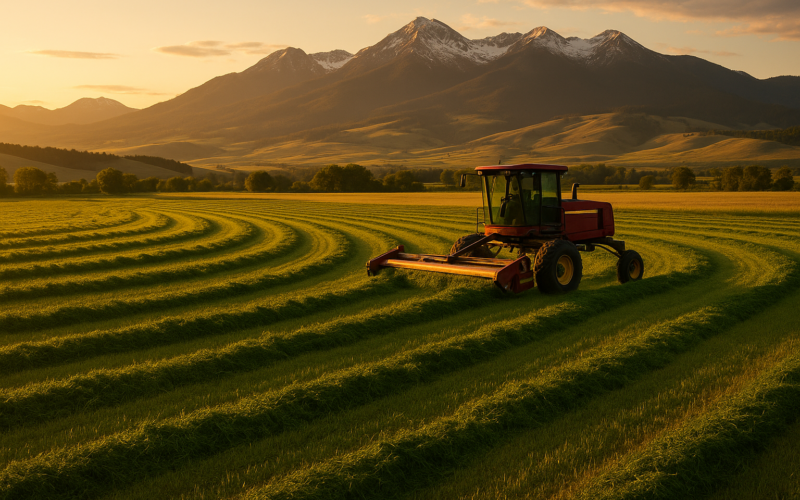
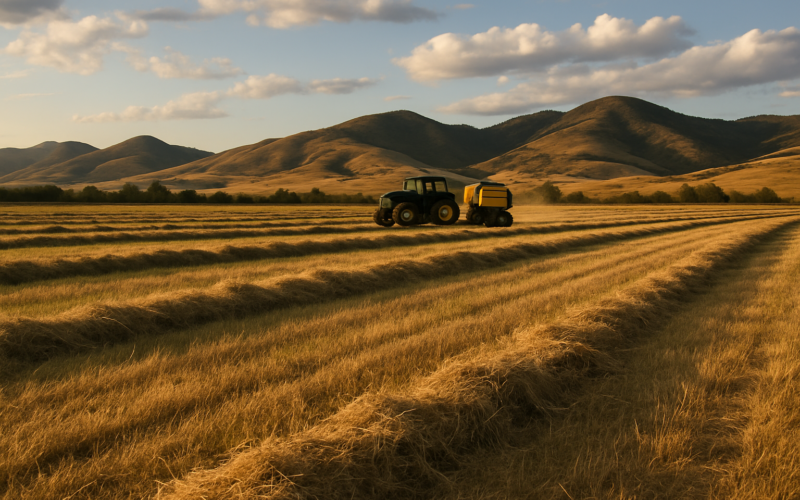
Lay it down so it dries even. A wide swath off the mower-conditioner pulls water out faster than a narrow windrow piled deep, because more of the crop sees sun. Conditioning rolls crack the stems so they don’t stay green while the leaves are already crisp. The goal is to get the whole swath to baling moisture together, not bale dry leaves wrapped around wet stems.
Rake or merge while there’s a little dew on it, early morning, so the leaves bend instead of breaking off. Raking bone-dry alfalfa at two in the afternoon is how you shatter half your protein onto the ground. Time the rake to firm up the windrow ahead of the baler, not to do damage.
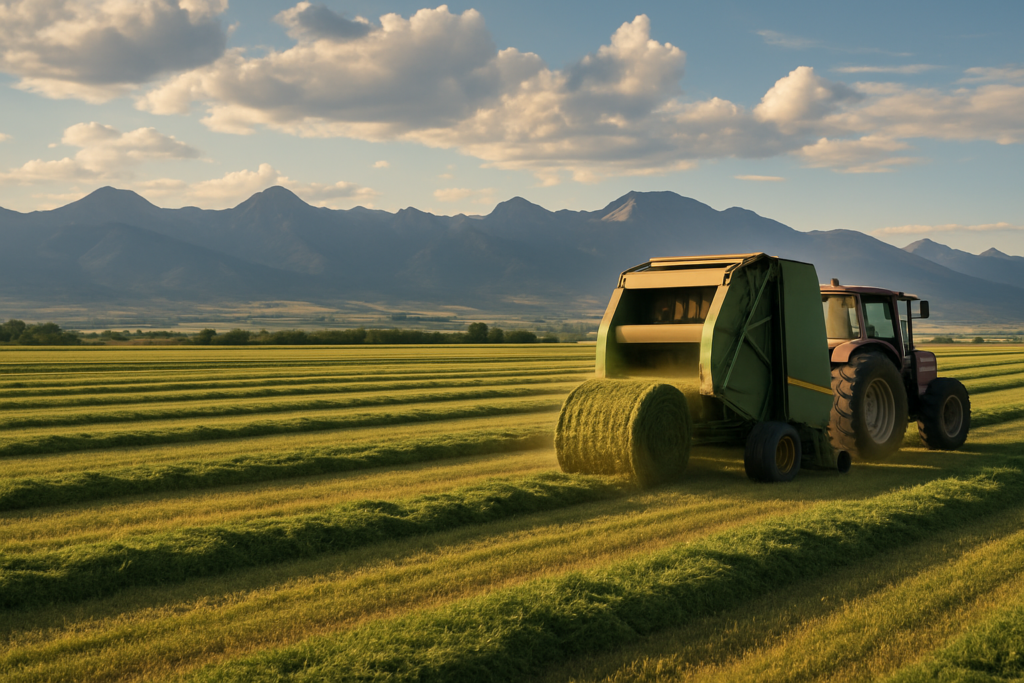
Then watch the bale moisture, because this is where hay turns into a problem you smell three weeks later. Small squares want to be drier than big rounds; large packages hold heat. Bale alfalfa too wet and it heats, molds, and in a tight stack of big bales it can climb to where you’ve got a real fire risk in the shed. Too dry and you’ve shattered the leaves anyway. A moisture tester on the baler or a probe in the bale beats guessing. If you have to choose, a hay preservative lets you bale a notch wetter and beat a rain, but it’s not a license to bale soup.
Beat the weather, protect the stack
Montana’s first-cutting weather is a gamble — you’re chasing a three- or four-day dry window against afternoon thunderstorms rolling off the front. A light shower on cut hay before it’s dry leaches soluble nutrients and bleaches the color; a hard rain on a curing windrow can knock real value off. When the forecast gives you the window, take it, even if the stand isn’t quite at the maturity you’d pick on a perfect year. Hay in the stack beats the perfect cutting that rained on.
Once it’s baled and hauled, stack it where it can breathe and shed water. Big rounds set on a rock pad or old tires, off bare ground, won’t wick moisture and rot the bottom. Net wrap sheds rain better than twine on rounds left outside. If you’ve got even a marginal-moisture cutting, give those bales room and watch them the first few weeks — a stack that’s heating will warm to the touch and smell sweet-then-sour before it ever shows smoke.
The cheapest feed test you’ll run is the one you make at the swather. Cut at the right stage, dry it even, bale it sound, and you’ll know in January you put up hay that works for the cows instead of just filling the yard.