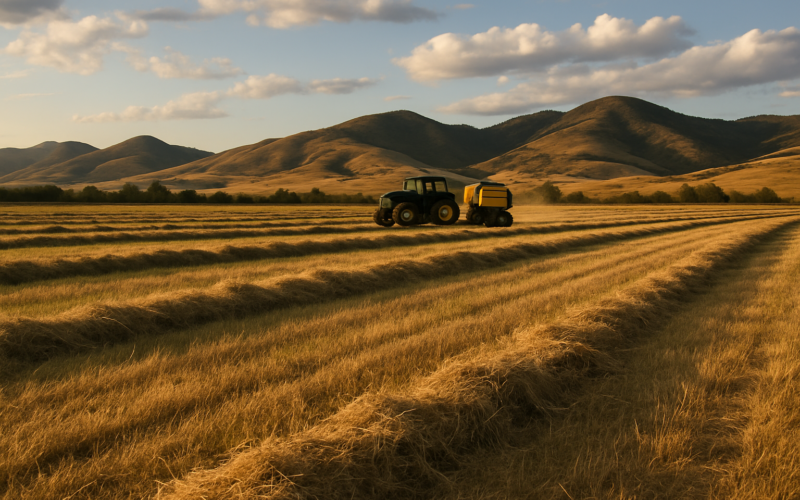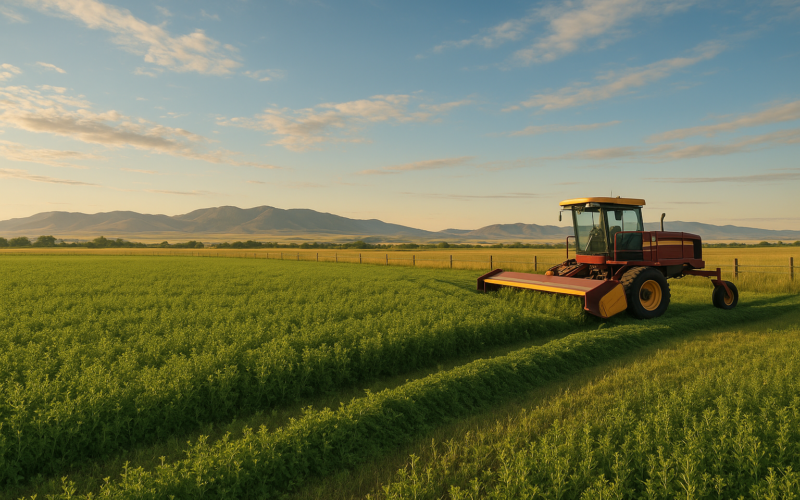
The dangerous part of hay season isn’t the swather or the baler. It’s the stack sitting quiet in the yard three weeks after you finished, cooking from the inside while you’ve moved on to the next field. First cutting is where this bites people, because the weather won’t leave the windrows alone long enough to cure and everybody starts baling a little green just to beat the next thunderstorm rolling off the front.
Wet hay heats. That’s not a maybe. Plant cells keep respiring after baling, and the bacteria and mold that thrive in damp forage throw off heat as they work. In a tight bale or a packed stack, that heat has nowhere to go. It builds. Most of the time it peaks, the hay browns a little, loses some feed value, and settles down. But push the moisture high enough and the pile can climb past the point where a chemical reaction takes over and it lights itself. No spark, no cigarette, no lightning. Just wet hay and time.
Know the numbers before you drop the sickle
Small square bales are generally safe baled around 18 to 20 percent moisture. Large rounds and big squares pack tighter and hold heat better, so you want them drier — closer to 16 to 18 percent, and lower is better for the big packages. Above that you’re gambling, and the bigger and tighter the bale, the worse the odds.
A cheap probe-style hay moisture tester pays for itself the first season. Check bales from different parts of the field and different times of day, because a windrow that tests fine at two in the afternoon can pick up dew by the time you’re baling after supper. Don’t trust one reading. The heavy, green spots along a ditch or a low corner are where trouble starts.
The old hand test still works as a backup. Twist a handful of hay hard. If it feels cool and dry and the stems snap, you’re in decent shape. If it feels cool but damp, or twists into a rope without breaking, it’s too wet to put in a stack. Bright green color and a strong smell coming off fresh bales the next morning is another tell — that’s not the hay curing, that’s it working.
Watch the stack, not just the calendar
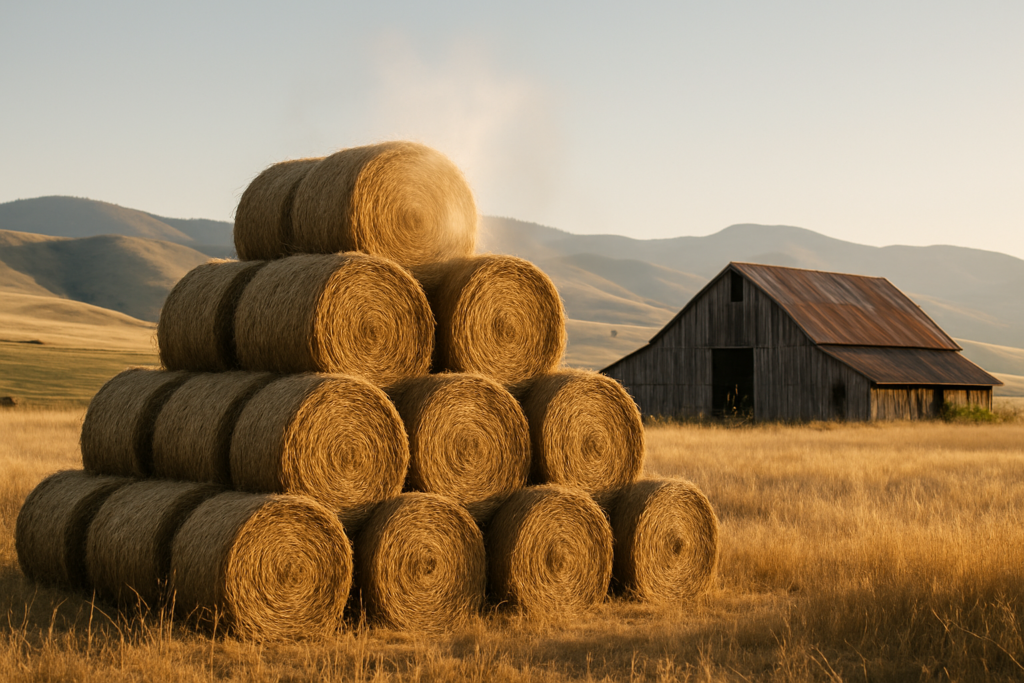
Heating usually shows up in the first two to six weeks. That’s the window to pay attention. A stack that’s warming will give you signs if you look: a musty, caramel or tobacco smell, visible steam or vapor coming off it on a cool morning, or condensation and white mold on the outside bales. If the top of a covered stack feels hot to the hand or you see the tarp sweating, something’s going on underneath.
When you’re worried, take the temperature. Drive a metal rod or pipe into the center of the stack, leave it a few minutes, and pull it out — if you can’t hold it in your hand, the hay is above about 130 degrees and you need to keep checking. Better yet, drop a thermometer on a string down the probe hole. Here’s the rough scale to keep in your head:
- Under 130°F: normal, hay is curing, keep an eye on it.
- 140 to 150°F: heating is active. Check it daily.
- 160 to 175°F: danger zone. Check every few hours and be ready to pull bales apart.
- Over 175 to 190°F: fire is possible or already starting inside. Call the fire department before you touch it.
That last point matters. A stack that’s near ignition can have burned-out pockets and cavities inside. Pull a bale out or drive a loader into it and you feed it a rush of oxygen, and it can flash. Don’t go climbing on top of a hot stack either — the crust can hold your weight until it doesn’t, and then you’re standing in a hole full of superheated hay. If it’s that far gone, let people who are set up for it handle it.
Buy yourself some room
The easy fixes happen before the hay is ever stacked. Let the windrow cure another half day when the forecast lets you. A tedder or a rake to turn the windrow speeds drying on heavy first cutting, especially if it laid in the rain. If you have to bale a touch wet to beat weather, a propionic-acid-based preservative will let you go up several points of moisture safely — read the rate, because underapplying it is just spending money to feel better.
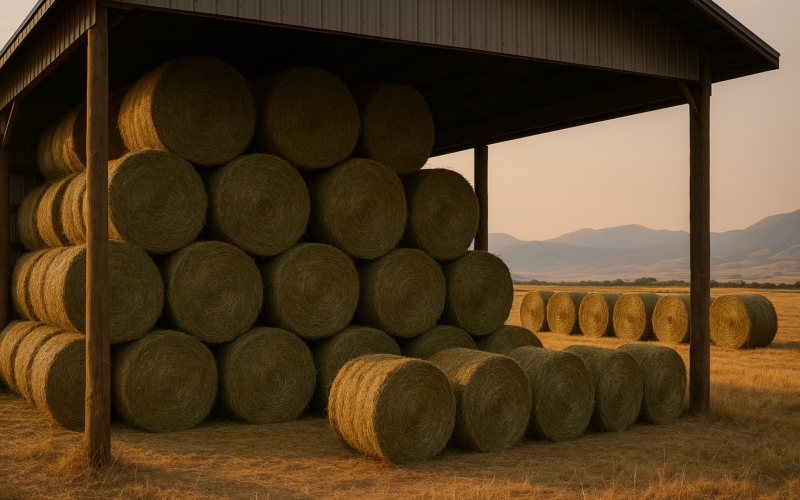
Once it’s baled, don’t stack green hay tight and tall right away. Leave space for air, keep suspect bales in smaller stacks or set out separately, and don’t cram fresh wet bales into a shed where a fire takes the building and everything in it. Give the questionable stuff two or three weeks in the open where you can watch it and where a fire has somewhere to go that isn’t your barn. Feed the wet bales first, too — they won’t get better sitting there.
First cutting is worth putting up right. A stack fire doesn’t just cost you the hay. It costs you the winter feed you were counting on, and sometimes the shed and the equipment parked next to it.