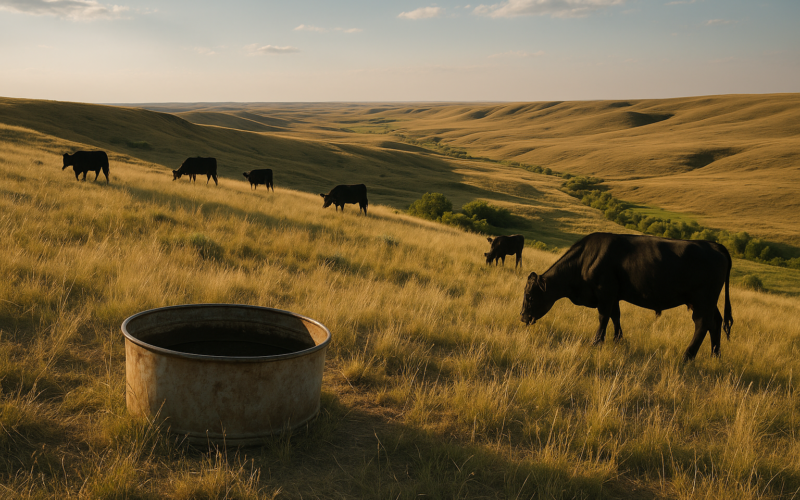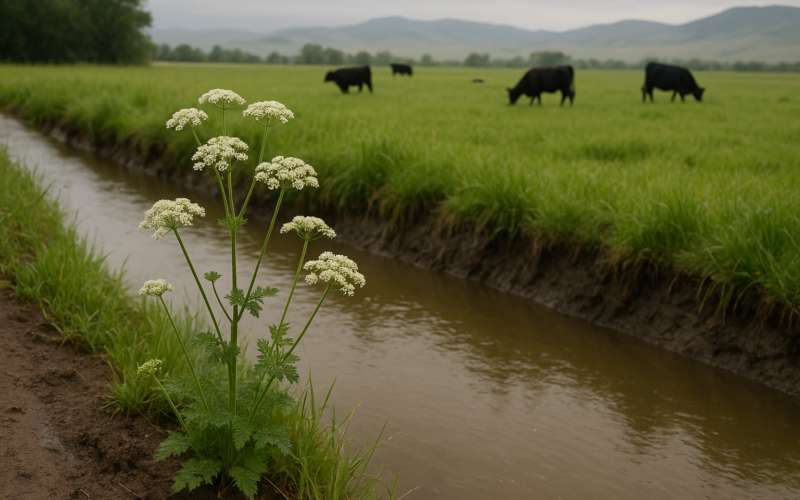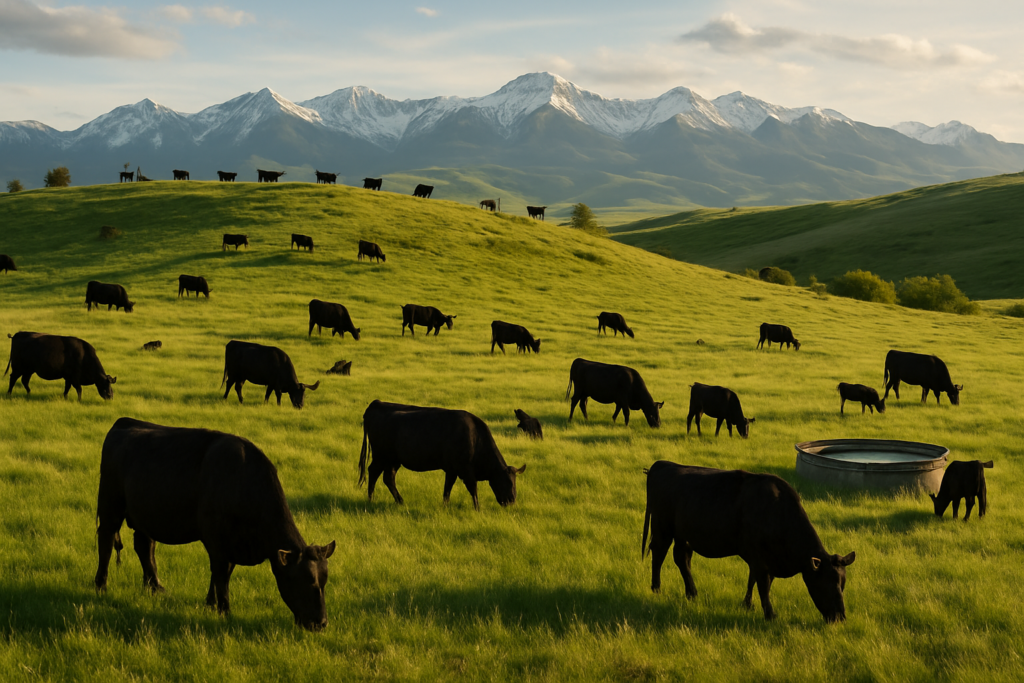
Turn a bunch of cows out on a section of rough summer country and watch where they end up. Nine times out of ten it’s the creek bottom, the shade, and the flat within a quarter mile of the gate. Meanwhile the south ridges and the far corner grow up rank, cure out, and never see a cow all summer. You’re feeding the same number of head off maybe two-thirds of the grass you turned them out on, and the part they do use gets grazed into the dirt.
Uneven use is one of the most expensive habits on a Montana outfit, and it doesn’t show up on a receipt. It shows up as short bottoms in August, banks getting chewed to mud, and pastures you have to pull off early because the accessible feed is gone while the hard-to-reach feed still stands. Fixing it isn’t about buying anything fancy. It’s about giving cattle a reason to walk.
Cattle graze to water, then to comfort
A cow will build her whole day around water. On flat ground she’ll travel a fair distance to it; on steep foothill or breaks country she won’t go far uphill for a drink, and she won’t graze much beyond a half mile or so from where she waters. If the only water is the creek, the creek is where she lives. Everything radiates out from that.
That’s why a single spring development, a tank fed off a pipeline, or even a hauled stock tank set on a bench can change how a whole pasture gets used. Put water where the grass is going ungrazed and cattle will find it within a day or two. You don’t need to plumb the whole ranch at once. One well-placed tank that pulls cattle up out of the bottom and onto a slope earns its keep in a single season.
Slope matters more than distance. Cows follow the contours, drift downhill, and cut trails along the easy grades. If you can water them on a bench or a saddle instead of the very bottom, you’ve already started spreading them out.
Salt and mineral are the cheapest herding tool you own
Salt won’t fix everything, but it’s the simplest lever you’ve got. Cattle come back to loose mineral and salt regularly, and where you set it decides which country they cover getting there. Put the mineral station down by the creek next to the water and you’ve just told the herd to stay in the bottom. Set it a half to three-quarters of a mile out, up on a ridge or a bench with good grass around it, and they’ll graze their way to it and back.
Move it. A mineral feeder that sits in the same spot all summer builds a bare, pounded loafing area and quits doing you any good. Pick the country you want grazed next, drag the feeder out there, and let it pull the cattle onto fresh feed. On big pastures, running two or three stations in the underused corners spreads the herd instead of concentrating it.
Keep water and salt apart, though. Setting salt right next to the tank defeats the whole point—the cattle never leave. You want the two far enough apart that the trip between them covers grass.
Ride them out before they settle in
The first week on new country sets the pattern, and cattle are creatures of habit after that. If you turn out and leave, they’ll pick the easy spots and stay. A few mornings spent horseback pushing them up onto the ridges and out to the far end teaches them the country’s bigger than the gate. Once they’ve found the water and grass out there on their own, they’ll keep using it.
Herding a couple times a week through the early part of the summer does more than any fence. On broken breaks country and bigger allotments, that’s the whole management plan—move them off the riparian areas before they camp there, and don’t let them sit on the same draw day after day.
A few other things that push cattle into the corners:
- Salt or a rub set near a shaded slope they’d otherwise skip, so they’ll use the timber edge instead of just the creek willows.
- Temporary cross-fencing on the flatter units, even a single hot wire, to keep them from grazing the near end into the ground while the far end cures out.
- Fixing the trail or laying back a steep water gap so cattle will actually climb to a bench they’re avoiding.
None of it is complicated. The payoff is grass in the bank in late summer, creek banks that hold up, and pastures you can leave cattle on longer because they’re eating the whole thing instead of one corner. On a dry year, that extra grazing you unlocked up on the ridge might be the difference between staying out and hauling home early.