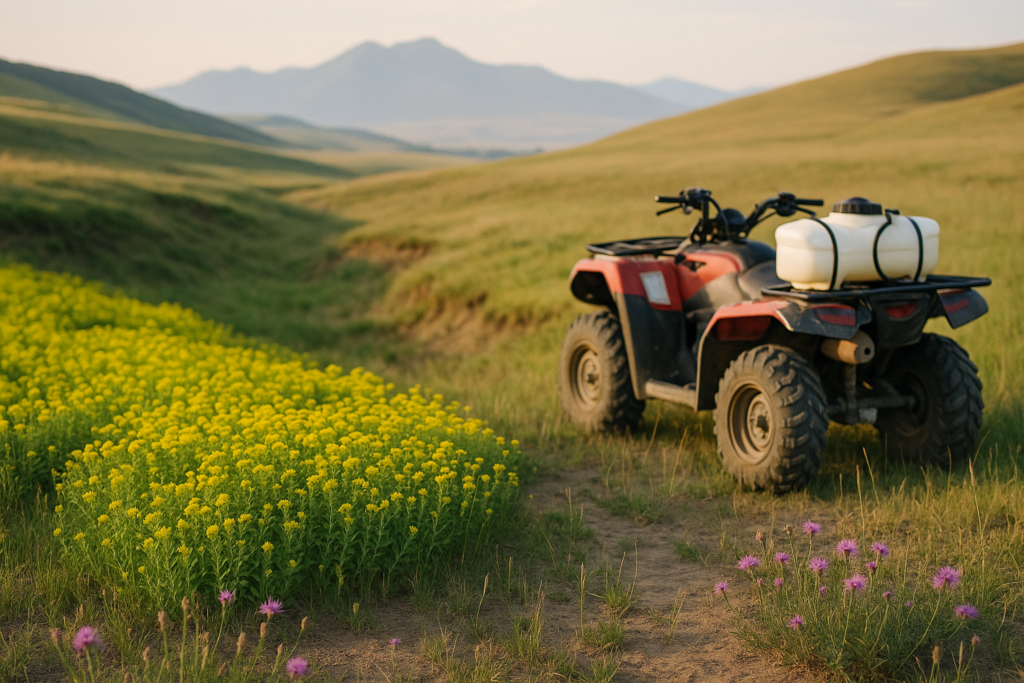
Everybody who runs cattle in Montana knows the yellow-green haze of leafy spurge coming up in a coulee, or the purple wash of spotted knapweed across a south slope in July. What fewer people do is time the spray so it counts. You can drive a whole tank of herbicide across a patch at the wrong growth stage and knock the plant back for a season while the root keeps its reserves. The weed comes right back, you’ve spent the money, and you’ve told yourself spraying doesn’t work.
It works. But these are perennials with deep, stubborn root systems, and the only way you move chemical down into those roots is to spray when the plant is actively hauling sugars back underground. That window is short, and for a lot of the worst offenders it lands right about now.
Match the timing to the weed
Leafy spurge is the classic example. The best two shots at it are the true-flower stage in June, when those little yellow bracts are open, and again in the fall when the plant greens up and starts pulling reserves down for winter. Spray it in the middle of summer, after it’s set seed and gone stemmy, and you’re mostly wasting product. The plant isn’t moving much anywhere.
Spotted and diffuse knapweed give you a longer window but reward you most from the rosette stage through bud and into early bloom. Once knapweed is standing tall and flowering hard, translocation slows and the older leaves get less receptive. Catch it before it throws seed and you’re preventing next year’s problem, not just this year’s.
Canada thistle is another June-into-summer target, best hit in the bud stage or on fall regrowth. Houndstongue and biennials like it want a rosette-stage hit. The point across all of them: know which plant you’re standing over and what stage it’s in, because the calendar date alone won’t tell you. A cold, wet spring pushes everything back; a warm dry one moves it up.
Rate, water, and the stuff that trips people up
Read the label and use the rate on it. Cutting the rate to stretch a jug is how you breed herbicide-tolerant weeds and get a marginal kill that looks good in August and betrays you the next spring. Use enough water to get real coverage on the foliage—patchy, drifting mist off a four-wheeler sprayer going too fast doesn’t wet the plant.
A few things worth keeping in mind when you head out with the sprayer:
- Wind and heat cost you. Spray in the calm of morning or evening, and lay off when it’s blazing hot—many products volatilize or the plant shuts down and quits taking up chemical.
- A surfactant matters on waxy, hairy leaves like knapweed and houndstongue. Skip it and the spray beads up and rolls off.
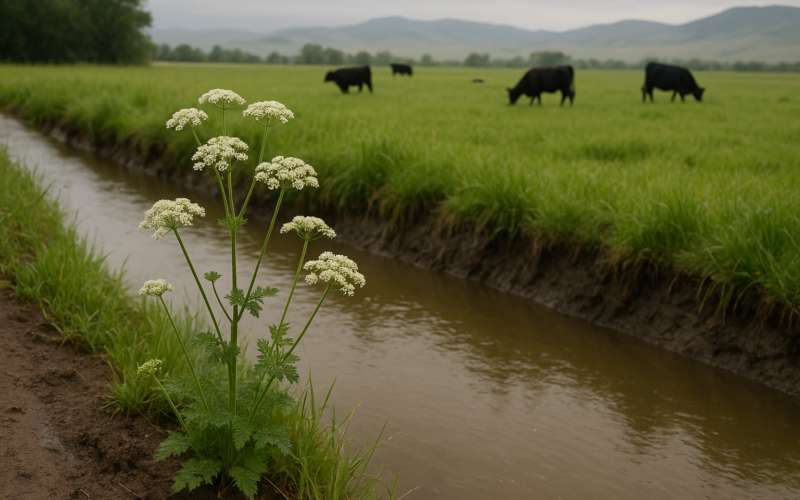
- Watch grazing and haying restrictions on the label, and be careful near water. A lot of Montana spurge grows right in the creek bottom, and not every product is cleared for use over water.
- Mark what you sprayed and when. Perennial weeds need follow-up, and you’ll never remember which draw you got last June.
If your weeds are down along a live stream or in a wetland, check with your county weed district before you spray. Most counties have cost-share programs and people who’ll tell you exactly what’s legal on riparian ground, and some will help with the bill.
Spraying alone won’t finish the job
Leafy spurge in particular laughs at a one-and-done approach. The flea beetles that feed on it have made a real dent on a lot of Montana ranches, and they work the patches you can’t drive a sprayer into. Grazing helps too—sheep and goats will hammer spurge that cattle won’t touch, and a lot of operations lease goats or run a few head specifically to knock it back. Combine a good-timed spray on the thick edges, bugs in the core, and some grazing pressure, and you actually shrink a patch over a few years instead of holding even.
The weeds that take over your best grass didn’t show up overnight, and they won’t leave overnight either. But a spray put on at flowering, at label rate, with enough water to wet the plant, does more real damage than three sloppy passes at the wrong time. Walk the patches now while spurge is in bloom and knapweed is bolting, figure out what you’re looking at, and hit it while it’s listening.