Cattle can get by a while on short grass. They can’t get by an afternoon without water. Yet the water system is the part of the summer setup that gets the least attention until it quits, usually on the hottest day of the year, three drainages from the truck, with a full herd standing around a dry tank bawling.
Mid-June is the window to run the whole system while nothing’s broken and you’re not under pressure. The grass is still coming, the creeks are still up, and if you find a problem now you have time to fix it right instead of jury-rigging it in a panic.
Start at the tank and work backward
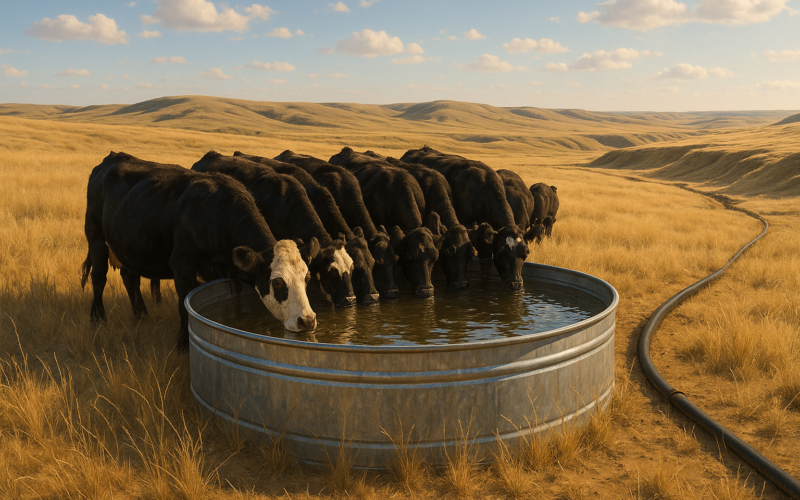
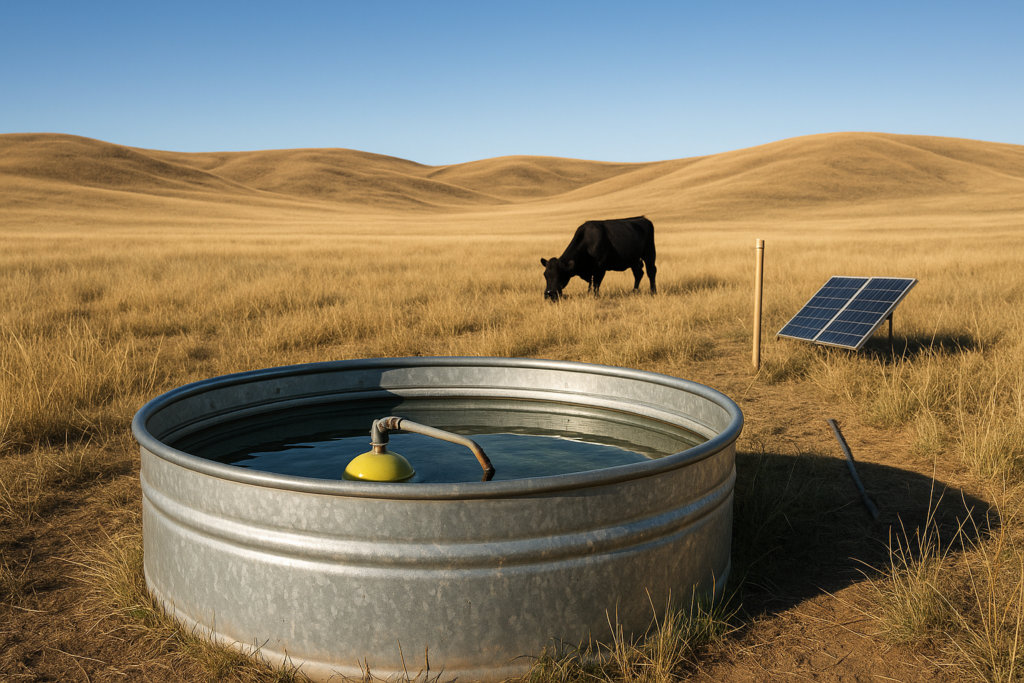
Walk to every tank on your summer country and actually look at it. Pull the lid off the float valve. Floats are the single most common failure point, and they fail two ways: they stick shut and the tank runs dry, or they stick open and the tank overflows all day until the well or spring can’t keep up and everything downhill goes empty. Grit in the seat, a cracked float ball that fills with water, a bent arm from a cow rubbing on it. All of it is a five-dollar part and ten minutes now, or a wreck later.
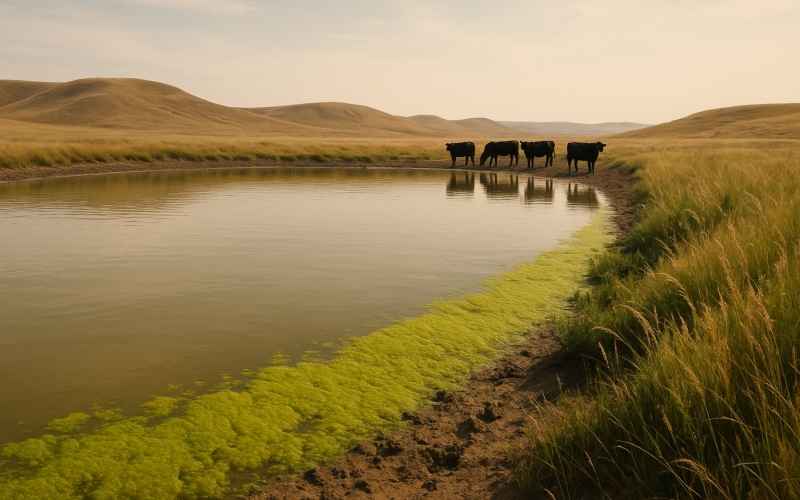
Check that the overflow actually drains where you want it and isn’t washing out the pad under the tank. A tank that settles or tips will crack a fitting eventually. Scrub out the algae and sediment while you’re there. A slimed-up tank in warm weather is where problems start, and a clean tank is easier to keep an eye on all summer.
On tire tanks and big concrete tanks, look at the seams and the drain plug. On poly and steel, look for the slow weep at the bottom weld or seam that tells you it’s on its way out. A tank that’s seeping in June is a tank that splits in July.
Pressure-test the pipeline and check the pump
If you’re pumping water any distance, run the line under pressure and walk it. Wet spots and greened-up strips over a buried line mean a leak, and a leak means your flow at the far tank is less than you think. Shallow-buried lines that froze last winter can hold together until warm weather and full pressure finds the crack. Check every riser, valve and hydrant for the drip that says the o-ring is going.
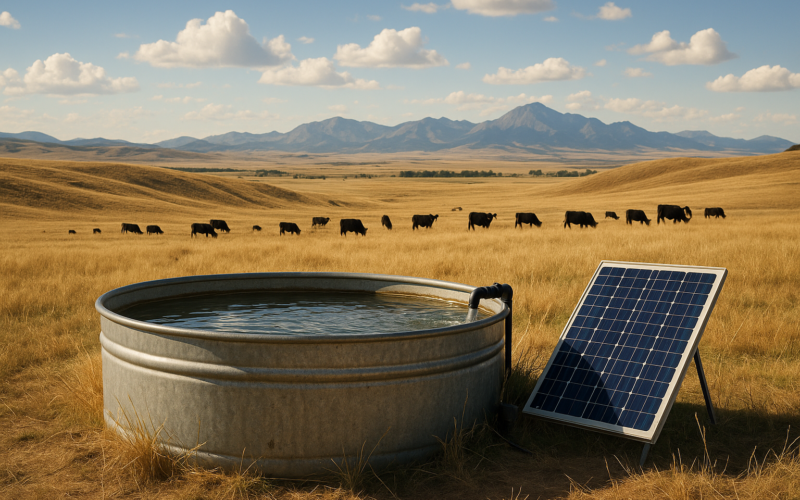
Solar pump systems have gotten common on Montana range, and they’re reliable right up until they aren’t. Wipe the panels down; dust and pollen cut output more than people expect. Check the wiring connections at the panel and the controller for corrosion, and make sure nothing’s chewed the wire. Look in the well or the tank the pump draws from and note the water level. A pump that kept up in a wet spring may not keep up once the ground dries and the static level drops. If you’ve got a storage tank buffering a solar setup, make sure it’s actually filling on a cloudy stretch, not just on the sunny days you happen to check it.
Windmills need the same once-over: grease, a look at the sucker rod and leathers, and the brake working so you can shut it down in a hard wind. If the leathers are worn, order them now. Nobody stocks them the week you need them.
Think about what happens when one source fails
The best-laid water plan still breaks. The question is what your cattle do in the hour after it breaks. If a pasture has one tank and that tank goes dry, you’ve got a hard deadline. If cattle can get to a reliable spring, a second tank, or a creek that still has water, you’ve got room to fix things.
Know how much water your herd actually needs in heat. A cow-calf pair drinks a lot more at 95 degrees than at 60, and lactating cows drink the most. Size your recovery expectations to a July afternoon, not a June morning. Where you’re stretching one source thin, plan the fix now, or at least know where the water hauler and a spare tank are before you need them.
Put a note in the truck of what you found and what you fixed. Come next June you won’t remember which float you replaced, and the paper trail tells you which parts of the system are wearing out and due for a real upgrade.