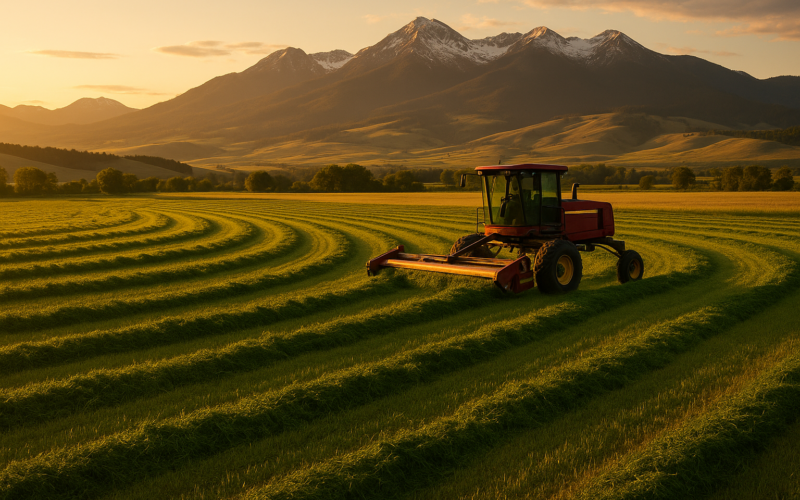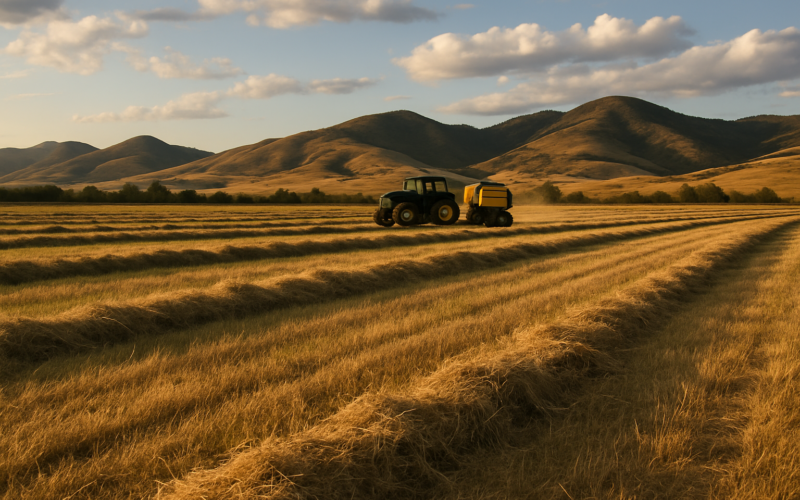
The first cutting is the one everybody’s in a hurry to get. The grass is finally there, the swather’s running, and a weather window opens for about three days before the next storm rolls off the front. So you rake a little early, you bale a little tight, and you tell yourself it’ll be fine. Most years it is. The year it isn’t, you walk out to the stackyard and there’s steam coming off the bales at daylight, or worse, you smell that sweet, tobacco-caramel odor that means the hay is cooking from the inside.
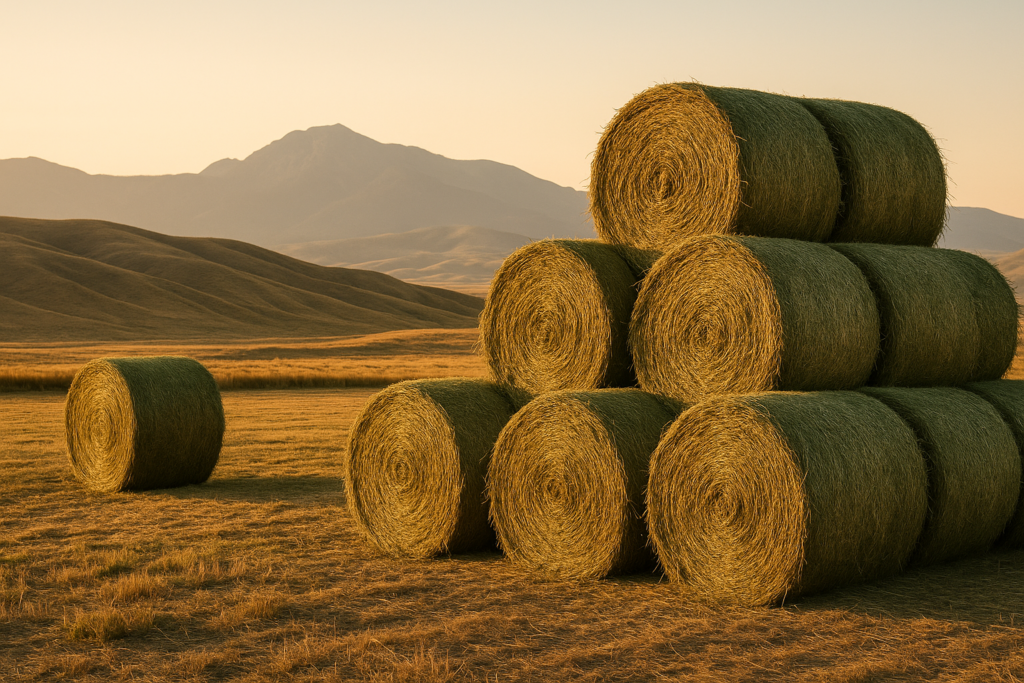
Hay doesn’t quit living the minute you cut it. Put up wet, the plant cells and the bacteria and mold on them keep respiring, and that respiration throws heat. In a loose windrow the heat escapes. Packed into a tight round bale or a big square and stacked three high, it doesn’t. The core temperature climbs, and if there’s enough moisture to feed it, it can climb past the point where the hay chars and, in a bad case, ignites on its own. Barn fires in July around here are almost never lightning. They’re June hay that went up too green.
Know your moisture before the baler does
The safe range depends on the package. Small square bales want to be down around 18 to 20 percent moisture. Big rounds and large squares pack tighter and hold heat better, so you want them drier — mid-teens is a fair target for the big packages, and for a really dense large square you’d like to be lower still. The bigger and tighter the bale, the less margin you have.
Don’t guess by feel alone, though a feel test is worth doing. Twist a handful of stems. If they’re brittle and snap, you’re close. If they twist into a rope and the stem still feels cool and pliable, there’s water in there yet. A cheap probe-style moisture tester stuck into a fresh bale will tell you more than your hand will, and it’ll keep you honest at two in the afternoon when the windrow feels dry on top and is still green underneath.
Dew matters as much as the calendar. On a lot of Montana ground the humidity drops off hard in late morning and the hay’s ready by mid-afternoon, then the dew comes back down fast in the evening and you’re baling tough again by nine. That afternoon window is when you want to be rolling. Baling in the cool of the evening to “beat the dew” often means baling the dew right into the bale.
Preservative and a smarter stack buy you room
If the forecast won’t give you a clean drying day, a buffered propionic-acid preservative applied through an applicator on the baler lets you put hay up a few points wetter without it heating. It’s not magic and it’s not free, and it works better on some hay than others, but for grass hay caught in a marginal window it can save a cutting. Follow the rate for the moisture you’re actually reading, not the rate you wish you needed.
How you stack matters too. Give fresh bales a chance to sweat before you cram them into a shed or throw a tarp over them. Leave space between rows for air to move for the first few weeks. A stack out in the open with airflow on all sides is a lot more forgiving than the same hay sealed under plastic where the moisture has nowhere to go. Keep any hay you’re the least bit unsure about out of the barn entirely until you know it’s stable.
Watch the stack for the first six weeks
Heating usually shows up in the first two to six weeks. Get in the habit of walking the stack. If bales feel warm to the hand or you smell that sweet caramel, drive a long probe thermometer or even a piece of pipe into the core and check it. Somewhere around 150 degrees the hay is damaging itself and losing protein. Past that it keeps climbing, and once you’re up near 175 to 200 you’re into pockets that can catch when air hits them.
Here’s the part people get wrong: don’t go pulling bales out of a hot stack in the middle of the day without a plan. Breaking open a smoldering core dumps oxygen on it and can flash it into open flame right in your face. If a stack is genuinely hot, call the fire department before you start moving anything, and have water standing by. Better to lose a stack you can watch burn in the open than a barn full of hay and a couple of tractors.
The whole thing comes down to patience you don’t feel like you have in June. One more afternoon of drying, a moisture reading before you drop the tailgate, and a few weeks of keeping an eye on the stack. It’s a lot cheaper than the alternative.