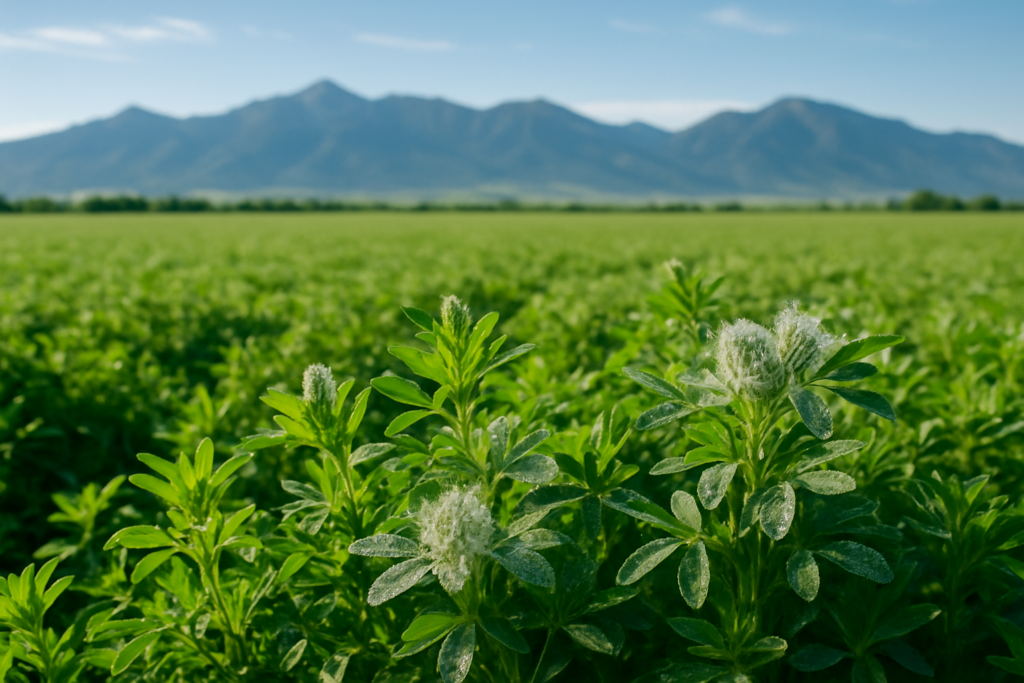
Drive past a good stand of alfalfa in the middle of June and it ought to look dark green and thick, especially the top few inches where most of the leaf and most of the protein sit. When the tips look pale, grayish, almost frosted, that’s not a trick of the light. Get out and pull a few stems. Odds are you’ll find little green larvae with a white stripe down the back and a shiny black head chewing the newest leaves down to lace.
That’s alfalfa weevil, and it does its worst work in the two or three weeks right before you’d normally cut. The adults overwinter in field trash and fence lines, lay eggs in the stems as things warm up, and the larvae hatch and start climbing to the tender growth at the top of the plant. They eat the part of the plant you actually sell.
What the damage costs you
The weevil doesn’t usually kill a stand outright. What it does is quieter and more expensive. It strips leaf off the top of the plant, and leaf is where your protein and your relative feed value live. A field that gets chewed hard before cutting can still make decent tonnage on the stem, but you’ve traded away the quality you were growing it for. If you’re putting up dairy-quality or horse hay, that’s the difference between top dollar and a phone call about a discount.
The second hit comes after you cut. If there are still larvae and adults in the field when the swather goes through, they turn around and feed on the crown regrowth. That’s how a good field ends up slow and patchy on second cutting while the neighbor’s is already knee-high. Weevil pressure that carries past first cutting steals from the whole rest of the season.
Get out of the truck and count
You can’t scout this one from the pickup, and by the time it’s obvious from the road you’ve already lost leaf. The check is simple. Walk out into the stand, away from the edges, and grab stems at random. Bend each one over into a bucket and give it a good shake so the larvae drop off, then count what’s in the bottom and count your stems. Do that in several spots across the field, because pressure is rarely even. South-facing ground and warmer fields green up first and get hit first.
Watch the tip feeding, too. A little pinholing is normal. When the top leaves start looking skeletonized and gray across a patch, the larvae are winning. Your county Extension office can give you the current stem-count and stage thresholds for your area and tie them to the price of hay, which is really what the decision comes down to.
Cutting is a control, if the timing lines up
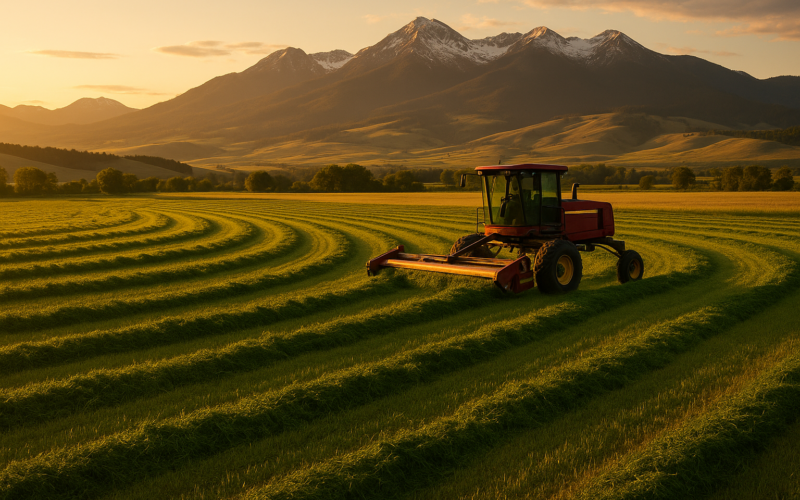
Here’s the part that fits June nicely. If the stand is close to cutting anyway and the weevils are heavy, the cheapest control you’ve got is the swather. Cutting removes the larvae’s food and exposes them to sun and heat, and a lot of them die in the windrow. If you were already planning to cut at early bloom for quality, you may not need to do anything else but move the date up a few days.
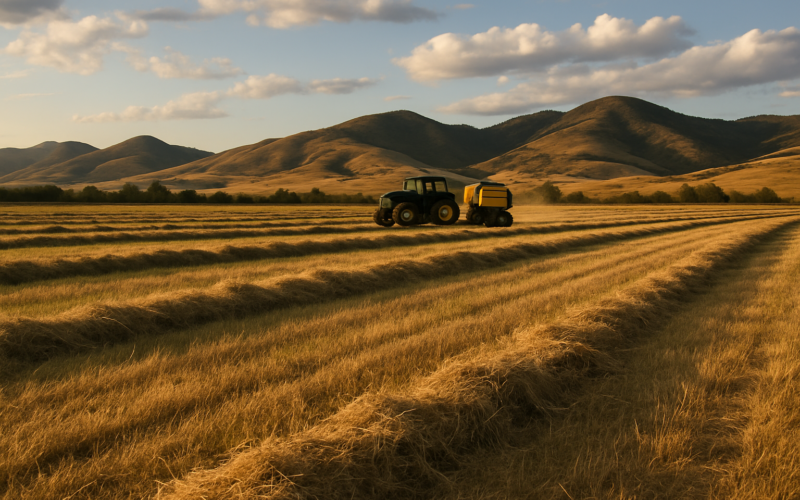
The catch is regrowth. Walk the stubble a few days after you bale. If you see new shoots getting chewed off or the field is slow to green back up, the survivors are eating your second cutting before it starts, and that’s when a spray earns its keep.
If you do decide to spray, a few things matter. Read the preharvest interval and honor it, or you’ll cut before you’re legally clear. Watch the wind and watch where the alfalfa is blooming, because that field is full of pollinators when it flowers and a lot of products are hard on bees. And don’t spray on reflex every year. Rotating chemistry and leaning on cutting when you can keeps resistance from building and keeps the natural enemies that help hold weevils down from one year to the next.
None of this is complicated. It’s just one more thing to look at during a stretch of June when you’ve already got branding cleanup, bulls to turn out, and a swather to grease. But the top three inches of your first cutting is the paycheck. Spend ten minutes with a bucket before you cut, and you’ll know whether it’s still there.