You spend all spring worrying about the cows and the grass, and the horses just get caught, saddled, and ridden. That works fine in April. By late June, when you’re horseback four days a week trailing pairs and riding fence in the heat, the string starts to show it. A horse doesn’t tell you he’s getting sore until he’s already lame, cinchy, or dragging behind the others up a hill. The wrecks that pull a good gelding out of the rotation almost always start small, weeks before you notice.
A ranch that runs short on sound horses in July is a ranch that gathers slow and gets shorthanded during the worst of the heat. Same problem as a dead water tank—you don’t feel it until it’s already costing you.
Feet come first, and shoeing dictates the schedule
Hooves grow faster in the green months, and hard, dry ground plus rocky trails wears them down uneven. A horse that was trimmed and shod in April is due again by mid-summer whether you’ve gotten around to it or not. Long toes, sprung shoes, and quarter cracks don’t fix themselves, and a horse that throws a shoe halfway up a coulee finishes the day on bruised soles.
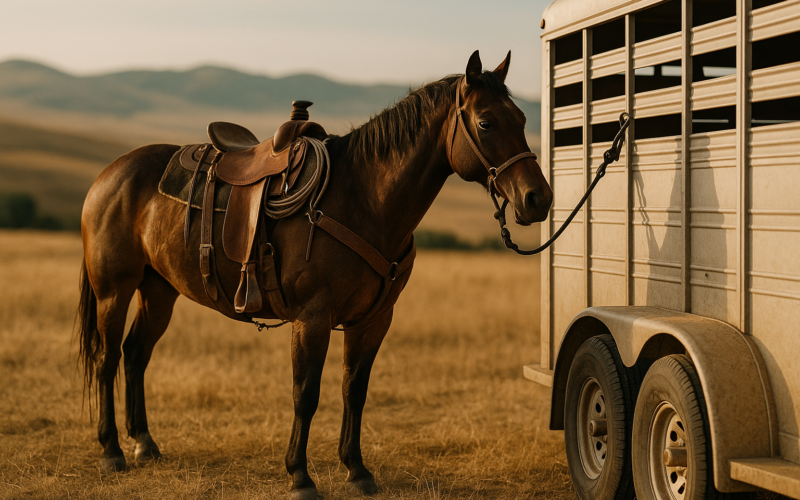
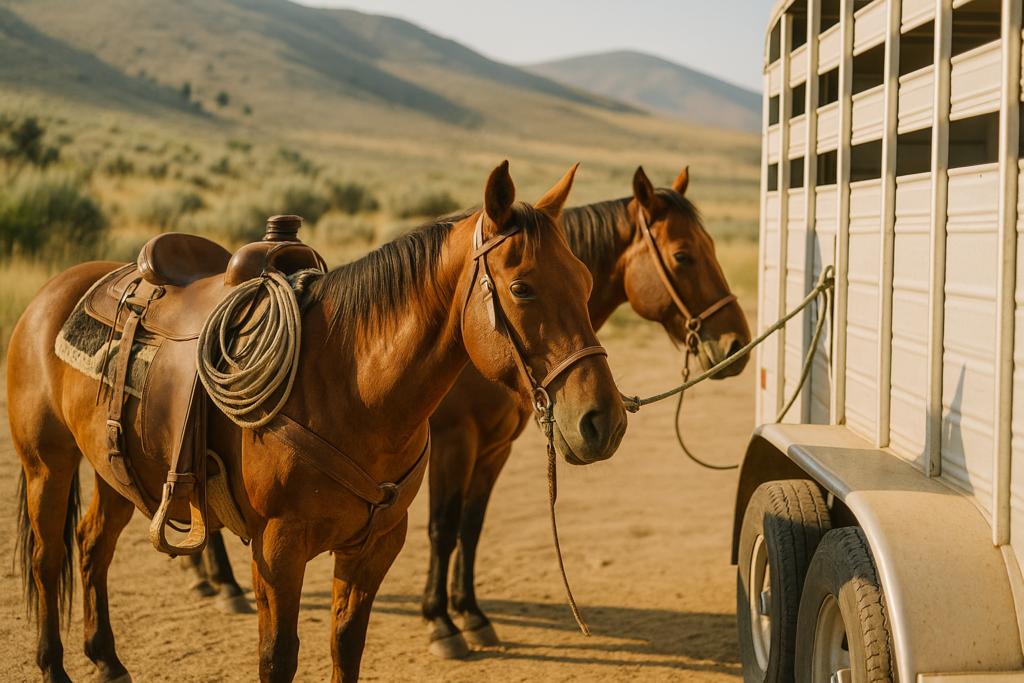
Pick up every foot before you load out for a big gather, not the morning you’re already saddled. Look for loose clinches, thin walls, and heat in the hoof that shouldn’t be there. If you’re riding a lot of rock and hardpan, a barefoot horse that was fine on soft spring ground may need shoes or boots now. Book the farrier before he’s booked solid—everybody wants shoeing done at the same time, and waiting three weeks means three weeks of a horse working on feet that are past due.
Water and salt keep the wheels on
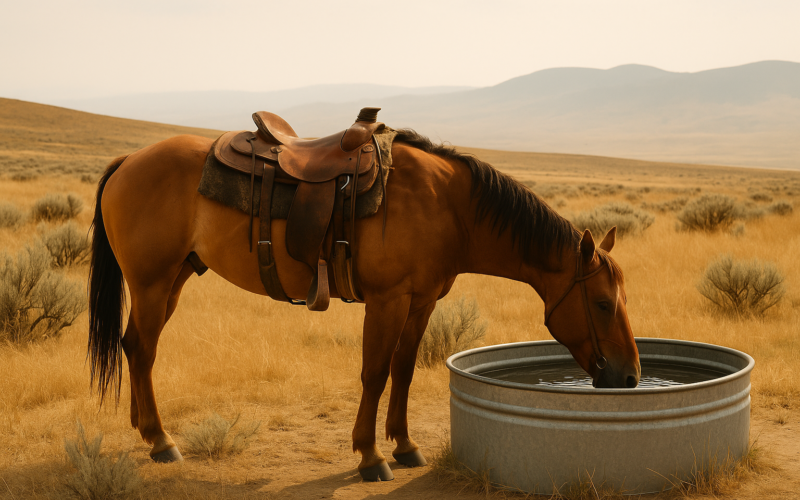
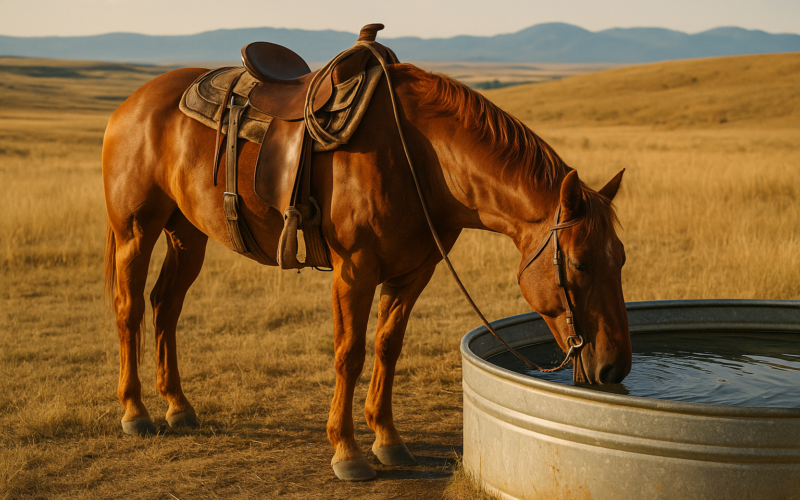
A working horse in summer heat can lose a surprising amount through sweat, and a dehydrated horse is a horse headed for impaction colic or tying-up. If you’re hauling to a trailhead and riding hard, that animal needs to drink well before you unload and again when you’re done. Don’t count on him tanking up at a creek mid-ride if he’s already behind.
Loose salt or a salt block where the horses stand between rides matters more than people give it credit for. Horses that sweat all day and only get plain hay and water lose electrolytes they can’t easily replace. On the hardest weeks, an electrolyte supplement in feed or water helps, but plain, clean water and free-choice salt cover most of it. A horse that won’t drink hauled water sometimes will if you bring a little from home or flavor it—worth knowing before you’re stuck with a gut-sore horse forty minutes from the barn.
Tying-up—that stiff, cramped, won’t-move episode that scares the daylights out of you—hits horses that are worked hard and irregular, especially ones kept fat on grain and then asked to go all day after standing in a pen. If a horse locks up, get off, don’t force him to move, keep him warm, and get him water. Prevention is steady conditioning and not overfeeding grain to a horse that isn’t earning it.
Backs, cinches, and the small stuff that ends a day
Saddle sores and cinch galls show up when you least want to deal with them. A dirty pad, a saddle that fits one horse and not the one you grabbed today, and a cinch caked with dried sweat all rub a horse raw. Check backs when you unsaddle—run a hand over the withers and loin and watch for flinching, swelling, or dry spots in the sweat pattern where the pad isn’t making contact. Those dry patches are pressure points, and pressure points become sores.
Keep pads clean and dry between rides. Rotate horses so no one animal carries the whole load through a hard stretch. A green two-year-old you’re bringing along can’t cover the same ground as your best older horse, and asking him to will sour him or hurt him.
Flies work on horses the same as cattle—face flies at the eyes, stable flies biting the legs until a horse stomps himself sore. Fly masks in the pen, a decent spray or wipe before you ride, and clean living conditions cut the misery. A horse fighting flies all day is a horse burning energy he needs for the work.
None of this takes much. An hour going over feet, backs, and shoeing before the summer really lands on you buys a string that’s still sound and willing when you’re gathering to wean in the fall. Neglect it, and you’ll spend August riding your worst horses because the good ones are laid up.