Ride out to check pairs on a still June morning and you’ll see them: a black haze of flies riding the withers and backline of every cow, shifting to the belly when the sun climbs. Those are horn flies, not the face flies that set up pinkeye. They’re smaller, they stay on the animal almost around the clock, and they make their living sucking blood — a couple dozen bites per fly, per day, hundreds of flies per cow.
The problem is that you get used to the sight. By the Fourth of July a heavy load looks normal, and normal is exactly where the damage happens. Cows bunch, quit grazing to fight flies, and burn energy standing in the wind or bogging into the wettest corner of the pasture to get relief. Calves nurse a cow that’s putting groceries into fighting bugs instead of into milk. You won’t see the cost as a dead animal. You’ll see it as lighter weaning weights and a few extra open cows come fall, and you’ll never tie it back to the flies.
Know what you’re actually looking at
Horn flies breed in fresh manure — fresh being the key word. A cow pat on summer grass can hatch out a batch in a week or so of warm weather, which is why the numbers explode right about the time your cattle hit good green pasture and start piling up. That life cycle is also the reason no single treatment holds all season. You knock them down, the pasture reloads from every fresh pat, and you’re back where you started inside a couple of weeks.
The rough rule most people use is that once you’re seeing a couple hundred flies on an animal — enough that they carpet the topline and you can’t count them — you’re losing performance. You don’t need to count. If the herd is bunched and tail-switching hard in the middle of a decent grazing morning, they’re over the line.
Pick tools that fit how your cattle move
The mistake is reaching for one product and running it all summer. Horn flies build resistance fast, especially to the pyrethroid ear tags a lot of us have leaned on for years. If you tag, tag late enough that the tags are still working in August, not burned out by the time fly pressure peaks — and rotate the chemical family you use year to year rather than running the same active ingredient a decade straight.
What actually works depends on your setup:
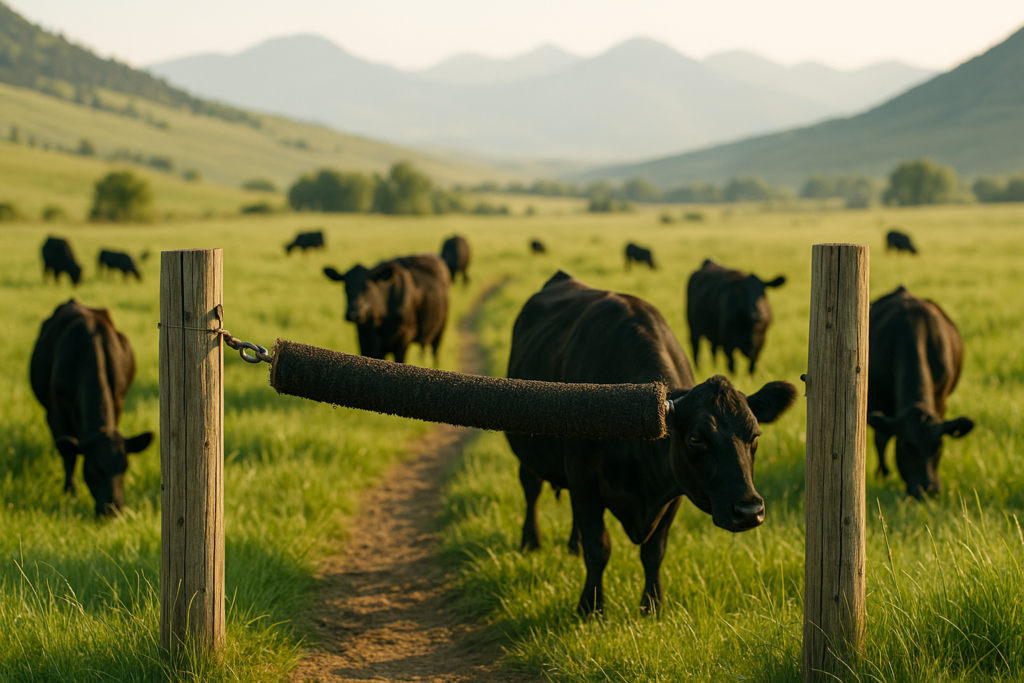
- Back rubbers and dust bags pay off if you can hang them where cattle have to pass under them to get to water or mineral or through a gate. Forced use beats free-choice every time. A rubber hung out in the open that cattle can walk around does about nothing.
- Insecticide ear tags are convenient at a June working, but only if you rotate classes and pull or plan to pull them at fall gathering so you’re not leaving weak tags out to breed resistance.
- Feed-through insect growth regulators in loose mineral kill the larvae in the manure before they ever hatch. They only work if cattle actually eat the mineral consistently, and they only work on your own cattle’s manure — your neighbor’s flies drift right across the fence. Start it a month before fly season really and keep it in front of them.
- Pour-ons and sprays give a fast knockdown when a group gets loaded, but they’re short-lived and mean gathering cattle you might rather leave alone.
Most outfits that keep flies under control run two things at once — say, a feed-through mineral plus a rubber on the water lane — rather than betting the summer on a single tag.
Start before it looks bad
The whole game is timing. Once the population is booming, you’re playing catch-up in the worst of the heat. If you get a control method going as the flies first show up in late spring and early June, you hold the numbers down through the stretch that matters — the middle of the grazing season when calves are growing and cows are trying to breed back.
Watch your bulls too. A bull standing in the shade fighting flies instead of covering cows is a quiet way to end up with a stretched-out calving season next spring, and he’s often carrying one of the heaviest fly loads in the herd because nobody’s grooming his back.
None of this is complicated or expensive compared to what a load of flies pulls off your calves between turnout and weaning. It just has to be started early and kept rotating, because the pasture is manufacturing new flies every warm day whether you’re paying attention or not.