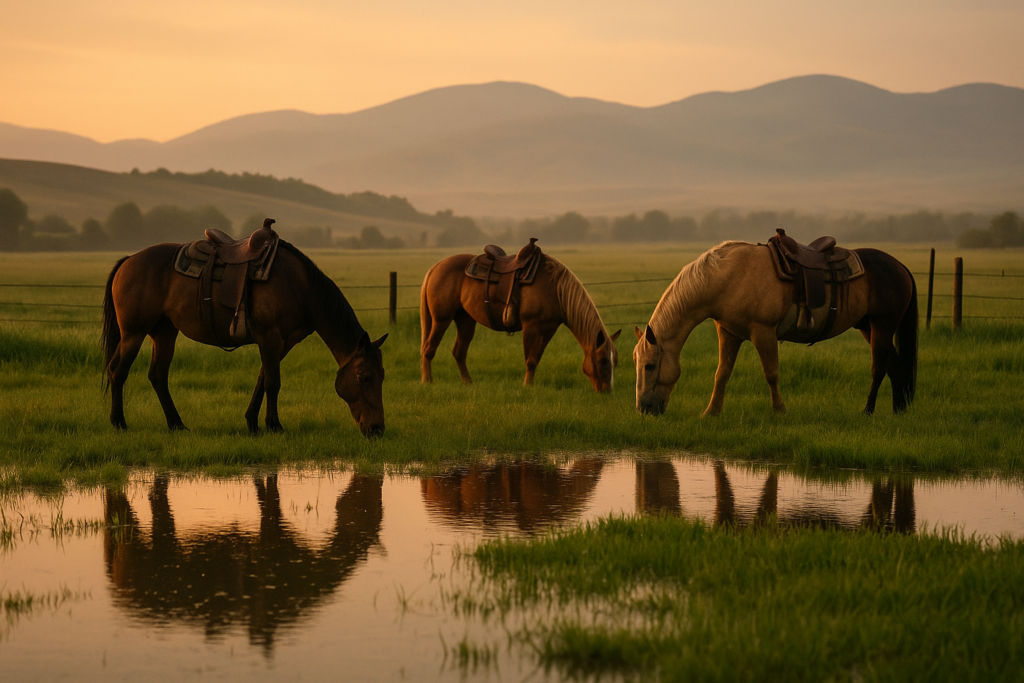
The mosquitoes are just getting started. Every ditch you’ve run water down, every low spot in the meadow that held snowmelt, every stock tank that’s been sitting warm and half-empty is breeding them right now. By July, when the irrigated bottoms are humming at dusk, the horses that pack you through the summer are standing out in the middle of it.
Most of those mosquitoes are just a nuisance. A few of them carry West Nile virus or one of the equine encephalitis strains, and those diseases don’t play. A horse that gets a bad case doesn’t just get sick and bounce back. A lot of them go down and don’t get up, and the ones that do pull through can come out of it with a head tilt, a stumble, or a temper that never fully leaves.
What you’re actually protecting against
Two things worth naming. West Nile is the one people hear about most, and it turns up somewhere in the state most summers. The encephalitis viruses — the Western strain especially — run in the same crowd, spread the same way, by mosquitoes moving the virus off birds and onto horses.
The signs sneak up. It usually starts as a horse that’s just off — a little dull, maybe a fever you’d never catch without a thermometer. Then it goes neurologic. Muscle twitching around the muzzle and shoulders, a wobbly hind end, stumbling, weakness that turns into a horse that can’t hold itself up. By the time a horse is down and can’t rise, you’re often past the point where much can be done. There’s no switch you flip to reverse it once the brain is inflamed. You treat the symptoms, keep the horse comfortable and hydrated, and hope.
That’s the whole reason vaccinating matters. This isn’t a disease you catch early and doctor through. It’s one you keep the horse from getting in the first place.
The timing is the point
These vaccines are cheap and they work, but they only work if the horse has immunity built up before the mosquitoes find it. A vaccine you give a horse the same week it gets bitten does nothing. The body needs a couple of weeks to respond, and a horse that’s never been vaccinated — a young colt, or one you just bought — often needs an initial series of two shots several weeks apart before it’s really covered.
Ideally the whole string got boosted this spring. If some didn’t, mid-June isn’t too late to fix it — mosquito pressure in Montana keeps climbing through summer, so protection you build now still buys you the back half of the season. Just don’t count a horse as covered the day you give the shot.
A few things worth keeping straight:
- Boost annually. These are yearly shots for adult horses, not a one-and-done deal. Last year’s immunity has faded.
- Naive horses need the full starter series. A single shot in a horse that’s never had it isn’t enough protection.
- Broodmares and young stock deserve extra attention — talk to your vet about timing on foals and pregnant mares.
- Don’t leave the colts and the retired horses out of the plan just because they aren’t earning their feed this summer.
Take the mosquitoes’ side of it too
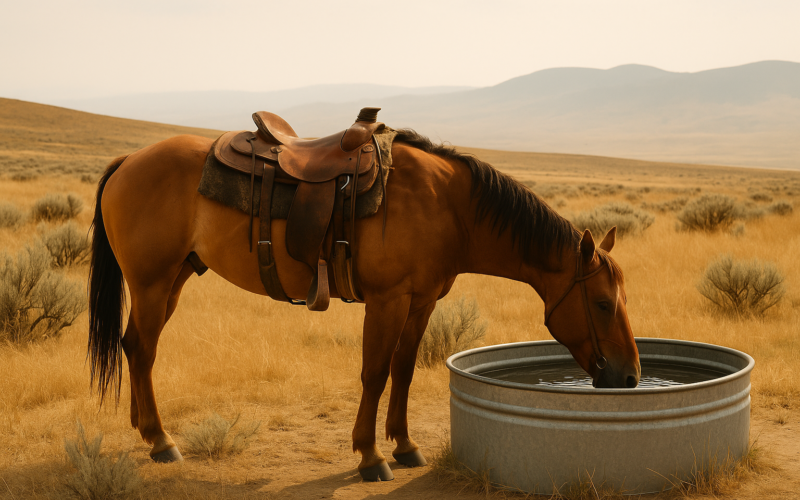
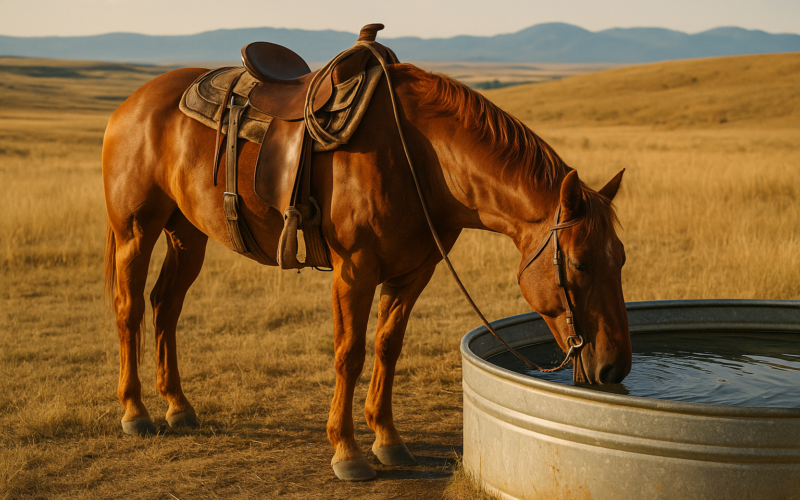
The shot is the main thing, but you can cut the odds down further by giving the bugs less to work with. Mosquitoes breed in standing water, and a horse place usually has plenty of it if you go looking. Dump and refill water troughs on a schedule instead of letting them go stale. Kick over the old tires, buckets, and busted stock tanks collecting rainwater behind the barn. Keep an eye on the leaky hydrant that’s been making a mud hole. None of that replaces the vaccine, but it takes some pressure off, especially close to the corrals where the horses spend their nights.
Turnout and stalling patterns help a little too. Mosquitoes are worst at dawn and dusk, so a horse in a barn or a dry lot away from the wet ground during those hours takes fewer bites than one standing in the bottoms all night.
Figure the cost of the shots against one good using horse laid up — or lost — in the middle of haying and gathering. It’s not a close call. Get the string caught up now, write down who got what, and you can quit worrying about it for the summer.