The creek is as high in June as it’s going to get. Snowmelt off the peaks fills the ditches for a few weeks, and then the flow starts dropping just as the days get hot and the grass wants the most water it will need all year. That’s the squeeze every Montana hay grower knows: the water shows up early and leaves early, and the ground stays thirsty into August. What you spread across the meadow now is what you’ll be cutting later.
If you flood irrigate off a live stream or a shared ditch, the job in June isn’t complicated, but it rewards paying attention. Water finds the low ground and leaves the high ground bone dry unless you move it there yourself. A meadow that looks flat from the pickup is full of little swales and benches, and the difference between an even stand and a patchy one is usually just how well the water got pushed to the corners.
Get water on early, then keep it moving
The temptation on a big runoff year is to sit back because the ditches are full. Don’t. Soil that’s charged deep in June holds moisture into the dry part of summer; soil that only gets wet on top dries out the first hot week and takes the crop with it. Fill the profile while the water is cheap and plentiful.
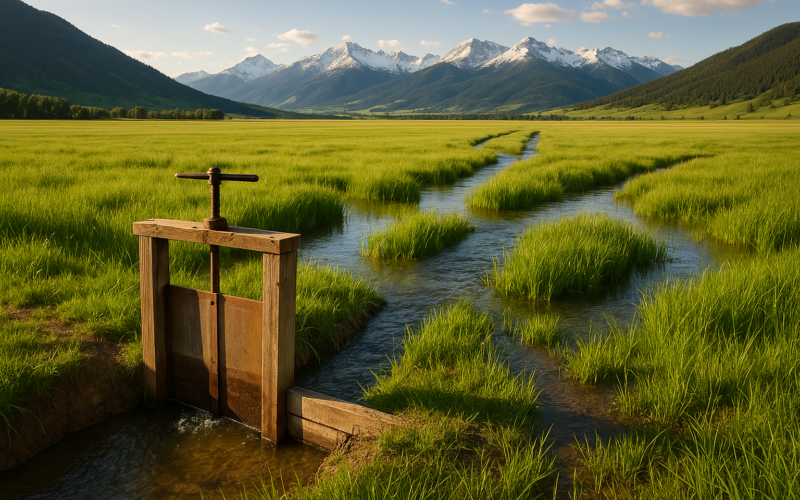
Set your dams and spread the sheet as wide as the ground will take it. On native meadow the goal is to sub the whole surface, not to run a river down the low draw and drown one strip while the shoulders stay dry. Move sets on a schedule instead of waiting until you happen to walk by—water standing too long in one spot does as much harm as none at all, especially on alfalfa. Alfalfa roots don’t like their feet wet. Soak them for days and you start losing the stand to crown rot, and a thinned alfalfa field doesn’t come back the way grass does.
Watch your tailwater. If it’s running off the bottom end and down the county ditch, you’re paying to irrigate the borrow pit. Slow it down, back it up, and let the far end fill before you turn more in at the head.
Ditches and headgates earn their keep in June
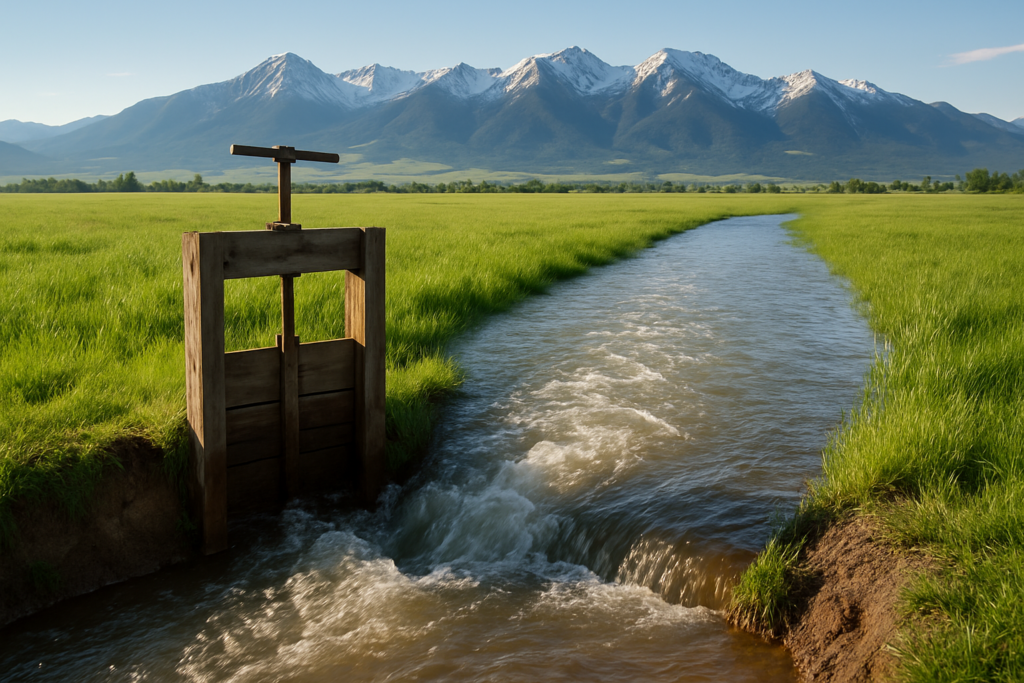
The first big head of water every spring finds every weak spot you meant to fix last fall. A blown-out dam, a gopher hole that’s now a washout, a headgate that won’t seat—every one of those is water on the ground where you don’t want it and short where you do. Walk the main ditch before you’re depending on it. Pull the trash out of the checks, tighten the boards, and make sure the headgate actually shuts. A ditch that leaks half its flow before it reaches the field is a slow bleed you’ll feel in the stack yard.
Wheel lines and pivots have their own June chores. Grease the drive units, check the tires and the alignment before the line is a quarter mile out in wet ground, and watch your nozzle pressure. A plugged sprinkler or a low-pressure section leaves a dry stripe that shows up plain as day at cutting. Startup is also when you find the gearbox that quit over the winter, and you’d rather find it in the yard than with the line stalled crossways in the field.
Dry years mean knowing where you stand in line
When the snowpack came in light and the creek is already dropping, June is when senior and junior water rights start to matter. If you’re low on the priority list, plan on getting your water early and hard while it’s there, because a call on the stream can shut you off before your last set. That’s another argument for charging the ground deep now rather than counting on a steady trickle all summer—the trickle may not come.
Think about splitting your effort, too. A meadow you can irrigate well and cut twice will out-produce two fields you water halfway. In a short year it’s usually smarter to grow a full crop on the ground you can actually cover than to chase water across every acre and come up light everywhere.
The runoff won’t wait, and neither will the grass. Ride the ditches while there’s water in them, keep it spread and moving, and put the June flow deep in the ground where the crop can find it in August. The hay you stack in September is decided a lot more in June than most people give it credit for.