You can lose a cow to a lot of things out on summer grass, but few kill as fast or leave you as puzzled as a bad algae bloom. A rancher goes to check a bunch grazing a section with one dependable pond, and finds two or three head dead near the water with no sign of a struggle. No predator, no lightning, no bloat. Just dead cattle bedded down or collapsed at the edge, and a pond that looks a little off.
What killed them is often blue-green algae, which isn’t really algae at all. It’s cyanobacteria, and under the right conditions it produces toxins strong enough to drop an animal within minutes to a few hours of drinking. Montana ponds start setting up for it right about now, and the risk climbs through July and August.
Why hot, still weather is the trigger
Cyanobacteria are always in the water at low levels. They turn dangerous when conditions let them multiply into a heavy bloom. Warm water, plenty of sunlight, and a load of nutrients are what they want. A stock pond that’s been catching runoff full of manure and fertilizer, sitting under a string of 90-degree days with no wind to stir it, is a setup.
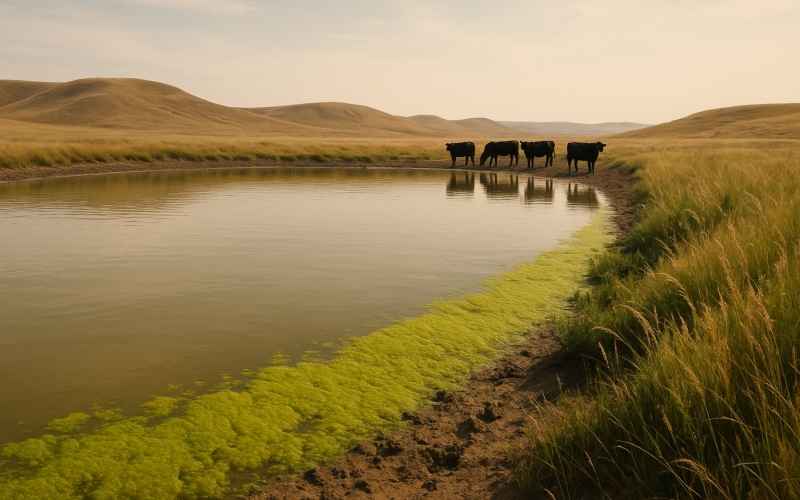
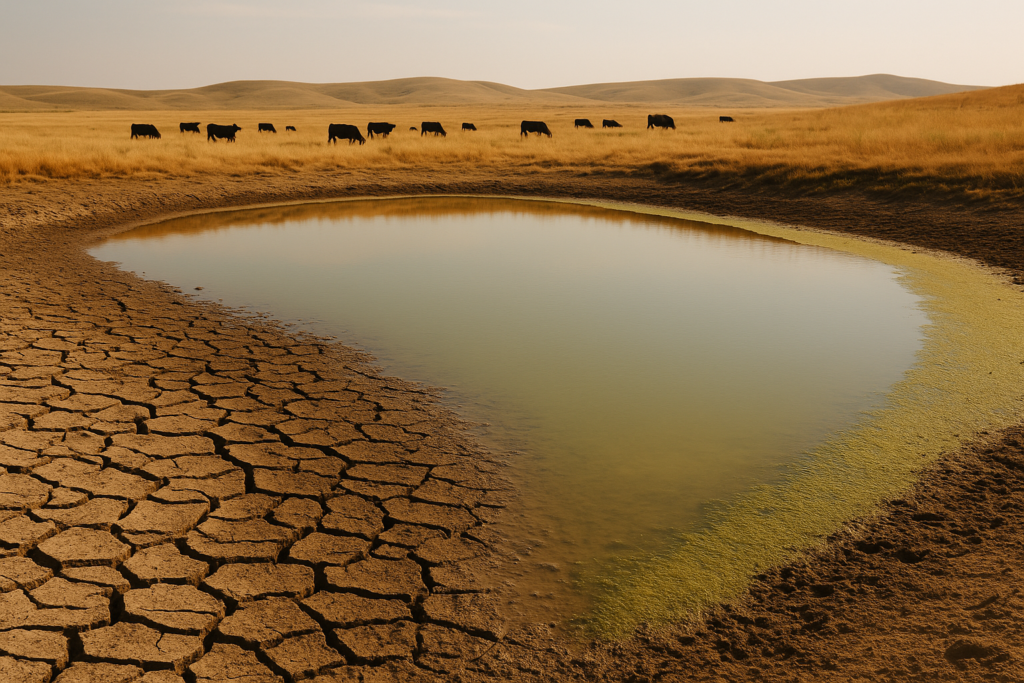
The other piece is water level. As ponds drop through the dry stretch of summer, the nutrients concentrate and the water warms faster. A shallow, muddy, cattle-tromped pond in late July is worse than a deep, spring-fed one in June. Prevailing wind matters too. The bloom gets pushed and piled on the downwind bank, which is exactly where cattle wade in to drink. So the water can look fine across most of the pond and still hold a lethal dose right where the animals put their mouths.
A real bloom usually shows up as a scum on the surface, often bright green or blue-green, sometimes described as looking like spilled paint or pea soup. It can form a thick mat along the edge. Not every green pond is toxic, and not every toxic bloom is dramatic, which is part of what makes this hard. Duckweed and harmless filamentous algae get blamed for cyanobacteria all the time. But if the scum looks like paint stirred into the water rather than distinct plant material you can lift out on a stick, treat it as a threat.
What it does to cattle
Different cyanobacteria make different toxins. Some hit the nervous system and kill fast; you may find animals down within a hundred yards of the pond, or dead right at the water. Others hit the liver and work slower, over a day or two, and those cattle may show weakness, diarrhea, going off feed, or photosensitivity where light-skinned areas blister and peel.
Because the fast-acting kind kills so quickly, there’s rarely much to do for an animal once she’s affected. The whole game is keeping cattle off the water in the first place. If you find dead stock at a pond and suspect a bloom, get the rest of the herd moved to clean water and keep them off until you know what you’re dealing with.
Managing the risk through summer
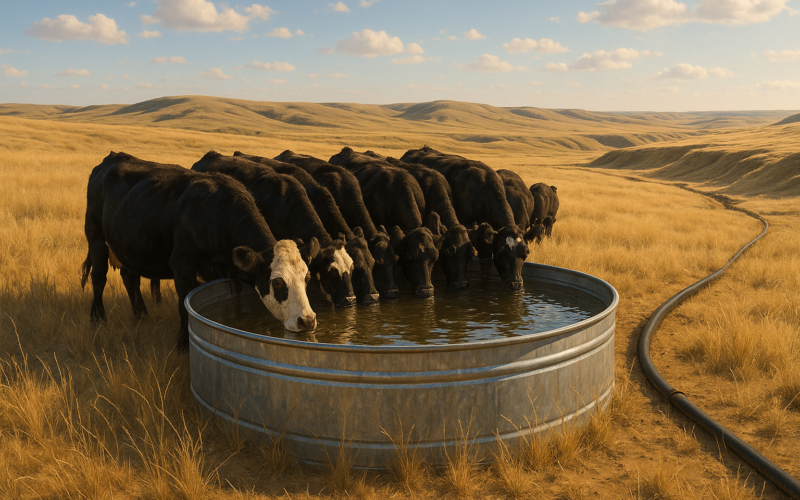
The single best move is to keep the herd from drinking suspect water. If you’ve got a pond that looks scummed up and the wind’s piling it on the bank, fence it off or move the cattle. A tank filled from a well or a clean pipeline gives you an out. Some producers who run problem ponds set up to pump water into a trough rather than let stock drink at the edge, which pulls animals away from the worst of the bloom on the shoreline.
A few habits cut the odds over the long haul:
- Keep an eye on your shallow, warm, high-traffic ponds first. Those bloom before the deep, cool ones.
- Check downwind banks, not the middle. That’s where the scum and the cattle both end up.
- Think about fencing cattle out of ponds you can and piping water to tanks, which also keeps manure and mud out of the source.
- Cut the nutrient load where you can. Ponds that catch heavy runoff feed the blooms.
When in doubt, water quality labs can test a sample, and your veterinarian can help sort a suspected poisoning from other summer killers. If you’re going to send a sample, wear gloves and don’t handle the scum with bare hands, because the same toxins aren’t good for you, your dog, or your horse either.
The frustrating part is how quickly it comes and goes. A bloom can build over a few hot days, kill, and then break up when the weather turns and the wind comes back. That’s cold comfort if you’ve already found cattle dead at the edge. Walk your summer water in the heat the same way you’d walk a fence, and pay closest attention to the ponds that are shallow, green, and still.