You spend all spring worried about the cows and the calves, and the horse under you is an afterthought until the morning he won’t take the bit or comes up short-strided on the way to the corral. By then you’re already behind. Summer is the hardest stretch of the year on a working horse in Montana — long circles in the heat, rough country, day after day of it once branding wraps up and you’re moving pairs to the high pasture and riding allotment. The horse that carried you fine in May can quit on you by the middle of August if you let the small things slide.
Most of what breaks a good using horse down over a summer isn’t dramatic. It’s a sore back nobody caught, a cinch gall that keeps getting saddled over, feet that went too long between trims, or a gelding that isn’t drinking enough on a hot day. None of it looks like much on any single morning. It adds up.
Feet and legs carry everything
A horse is only as good as his feet, and Montana country is hard on them. Dry summer ground gets like concrete, and rock, shale, and prickly pear will chew up an unshod hoof in a hurry if you’re riding the breaks or the timber. If you shoe, stay on a schedule instead of running shoes until they’re loose and worn thin — a lost shoe two ridges out from the trailer is a long walk and a bruised sole. If you keep horses barefoot, keep them trimmed and watch for chips and cracks before they run up into the hoof.
Pay attention to how a horse travels the first quarter mile of the morning. A gelding that warms out of a little stiffness is one thing. One that stays short-strided, or that’s ouchy over gravel, is telling you something. Sore feet don’t fix themselves under a saddle. Rotate your good horses if you can so no one animal takes every long day, and give the older ones the shorter circles.
Backs, cinches, and saddle fit
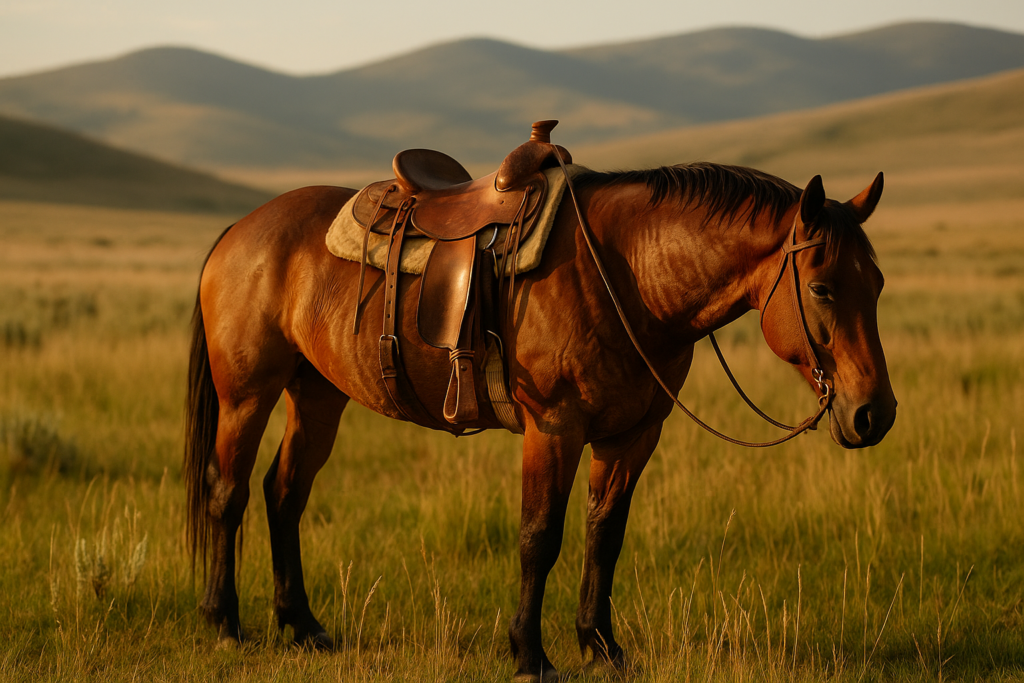
A saddle that fit fine on a fat, soft horse in April doesn’t fit the same horse in July after he’s leaned up and muscled out from steady work. Run your hand down his back when you pull the saddle and feel for heat, tender spots, or dry patches in the sweat pattern — a dry spot where the rest of the pad is wet usually means the tree is bridging and pinching there. White hairs coming in over the withers or loin are old damage telling on you.
Cinch galls behind the front leg come from a dirty cinch, a horse cinched too tight too fast, or long days in the heat. Keep the cinch and pads clean, brush the loose hair and dried sweat off before you saddle, and snug up gradually instead of jerking it tight at the trailer. Once a gall opens up, every day you saddle over it makes it worse, and you’ve bought yourself a horse you can’t use until it heals.
Water, salt, and staying in shape
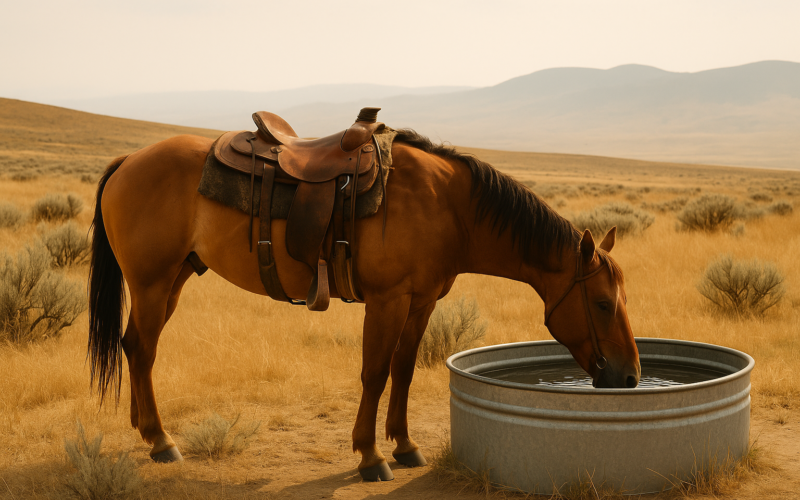
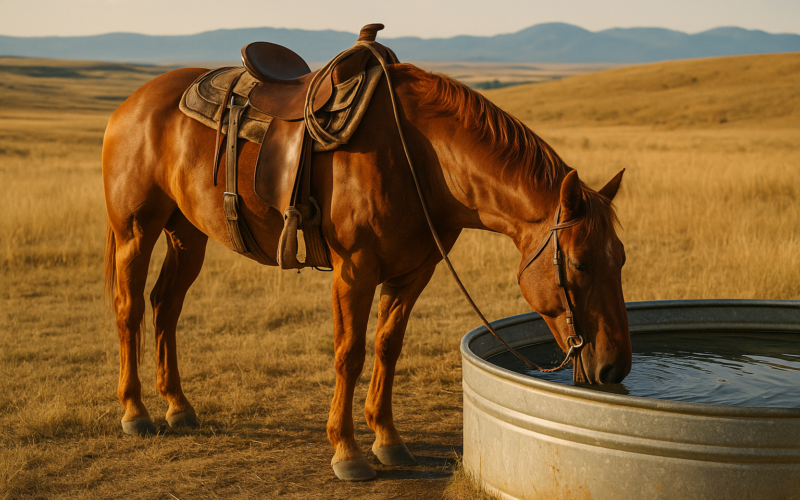
A horse working hard in summer heat can move a lot of water and sweat out a lot of salt, and a gelding that quits drinking is a gelding headed for trouble — poor gut sound, a dull attitude, or worse if it goes far enough. Make sure horses have clean water they’ll actually drink, both in the pen and where you’re riding. Loose salt or a salt block, free choice, covers most horses doing ordinary ranch work.
The other thing that lays horses up in June is asking a soft one to do a hard man’s work. The horse that stood in the corral all spring and then gets legged up on a thirty-mile branding gather can tie up — cramp hard through the hindquarters and hips, sometimes bad enough he can barely move. Bring them along instead. Short rides that build up, feed matched to the work, and turnout on grass beat pulling a fat horse out of the pen and expecting him to go all day.
None of this is complicated. It’s the difference between a remuda that’s still sound and willing when you’re gathering in the fall and a string of sore-backed, tender-footed horses you’re nursing along by August. The cows get all the attention. Take five minutes on the horse — you’ll ride him a lot harder before frost.