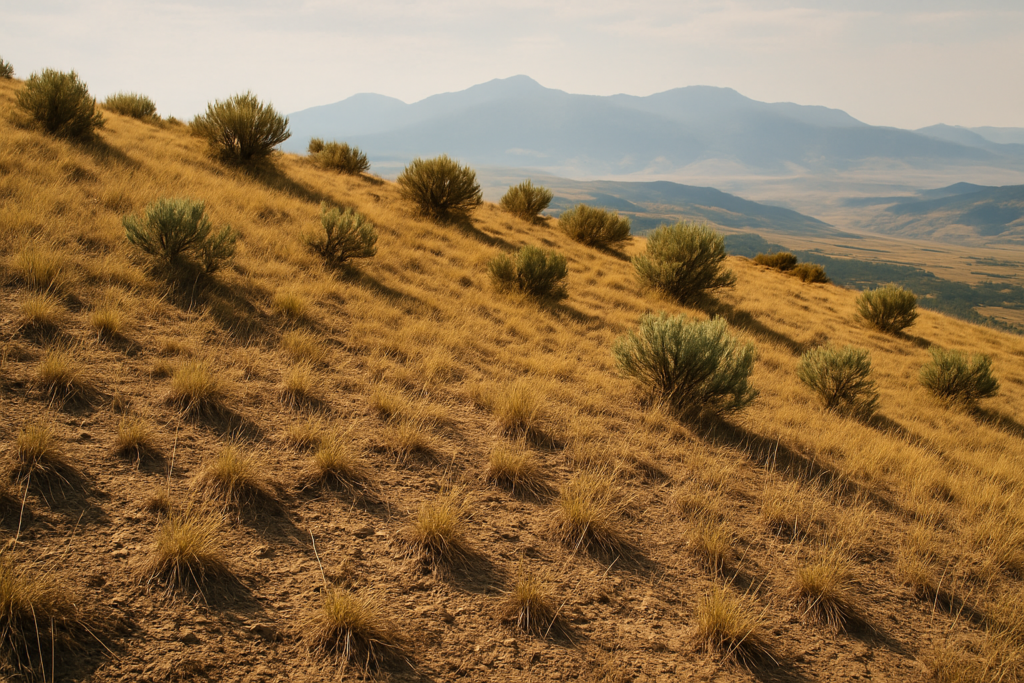
A grasshopper problem never announces itself. You ride the same pasture you always do in early June, the grass looks a little short in spots, and you tell yourself it’s the dry spring. Then you come back the first week of July and the south-facing slopes are chewed to the crown, the fenceline weeds are stripped, and hoppers scatter ahead of your horse in a wave. By then the damage is done and the insects are big enough that killing them costs more and does less good.
Grasshoppers are a fact of dryland range in Montana, and most years they stay in the background. But warm, dry falls followed by warm, dry springs stack the deck. The eggs laid in the soil last summer overwinter, and a run of hot days in May and June hatches them in a hurry. Drought makes it worse two ways: it thins the grass so every hopper hits your feed harder, and it dries the fungal diseases that would otherwise knock populations back in a wet year.
Scout in June, before they get wings
The window that matters is right now, when the young nymphs are hatching and can’t fly yet. A nymph eats a fraction of what an adult eats, and it’s stuck where it hatched, so you can treat a hatch bed instead of chasing grasshoppers across a section. Once they wing out in July, they move, they reinfest sprayed ground, and they’ve already put on most of the forage damage they’re going to do.
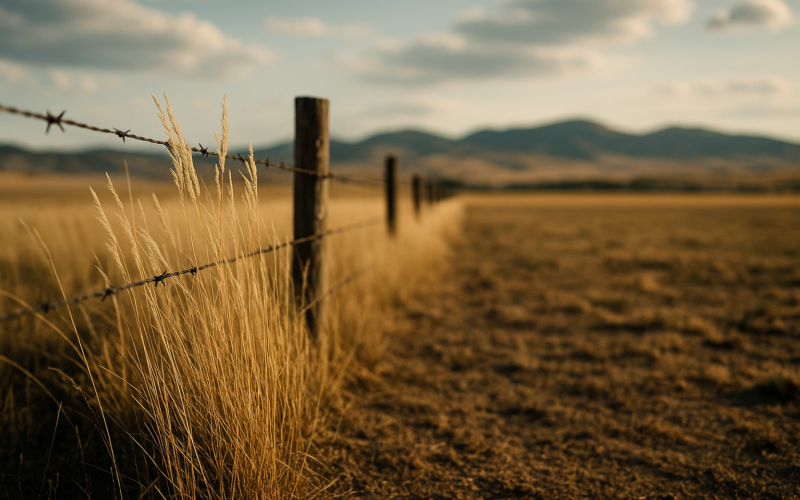
Counting them is cruder than it sounds and works fine. Pick a spot, imagine a square foot of ground, walk toward it, and count how many hoppers jump out of that square as you approach. Do it 15 or 20 times across the pasture and average it. Hit the places they like first — the dry knobs, the field edges, the road ditches, the overgrazed corners near water. Those warm, bare, south-facing spots are where the eggs hatch earliest and the densities run highest. If a pasture is going to blow up, it usually starts there and spreads out.
Rough rule of thumb people have used for years: somewhere around eight or more per square yard on rangeland starts to be an economic problem, and the number climbs fast from there. But the count only tells half the story. Eight hoppers in a fat pasture after a wet spring is background noise. Eight hoppers in a drought year, in a pasture you’re already short on, is eating grass you were counting on to get through August.
Decide whether spraying pays
Treating grasshoppers on range is a math problem, not a reflex. The cost of an aerial application only pencils out if the forage you save is worth more than the spray, and that depends on how many hoppers there are, how big your pasture is, and how tight your feed situation looks heading into summer. A thin count on good grass, leave it alone. A heavy count on a pasture you can’t afford to lose, and you’re better off acting while they’re small.
The approach that has cut costs on big country is treating strips rather than the whole pasture — leaving unsprayed swaths between sprayed ones. The hoppers move into the treated ground and pick up the insecticide, and you cover the same acres with less product. It works because the young nymphs are already on the move looking for food, and it leaves some habitat for the parasites and predators that help hold the next generation down. Talk to your county extension agent or a custom applicator about what’s labeled and what’s working locally before you commit to a program.
One thing worth knowing: grasshopper outbreaks are regional. If your neighbors are hatching heavy and you’re not, the winged adults will find you in July no matter what you do on your own ground. That’s an argument for watching what’s going on across the fence and coordinating if a real outbreak is building. A single ranch spraying in the middle of a bad year is bailing water out of one end of the boat.
What you can do besides spray
Grazing management is the long game. A hard-grazed, drought-thinned pasture is a grasshopper nursery — bare, warm soil is exactly what they want for laying eggs, and the sparse grass means every hopper does more visible damage. Pastures kept in better condition don’t get outbreaks as often, and they hide the damage better when they do. That won’t save you in a year the whole county erupts, but it tilts the odds in a normal year.
The other move is simply paying attention now. Ride the dry ridges in June the same way you’d check a water tank. If the ground’s alive with little hoppers, you’ve still got time to make a decision. Wait until they’ve got wings and you’re just counting your losses.