By late June the runoff is gone, the pond is dropping, and the water that looked fine in May starts to warm up and go still. That’s when a stock pond can turn on you. A blue-green algae bloom doesn’t announce itself the way a busted fence or a bloated cow does. You ride the pasture, everything looks quiet, and then one morning there are two or three cows dead within a hundred yards of the water. No sign of a struggle, no predator, nothing chewed. They drank, walked off, and went down.
Blue-green algae isn’t really algae. It’s cyanobacteria, and under the right conditions it produces toxins that hit the liver or the nervous system hard and fast. The frustrating part is that most summers the same pond is perfectly safe. It takes a specific set of conditions to tip it over, and once it does, the water can go from harmless to deadly in a couple of warm, calm days.
What tips a pond over
The recipe is warm water, sunlight, still air, and nutrients. Ponds that sit below a corral, a heavily used loafing area, or a hay-feeding ground catch the runoff loaded with manure and nitrogen, and that’s exactly what a bloom feeds on. Add a stretch of hot, windless July weather and a dropping water level that concentrates everything, and you’ve got the conditions.
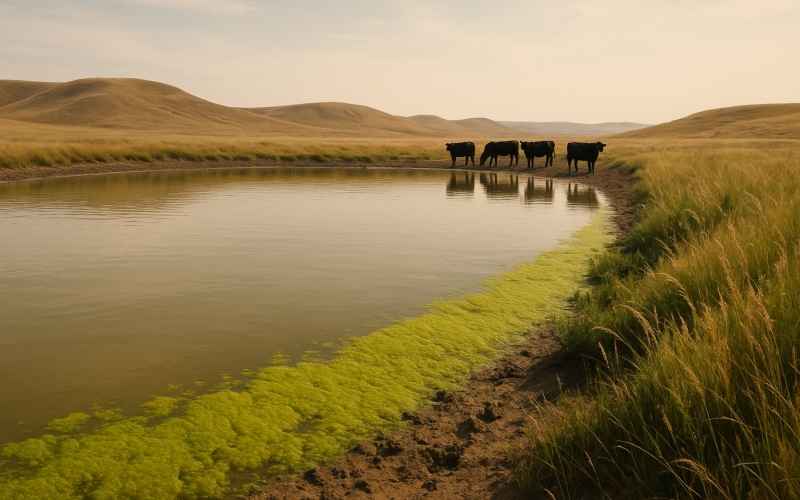
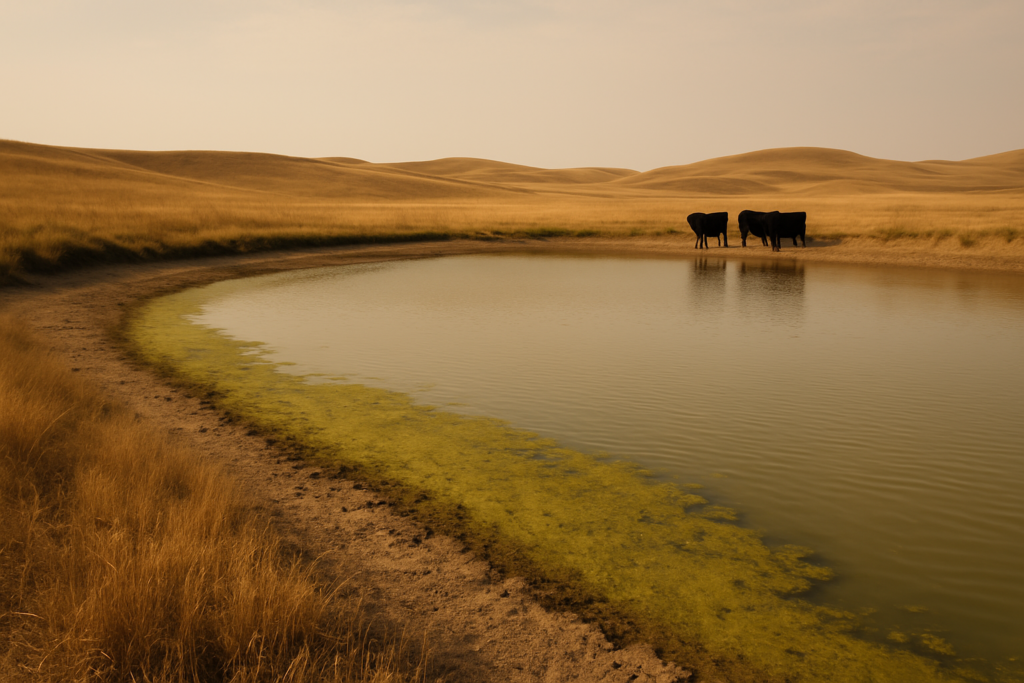
Wind matters more than people think. The toxins and the thickest scum get pushed to the downwind shore and pile up along the bank. That’s the side the cattle wade into to drink, and that’s why you’ll often find the dead animals grouped on one edge of the pond while the rest of the water still looks reasonable. A bloom that’s spread thin across the whole surface is dangerous, but a bloom that’s been blown into a green windrow along the near bank is where cattle get a lethal dose in a few swallows.
What it looks like
The classic sign is water that looks like someone spilled paint in it, usually bright green but sometimes bluish or turquoise, and often with a scum or a foam collecting on the surface and along the shore. Some blooms look like pea soup. Others look like grass clippings floating on top. A useful field check: scoop some of the surface water into a clear jar and let it sit. Regular pond algae tends to settle or stay suspended in green strands. A cyanobacteria bloom often floats and forms a green ring at the top within a few minutes.
Not every green pond is toxic, and there’s no way to tell by looking whether a given bloom is producing toxin at a given hour. Blooms come and go, and toxin levels swing with them. That uncertainty is the whole problem. If a pond looks bad, you have to treat it as if it’s dangerous, because by the time you know for sure, you may be counting carcasses.
What to do about it
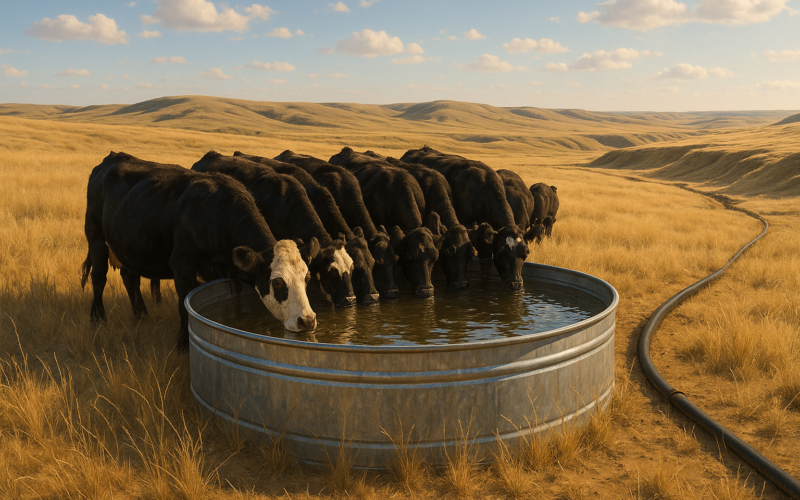
The first move when you find a suspicious bloom is to fence the cattle off that water and give them a clean source. That’s easier said than done on big country where a pond is the only water in the pasture, which is exactly why the planning has to happen before July. If a pond has bloomed on you before, or it’s the kind that sits low and catches corral runoff, have a backup ready: a hauled tank, a pipeline off a well, a gap into an adjacent pasture with better water.
A few things worth keeping in mind through the summer:
- Keep an eye on your low, warm, nutrient-fed ponds during hot, calm stretches. Those are the ones that go first.
- Check the downwind bank, not the middle. That’s where the concentration builds and where cattle drink.
- Move feeding grounds, mineral, and salt away from the water’s edge so you’re not funneling manure and nutrients straight into the pond all season.
- Dead animals near water with no other explanation should make you suspect the water until you’ve ruled it out. Dogs and other livestock can be poisoned the same way.
If you catch it early and the cattle haven’t been drinking heavy, pulling them off usually settles the worry. Once an animal shows signs, though, there often isn’t much time or much you can do, so the value is all on the front end. The ponds that kill cattle in a hot July are the ones nobody was watching in a green June. Know which of your waters run the risk, and have somewhere else for the cows to drink before you need it.