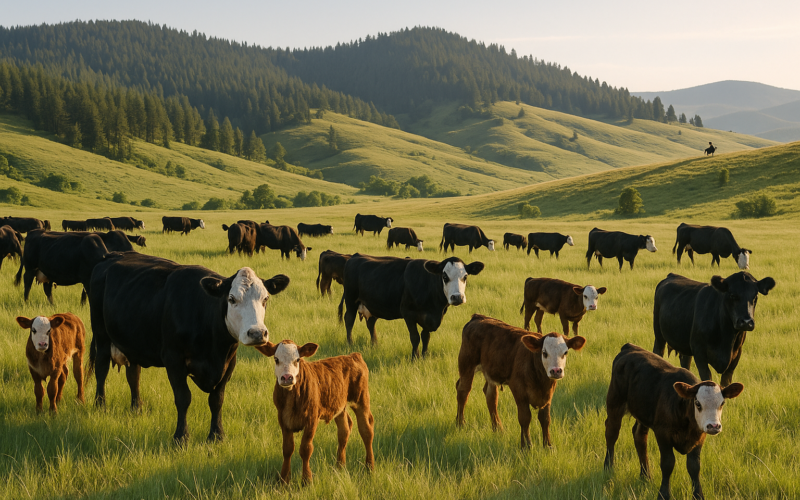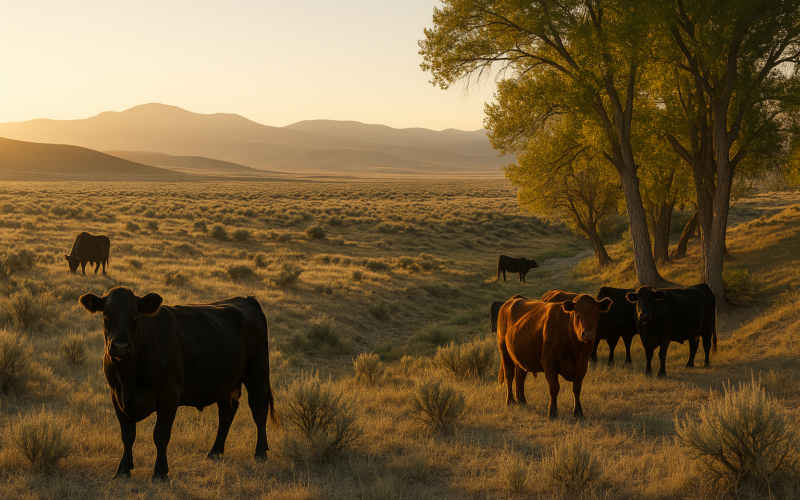
The grass looks good right now. That’s exactly why fire season is easy to forget in June. But the same growth that fills your pastures cures out into fuel by late July, and on the low, dry ground the cheatgrass is already turning purple and brittle. A grass fire doesn’t need a drought year to run. It needs wind, dry fine fuel, and a spark, and Montana afternoons hand out all three most of the summer.
The producers who come through a fire in decent shape are almost never the ones who got lucky. They’re the ones who did a handful of unglamorous things ahead of time, while there was still moisture in the ground and no smoke on the horizon.
Most range fires start close to home
Lightning gets the blame, and it earns some of it. But a lot of grass fires around ranch country start with equipment. A swather sickle throws a spark into a dry field edge. A baler bearing runs hot and drops fire in the windrow. A truck with a dragging chain or a hot exhaust parked over tall grass. A grinder or welder going in the shop yard on a windy day.
Haying season and fire season overlap on purpose, and that’s the risk. Keep a full water sprayer or at least a couple of charged extinguishers on the swather and baler, not in the shop. Blow the chaff off hot engine parts and belly pans. Watch bearings that run warm. If it’s blowing hard and the humidity has crashed, that’s the afternoon to grind steel another day or knock off early. Nobody wants to bale in a 20 mile-an-hour wind, and nobody should be welding fence in one either.
The other common start is the two-track and the county road. A dragging trailer chain, a blown tire run on the rim, a cigarette out the window. You can’t control the traveling public, but you can control the fuel along your own approaches.
Cut the fuel before it cuts you
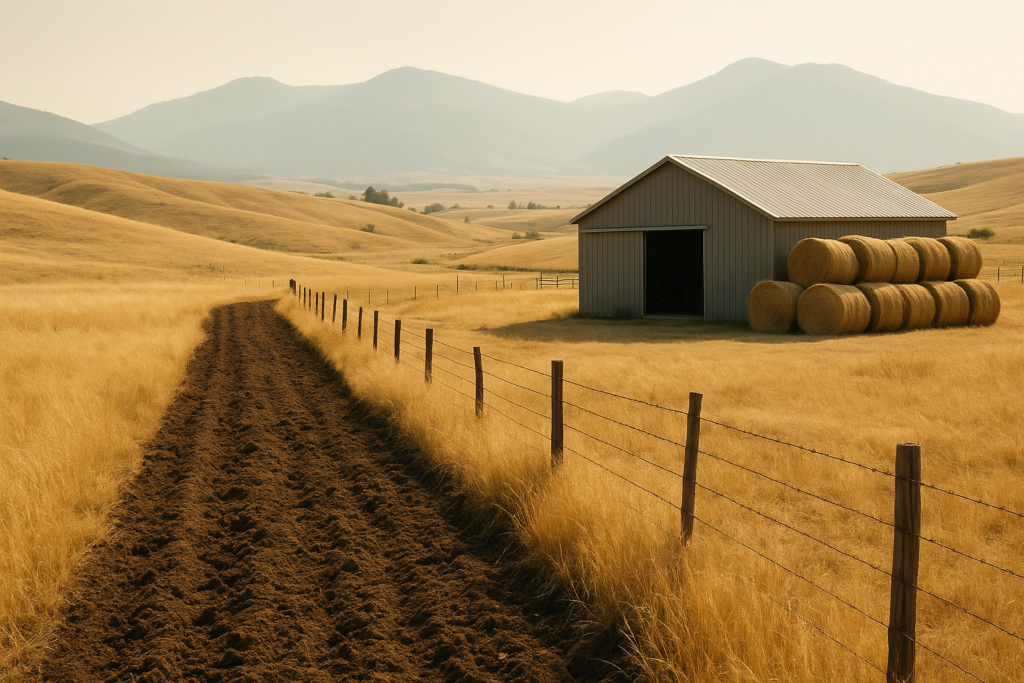
A firebreak doesn’t have to be fancy. A disked strip or a mowed lane down a fence line or around the buildings gives a fire less to grab and gives you a place to fight from. Around the house, shop, and hay yard, that bare or short-grass buffer matters most. Stacked hay is a total loss waiting to happen if the fire reaches it, and a burning stack throws embers a long way. Keep some distance between stacks if you can, and keep the grass around them short.
Grazing is a fuel tool too. A pasture eaten down carries fire poorly compared to one standing knee-high and cured. That’s worth thinking about when you plan where cattle go through the summer, especially near the home place and along the roads where a fire is most likely to start.
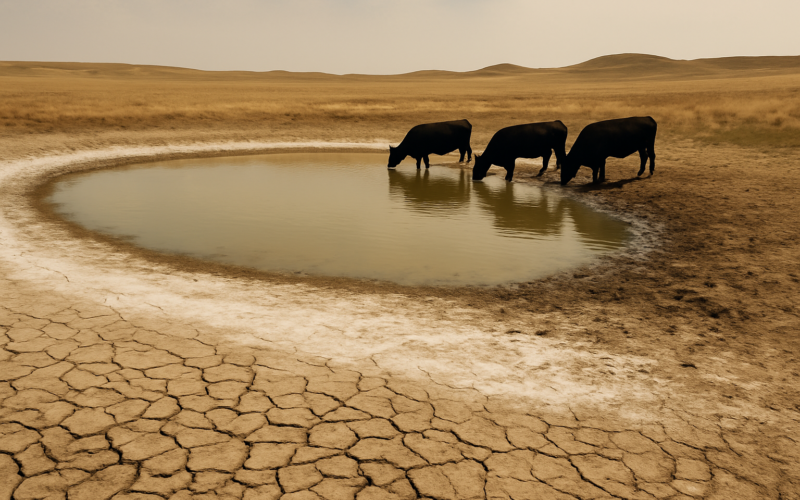
Know where your water is, and make sure a fire truck can get to it. A stock tank, a pond, a well with a fill line — mark them in your own head and tell the neighbors, because in a fast-moving fire the crews fighting it are often your neighbors and the volunteer department, and they can’t use water they can’t find.
Have an answer for the cattle before the smoke
The hardest calls come with cattle scattered across summer country and a fire pushing toward them. You won’t have time to figure it out from scratch that afternoon, so figure some of it out now.
Walk the summer pastures with fire in mind. Where would a fire come from with a west wind? A north wind? Which gates would you open to let cattle drift ahead of it instead of piling into a fence corner? Cattle will move away from fire on their own if they have somewhere to go, and a fenceline can turn a survivable fire into a wreck when they bunch against the wire and can’t get through. Knowing which gate to throw open, and being able to get to it, is worth more than any amount of good intentions.
Keep it simple and keep it current:
- Know two ways in and out of every pasture, in case a road is cut off by fire or the crews using it.
- Have gates that swing free and aren’t wired shut or grown over.
- Keep a rough head count and location in mind so you know who’s where when the smoke comes up.
- Save the numbers for the local fire department and your neighbors in your phone, not on a list in a drawer.
None of this stops a fire. What it does is buy minutes, and in a grass fire minutes are the whole game. The work is cheap and dull, which is why it gets skipped. Do it in June, when the ground is soft and the pressure’s off, and you won’t be trying to improvise it with the wind up and the sky going brown.