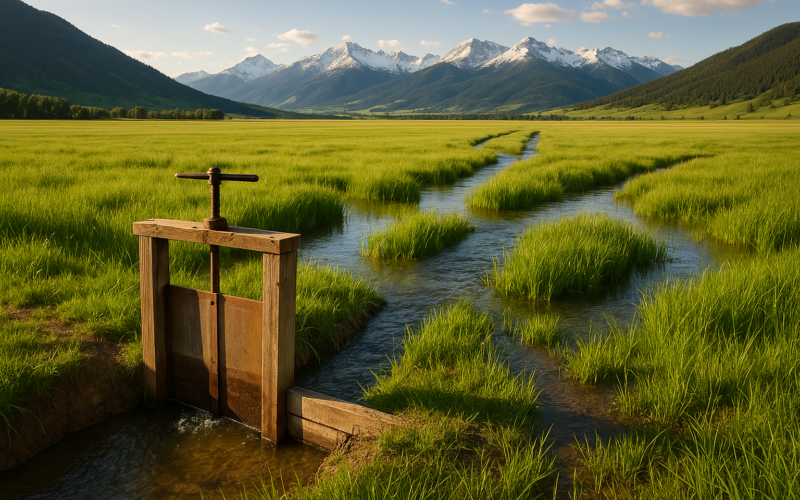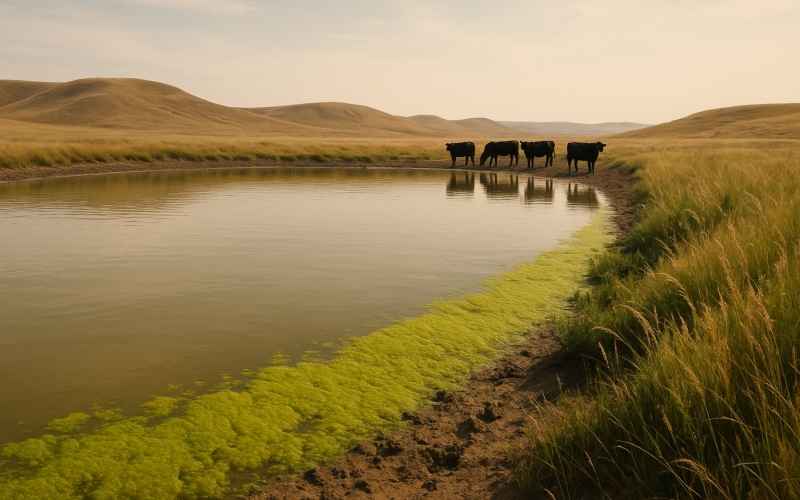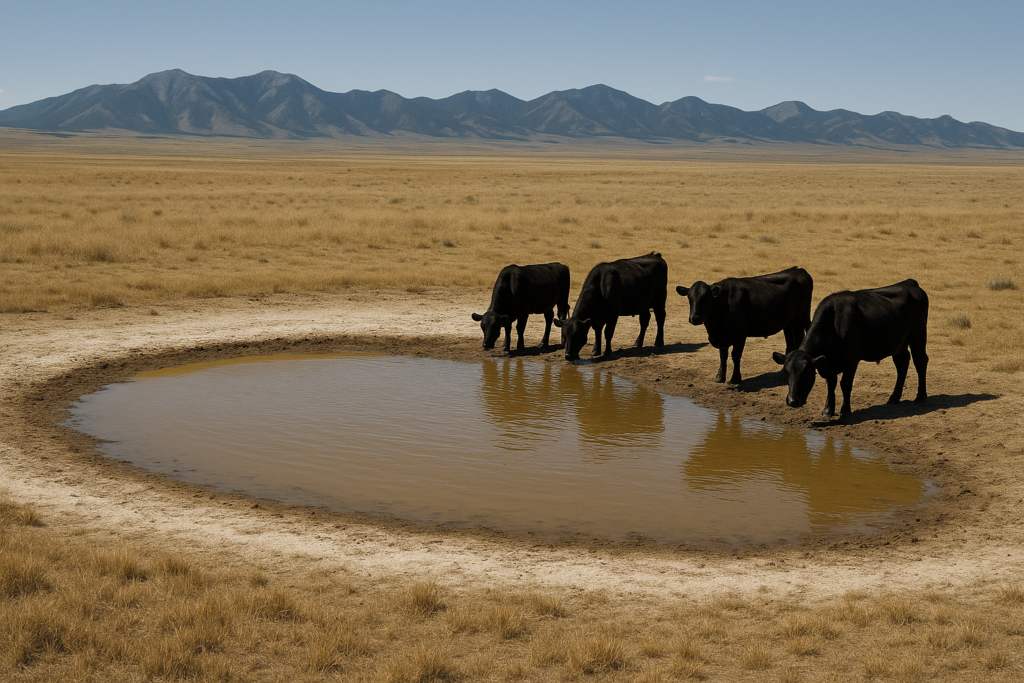
Every June the same thing happens on the flats east of the mountains and out across the northern rangeland: the reservoirs that filled with spring runoff start dropping. Less water, same salts. Whatever minerals were dissolved in that pond don’t evaporate with the water — they stay behind and get more concentrated as the pool shrinks. By late summer a pond that watered cattle just fine in May can be strong enough to knock production, and in a bad case, strong enough to put an animal down.
Most producers watch for green scum and blue-green algae, and they should. But the quieter problem is dissolved salts and sulfates in water that looks perfectly clear. You can’t see it, and cattle can’t always avoid it, especially when it’s the only water in the pasture.
What high salts and sulfates actually do
Two things matter in a water test: total dissolved solids, which is the overall salt load, and sulfate, which is its own separate concern. High total dissolved solids make water taste bad. Cattle drink less of it, and a cow that drinks less eats less and quits gaining. In hot weather that’s the last thing you want, because her water needs are already climbing right when the source is getting saltier.
Sulfate is the one that kills. When cattle take in too much sulfate over time, it can trigger polioencephalomalacia — the old-timers call the affected ones brainers. The animal goes off by itself, wanders, presses its head against a post, goes blind, staggers, and eventually goes down with the head pulled back. Once you’re seeing those signs the damage is done, and treatment is a long shot. Younger cattle and yearlings on grass tend to show it first.
Sulfate doesn’t only ride in the water, either. It’s in some feeds and in certain mineral supplements. The water might be borderline on its own, but stack it with a high-sulfate protein source or byproduct feed and you tip the whole thing over. It’s the total daily intake that counts.
Read the water before the cattle do
You cannot judge water quality by looking at it. Clear water off an alkali flat can be loaded, and muddy runoff can be fine. The only way to know is to pull a sample and have it tested. Your county Extension office can point you to a lab, and a basic livestock water panel that covers total dissolved solids and sulfate doesn’t cost much against a dead yearling.
Sample the sources you’re actually worried about — the shrinking reservoirs, the seep springs, the alkali sloughs — and pull the sample from where cattle drink, not from the deep clean water in the middle. Test again in late summer if a pond has dropped hard, because the number you got in May is not the number in August. Salts climb as the water goes down.
Pay attention to what the cattle tell you, too. If they’re standing around a full-looking pond bawling, or drinking hard at one source and ignoring another, believe them. Cattle will often refuse bad water until thirst forces them into it, and that swing — go without, then gorge — is its own trouble.
What to do when the number comes back high
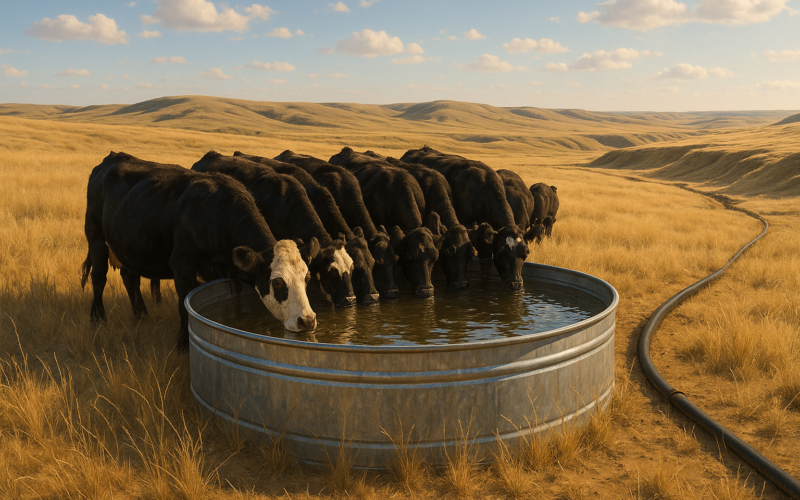
If a source tests marginal, the cleanest fix is a better source. Haul water, pipe from a well, or fence the cattle off the bad pond and open a good one. Where you’ve got a strong well and a weak pond in the same pasture, sometimes just giving cattle a clear choice fixes it, because they’ll pick the better water on their own if they can reach it.
Where you’re stuck with what you’ve got, cut the other sulfate coming in. Check your mineral tag and your supplement, and don’t pile a high-sulfate feed on top of high-sulfate water. Bring cattle onto questionable water gradually rather than dumping thirsty cattle onto it after a long drive. And keep an eye out for the first loner pressing its head on a fence post — moving that whole bunch to clean water fast is about the only thing that helps once polio starts.
The reservoir that carried your cows for ten summers can turn on you in a dry one, and it won’t look any different the day it does. A twenty-dollar water test in June is a lot cheaper than walking out to find a good yearling down and blind in August, wondering what got it.