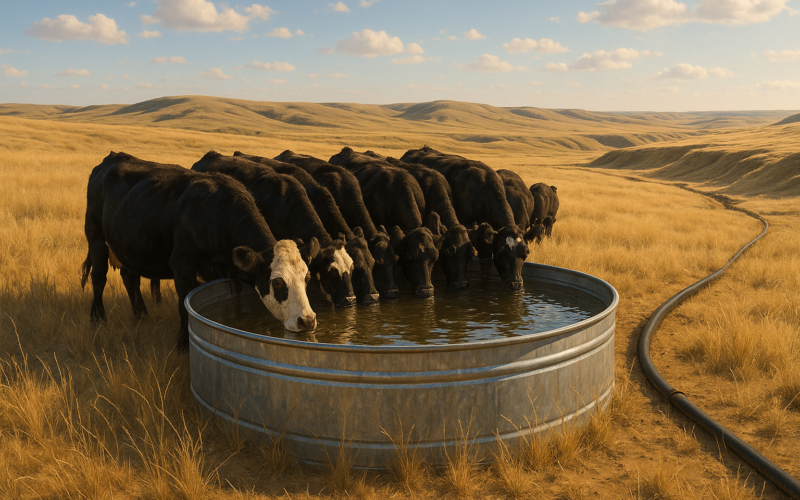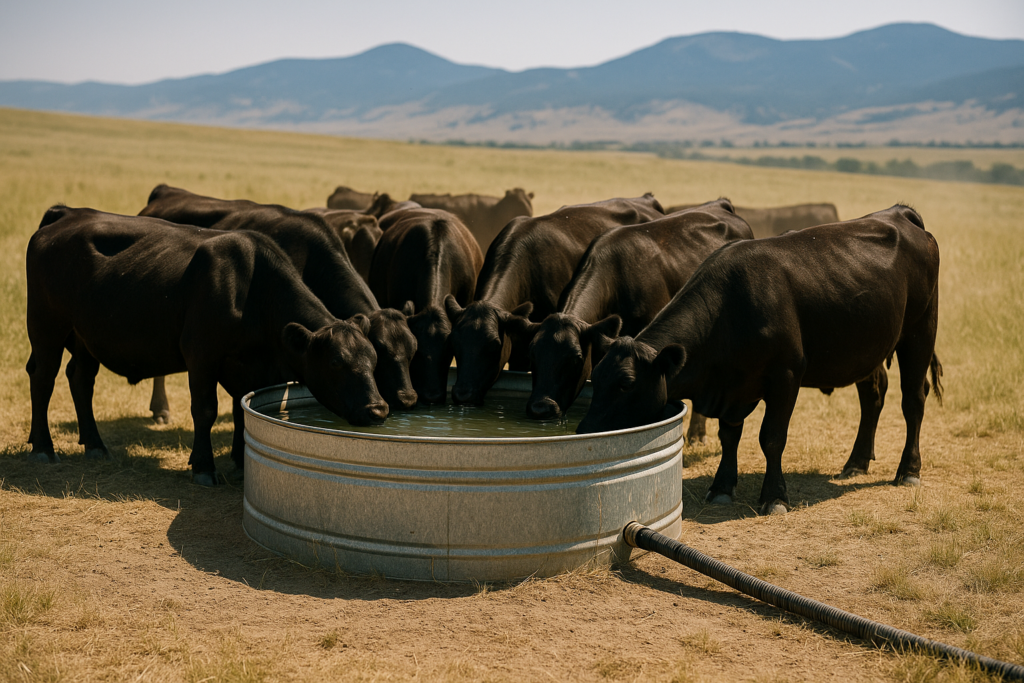
Water is the thing nobody looks at until it’s already a problem. The pasture greens up, the cows go out, the tank fills, and you cross it off the list. Then the middle of July hits, the calves are big and sucking hard, the temperature parks in the nineties, and one afternoon you drive out to find twenty cows crowded around a tank that’s drawn down to mud with the float valve wide open. The well or the pipe simply can’t refill it as fast as the herd is pulling it out.
That gap between how much cattle drink and how fast your system delivers is where a lot of summer water trouble lives. It rarely shows up as a dead cow. It shows up as cows that quit grazing the far end, bulls that lay up in the shade instead of working, and calves that don’t gain the way the grass says they should.
Intake climbs fast once it gets hot
A dry cow in cool spring weather gets by on a fairly modest amount of water. Put that same cow on summer grass with a calf at her side, add ninety-degree afternoons, and her daily intake can roughly double. Lactation alone drives it up hard, and heat stacks on top of that. Bigger, later-lactation cows drink more than small ones. Cattle on dry standing forage or grazing salty ground pull more than cattle on lush green feed.
The number that catches people isn’t the daily total, it’s the peak. Cattle don’t sip steadily around the clock. They drink in bunches, mostly in the few hours after they come off feed in the heat of the day and again toward evening. A group can pull a big share of its whole day’s water inside a couple hours. Your tank and the line feeding it have to survive that rush, not just the 24-hour average.
Figure your recovery, not just your capacity
A big tank hides a slow well for a while, then quits hiding it on the hottest day of the year. What matters is flow: how many gallons per minute your well, spring, or pipeline actually delivers, and whether that keeps a tank ahead of a thirsty bunch during that afternoon rush.
You can check it without any fancy gear. Shut the stock off the tank or watch when it’s empty of cattle, time how long the float takes to bring a known volume back up, and do the math into gallons per minute. Then walk the herd count in your head against a hot-weather intake per cow and see if the recovery covers the peak draw with something left over. If the tank empties faster than it fills when cattle are on it, you’ve found your bottleneck before August does.
- Check your float valves and their orifice size. A partly plugged valve or one sized for a small pasture won’t pass enough water no matter how good the well is.
- Look at pipe diameter and length. A long run of undersized poly line drops your delivery a lot, and it drops it worst right when demand is highest.
- Give cattle enough trough space and access. If the whole bunch can’t get to water at once, the timid cows and the smaller calves get shoved off and wait.
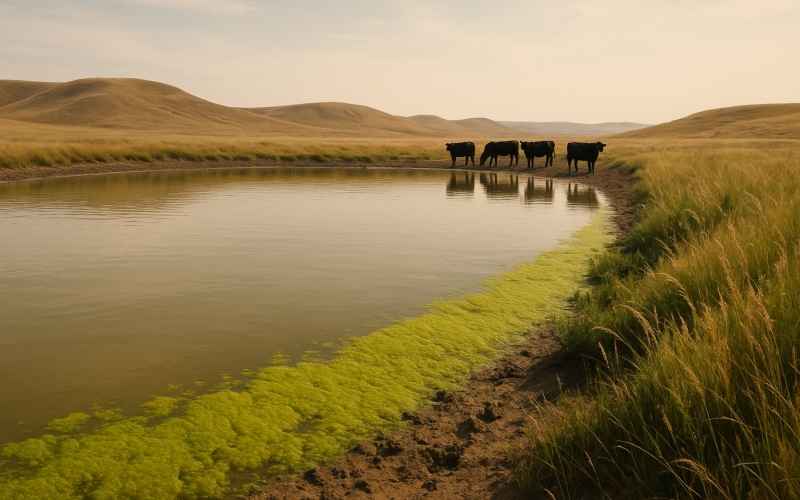
- Clean the tank. Algae and moss foul valves and float mechanisms, and cattle back off dirty, warm water even when there’s plenty of it.
Watch the cattle, they’ll tell you
Cows read their water better than any gauge. When they start bunching and milling at the tank, hanging close instead of scattering out to graze, that’s a herd telling you the water is short or slow. Cattle that drink and leave are satisfied. Cattle that won’t leave are waiting for the tank to catch back up.
Distance matters too. On big summer country, water that’s too far from the back of the pasture leaves that grass ungrazed and overloads whatever tank is handy. Hauling water or setting a second tank in the country cattle are ignoring does two jobs at once, spreads the grazing and takes the peak pressure off your main source.
The fix is cheap compared to the cost. A bigger valve, a length of larger pipe, a storage tank buffering a slow well, or one more trough moved out where the cattle need it will carry more weight on calves than most anything else you do this summer. Sort it out now, on a cool morning with time to work, instead of on the July afternoon when the tank’s already dry and the cows are standing over it.