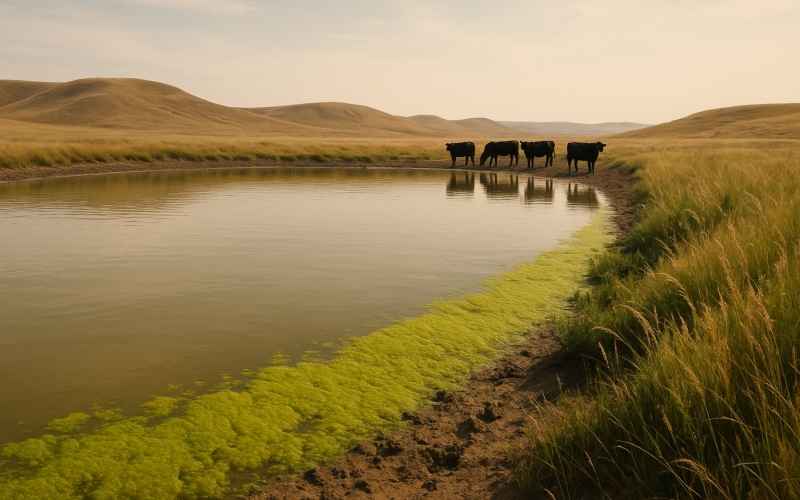
Most of the water problems ranchers talk about in summer are the ones you can see — a pond gone pea-green, a gap washed out, a spring that quit. The one that gets cattle in eastern and central Montana is the one you can’t see at all. The water looks fine. The cows are drinking. Then one comes off the pond staggering, pushing her head into a fence, blind and circling, and you’re trying to figure out what hit her overnight.
A lot of the time it’s the water itself. As ponds and shallow wells drop through June and July, whatever’s dissolved in them gets more concentrated. On a lot of this country that means sulfates, and sulfates in high enough numbers will put a cow down with polio.
Why the water gets worse as it gets lower
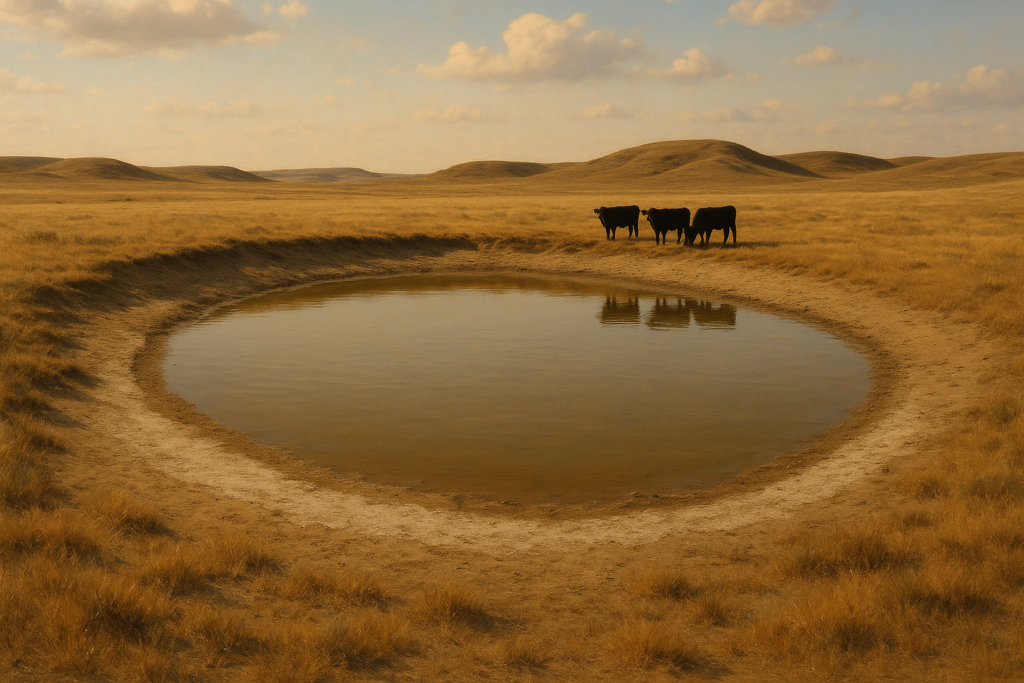
Groundwater and runoff across much of the eastern half of the state carries a fair load of dissolved minerals to begin with — sulfates, plus the general total dissolved solids that make water taste alkaline. When a pond is full in May off snowmelt and spring rain, all of that is diluted. Come mid-June, the inflow stops, the sun works on it, and the water level drops. The minerals don’t leave with the water that evaporates. They stay behind in a shrinking amount of water, so the concentration climbs.
By August a pond that was drinkable in June can be a good deal saltier, and a shallow stock well that’s drawing down can pull in worse water than it did in spring. The change is gradual, which is exactly why it sneaks up on you. Cattle will keep drinking it as it gets worse because they don’t have another option, and there’s no obvious point where it goes from fine to dangerous.
What sulfate does to a cow
The problem with sulfate isn’t a straight poisoning. Rumen bugs convert it into forms of sulfur that interfere with the way the brain uses thiamine, and the result is polioencephalomalacia — polio, the same brain condition you can get from other causes. The animal essentially goes short on usable thiamine and the brain swells.
What you see: a cow off by herself, head up and pressing against something, blind or acting blind, walking in circles or into obstacles. Some go down and paddle. It can come on within a day or two once intake is high enough. Younger cattle and growing calves tend to show it first because they’re drinking a lot relative to their size and their systems are more sensitive.
Caught early, a cow will sometimes respond to thiamine from your vet, but you have to get her off the bad water first or she’ll just load right back up. Once one’s been down and blind for a while, the odds get long. The better play is to never let intake get that high in the first place.
Test the water before you trust it
You can’t eyeball sulfate. Clear water and dirty water can both be loaded. The only way to know is to pull a sample and have it tested for sulfate and total dissolved solids — most feed and soil labs run it cheap, and your county Extension office can point you to one and help read the number. Test the sources you’re actually turning cattle onto for the summer, not just the good well by the house.
If you’ve had trouble before, sample the same pond both full in spring and drawn down in July. That tells you how much it swings, and whether a source that’s fine early becomes a problem by late summer. Sulfate in the feed counts too — some forages and byproduct feeds add to the total load, so the water number isn’t the whole picture on a really marginal source.
A few things that help once you know what you’re dealing with:
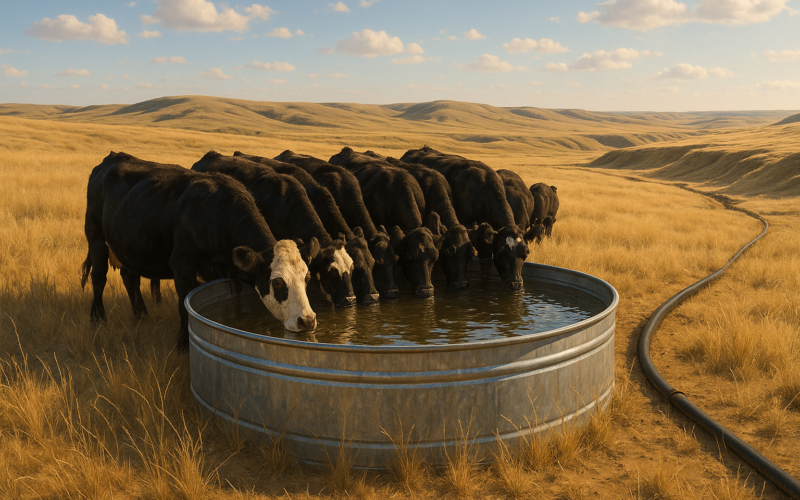
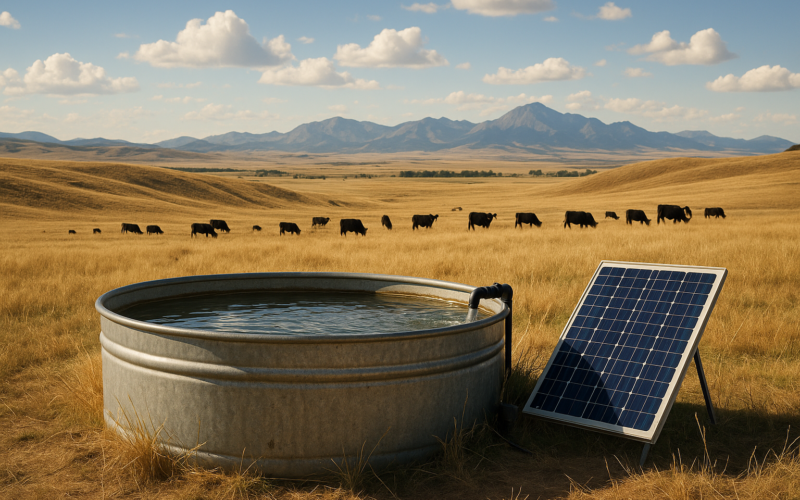
- Fence cattle off the worst ponds by late summer and haul or pipe better water in, even if it’s a hassle. It beats losing cows.
- Give them a choice. If there’s a decent well nearby, keeping it available lets cattle self-limit off the bad pond instead of being forced onto it.
- Watch the growing calves and yearlings hardest. They’ll tell you first.
- Don’t wait for a death to test. A number in hand in June lets you plan; a dead cow in August just tells you the water was bad.
The frustrating part is that a pond doesn’t warn you. It’s the same water hole it’s always been, in the same draw, and the cattle walk to it every day like they always have. The difference is a foot and a half of water gone off the top and a mineral load that climbed while you weren’t looking. A twenty-dollar water test in the spring is how you find out whether the tank you’re counting on all summer is one you can actually trust in a dry year.