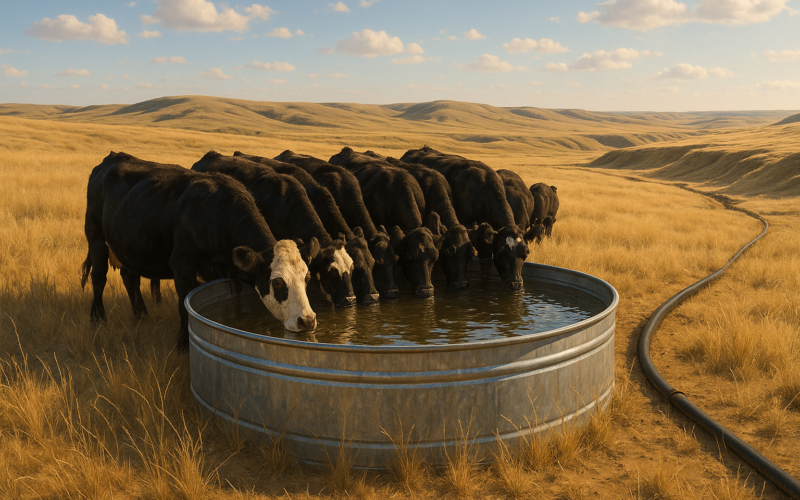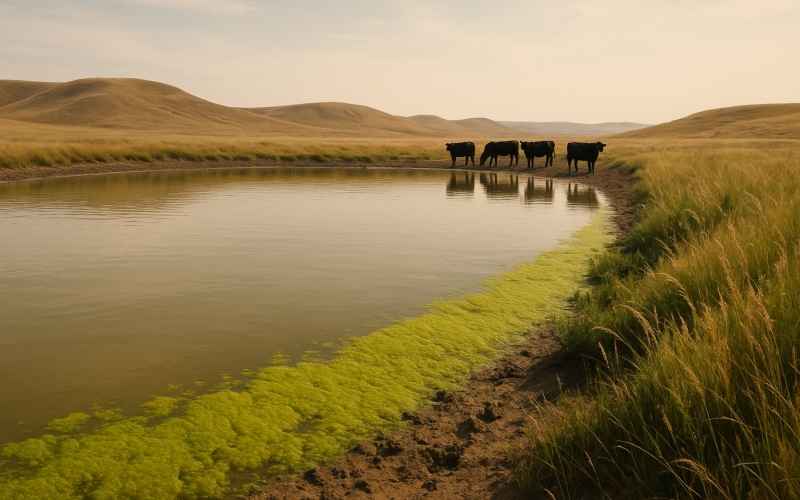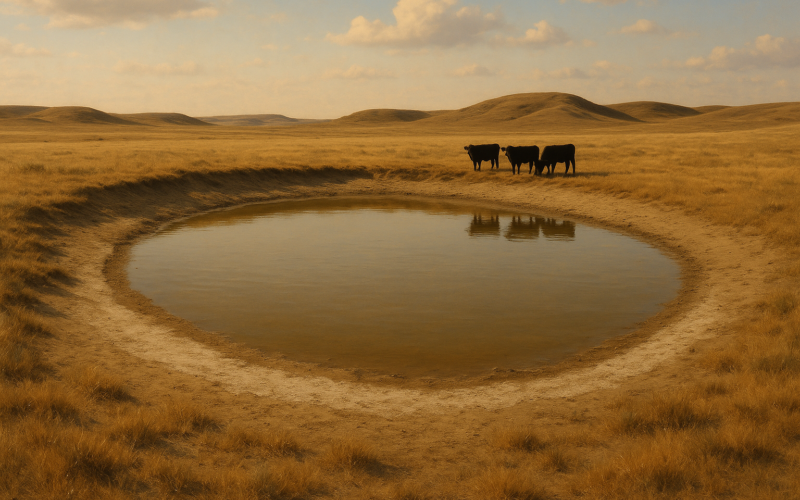
Every ranch has a corner of summer country that grows more grass than the cattle ever touch. Nine times out of ten it isn’t the grass that’s the problem — it’s the half-mile walk to a drink. Cows will hammer the flat around the tank and leave the far ridges standing, not because they’re lazy but because water sets the size of the pasture. A tank that runs dry in July shrinks a section down to a quarter of it.
Mid-June is the window to sort this out. The runoff that’s been filling every low spot is dropping fast, the days are getting long, and the first real heat is a couple weeks out. Whatever supplies water when it’s 95 in August needs to be tested now, while a failure costs you a wet boot instead of a dead cow.
Walk the springs before you trust them
A developed spring is a simple thing until it quits. The box fills with silt over the winter, a gopher packs the overflow, or the collection line pulls air after a dry spell and the trough drops an inch a day. You won’t see any of that from the truck. You have to get out, pull the lid, and look.
Clean the silt out of the box while the ground is still soft from spring moisture. Check that the overflow runs free — a plugged overflow backs water up and pushes the seep out around the box instead of into it, and then you’ve got a mudhole and a dry trough. Run your hand down the pipe to the trough and feel for flow. If the trough is fed by gravity, walk the line for slumps and low spots where air collects. A spring that filled fine in May can go stubborn in July when the water table drops and the collection field barely stays wet.
Fence the seep itself if it isn’t already. Cattle standing in the source turn a clean spring into a churned bog, foul the water, and eventually cave the collection area in. A short jog of wire that keeps them at the trough end saves you the whole development.
Solar and windmill: the parts that fail are cheap and predictable
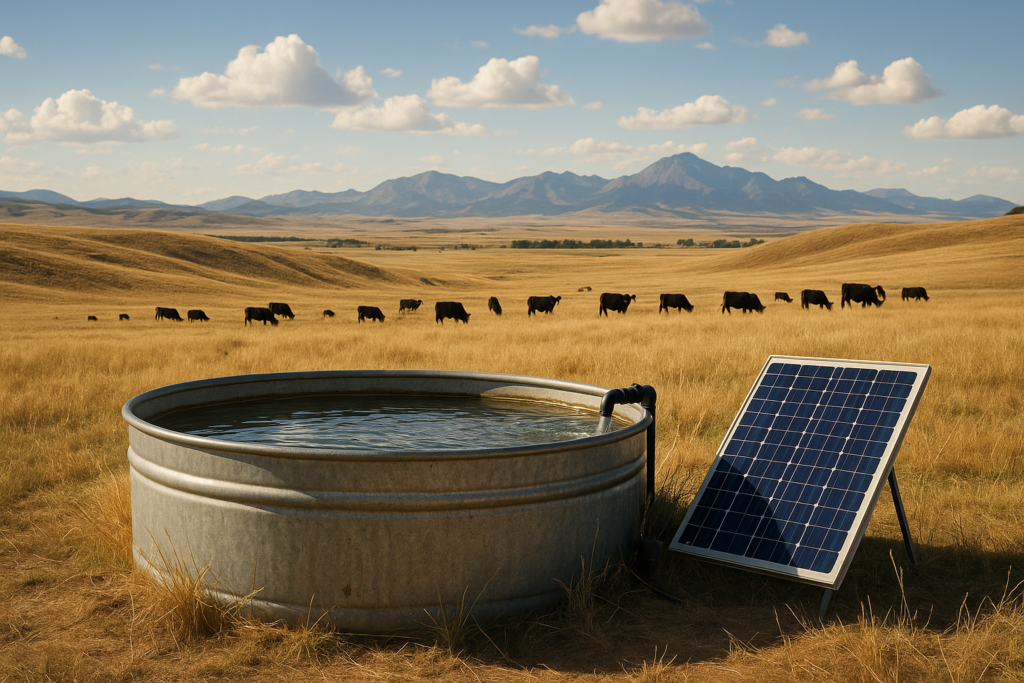
If you’re pumping to a tank, the weak points are the ones you can fix in an afternoon. On solar setups, brush the dust and pollen off the panels — a filmed-over panel loses pumping capacity right when the days are longest. Check the wiring at the controller for mice and corrosion, and pull the well pump if it’s been sitting to make sure it primes. Solar loves the long June days, but it also means the pump runs hard, so listen for a motor that’s cavitating or a foot valve that won’t hold.
Windmills need the gearbox oil checked and the leathers looked at before the light summer breezes leave them barely turning. A mill that pumped through a windy May will still leave you short on a dead-calm July afternoon, which is exactly when the cattle need it most. That’s the argument for a storage tank ahead of the trough — enough reserve to carry a still day or a cloudy stretch without the float ever bottoming out.
Speaking of floats: replace the sticky ones now. A float that hangs open runs the tank over and pumps your reserve onto the ground. A float that hangs shut leaves the tank half full and the tail end of the herd shoved off water. Neither shows up until you’re already behind.
Put water where the grass is
The cheapest grazing improvement most outfits can make isn’t reseeding — it’s a length of poly pipe and a portable tub that moves a drinking spot out onto the ground that never gets used. Cattle graze in a rough circle out from water, and the far edge of that circle is where the good feed sits untouched. Move the water a quarter or half mile and the whole pattern shifts with it.
You don’t have to trench a permanent line to do it. Surface pipe run in June, drained and rolled up in October, will get another year or two out of a pasture you thought was maxed out. Set a tub on the ridge, prime it off the existing tank, and the cows will find it in a day.
Water is the fence you can’t see. Get it right before the heat, and the grass takes care of itself.