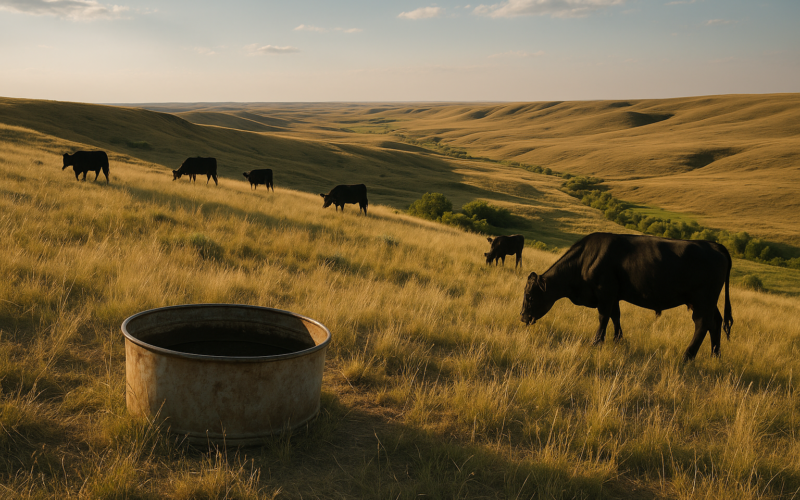
Every summer a little more of the range quietly stops being range. A patch of spotted knapweed on a south slope, a spot of leafy spurge along a coulee bottom, and by the time you notice, the cattle are walking past it to graze somewhere else. Neither of these weeds waits for you. Mid-June is about the best chance you get all year to knock them back, and the difference between spraying now and spraying in three weeks is often the difference between control and a wasted tank.
Why the timing matters this much
Herbicides work when the plant is moving sugars around and hauling that chemical down to the roots. On spotted knapweed, that means the bolt-to-bud stage—when the plant has shot up but hasn’t opened those purple flowers yet. Once it blooms and starts setting seed, two things happen. The plant quits pulling herbicide down as hard, and every head you didn’t kill is banking seed in the soil that stays viable for years. Knapweed doesn’t need much help. A single plant throws thousands of seeds, and they ride in on tires, hooves, and hay.
Leafy spurge is its own animal. It greens up early and by June you’ll see those yellow-green bracts that people mistake for flowers. That true-flower stage is one of your good treatment windows; the other comes in fall when the plant is loading the roots again. Spurge spreads by seed and by a root system that can run down eight feet and sideways for yards. You are never spraying your way out of established spurge in one season. You’re chipping at it, year over year, and the June application is one of the two swings that actually connects.
Hit it where it’s spreading from
You can’t blanket-spray a whole allotment and you shouldn’t try. Walk or ride the edges of what you’ve got and figure out where it’s coming from. Spurge and knapweed both march out from a source—an old corral, a trailhead, a stretch of county road, the spot where you fed hay two winters back. Kill the leading edge and the satellite plants first. A scattered plant you catch this year is a patch you don’t fight for the next decade.
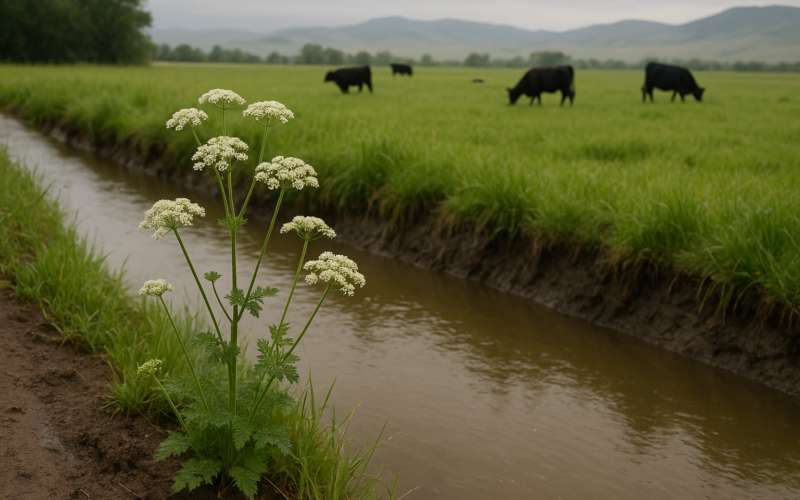
Read the label before you decide what to run and how much. Some of the products that work best on these weeds carry grazing and haying restrictions, and a few have residual soil activity that’ll bite you if you’re planning to interseed or reseed that ground. If you’re spraying near water—and spurge loves a wet draw—you’re into aquatic-approved products only. When in doubt, your county weed district or Extension office will tell you what’s registered and what’s working locally, and a lot of counties still run cost-share on the chemical.
Spraying alone won’t finish it
Spotted knapweed and leafy spurge both got established because they outcompete a stressed stand. Overgrazed range with bare ground between the bunchgrasses is an open invitation. If you kill the weeds and don’t fix what let them in—rest the pasture, adjust your rotation, get some litter and desirable grass back on that ground—the weeds come right back into the same bare spots. Herbicide buys you the opening. Healthy grass keeps it.
Biocontrol has a place too, especially on spurge and on knapweed patches too big or too rough to spray. The flea beetles released on leafy spurge over the years have knocked back some heavy infestations where nothing else was practical. It’s slow and it won’t wipe a patch out, but on a rough breaks pasture you can’t get a sprayer into, it beats doing nothing. Sheep and goats will graze both plants hard, and running them through a knapweed patch is a real tool if you’ve got access to a flock.
The thing to remember is that this fight is measured in years, not afternoons. Whatever you spray in June, plan to walk it again next summer, because the seed bank outlives your patience. Map what you’ve got, hit the new spread first, and keep the good grass thick enough that the weeds don’t get another easy start. Ground you keep in grass this year is ground you’re not spraying five years from now.