Every June the same argument runs through the coffee shop in every hay town from the Bitterroot to the Judith Basin: cut now, or wait a week for more windrow. The field looks thin. The alfalfa is barely knee-high. Give it seven more days of this warm weather and there’ll be real tonnage out there. That logic is how a lot of good hay turns into cow bedding.
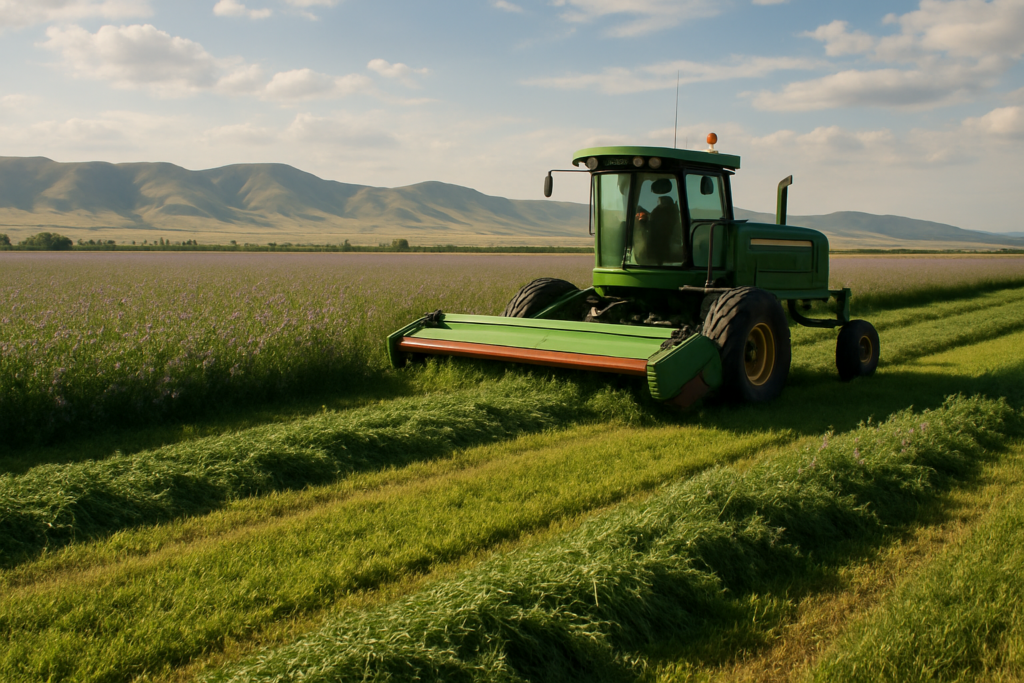
The plant doesn’t add weight for free. Once alfalfa moves past the bud stage and starts throwing purple, the extra growth is mostly stem. Stem is fiber. Fiber fills a cow up before it feeds her. The leaf is where the protein and the energy live, and the leaf-to-stem ratio only goes one direction after bloom starts — down. So the pile gets bigger and every ton in it gets worse. You end up hauling more low-quality hay instead of less good hay, and your cows tell you about it in February when the thin ones won’t hold condition on it.
Read the plant, not just the calendar
Cut at late bud to first flower. On a stand you’re watching close, that means you catch it when maybe one plant in ten is showing a bloom, not when the field’s gone lavender. Grass hay works the same way but on its own clock — you want it at the boot stage, right as the seedhead is swelling in the sheath but before it pushes out and heads. Once grass heads out, it’s coarse and the cows sort through it.
The trouble in a lot of Montana country is you’re haying a mixed stand, and the alfalfa and the grass don’t peak on the same day. You compromise. Most years the alfalfa is the higher-value component, so lean toward cutting when it’s ready and take the grass a hair past ideal. What you don’t do is wait for both to be perfect, because that day never comes.
Weather forces your hand too. A good drying window in June is worth cutting a couple days early to catch. Alfalfa laid down ahead of a three-day stretch of sun and a little wind beats the same alfalfa a week riper that gets rained on twice in the swath. Rain leaches the solubles out of cut hay and knocks the leaves off when you finally rake it dry. A perfectly timed cutting that gets soaked is worse than a slightly early one that bales clean.
Don’t shave the crown to get the last inch
The temptation when the first cutting looks light is to run the sickle right on the dirt to grab every stem. On alfalfa that’s a mistake. The plant regrows from the crown and from energy reserves in the root, and the new shoots for your second cutting are already starting down low before you ever cut. Scalp them off and you set the regrowth back a week or two — which in a dryland year can be the difference between a real second cutting and nothing.
Leave three or four inches of stubble. On grass hay that stubble also shades the crown and holds a little moisture, and on sidehills it slows things down enough to keep your topsoil where it belongs. You give up a small amount of tonnage on the first pass and get it back, with interest, on the second — if the moisture holds.
Get it dry before you get it green
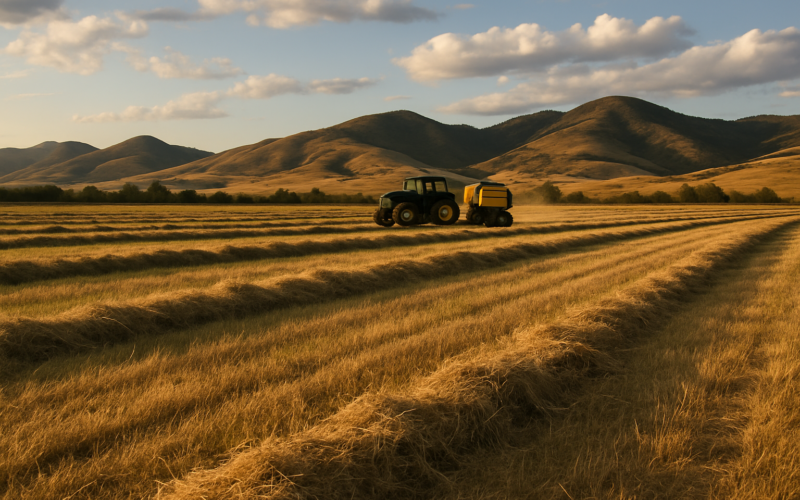
Cutting at the right stage only pays if you bale it right. Alfalfa needs to come down under the high teens on moisture for large bales, drier for small squares, or the stack heats and you’ve cooked the very protein you cut early to keep. A tedder or a rake pulled at the right time speeds the dry-down and lets you bale before the afternoon humidity climbs back up. In our short northern days, the difference between raking at ten in the morning and raking at four in the afternoon can be a full day of curing.
The whole thing is a chain. You cut at bud to save the leaf, you leave stubble to save the second cutting, and you bale it dry to save the stack. Break any link and the other two don’t matter much. First cutting is the biggest hay you’ll put up all year on most places — it’s worth watching the plant close and being ready to drop the header the day it’s right, not the day the calendar says.