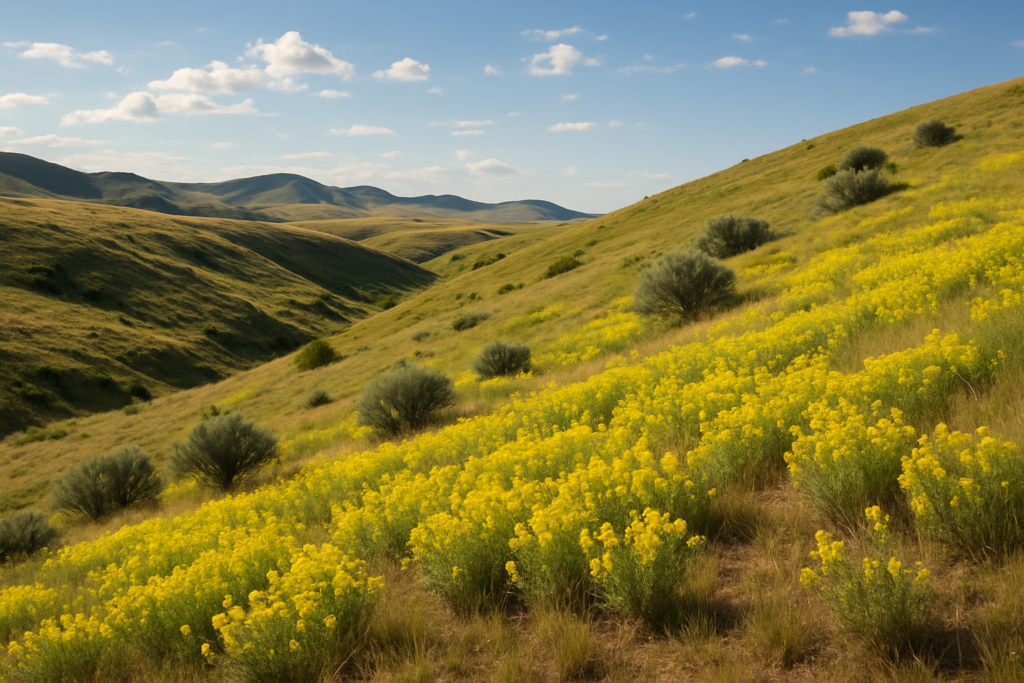
Drive any gravel road in June and you can read the weed map from the truck. The yellow-green wash coming up a coulee or spreading off a right-of-way is leafy spurge. The gray-green rosettes fattening up on the south slopes and old disturbance are spotted knapweed, getting ready to bolt. Neither one showed up overnight, and neither one is going to leave on its own. What June gives you is a short stretch where the plant is working against itself, and that’s the stretch worth planning around.
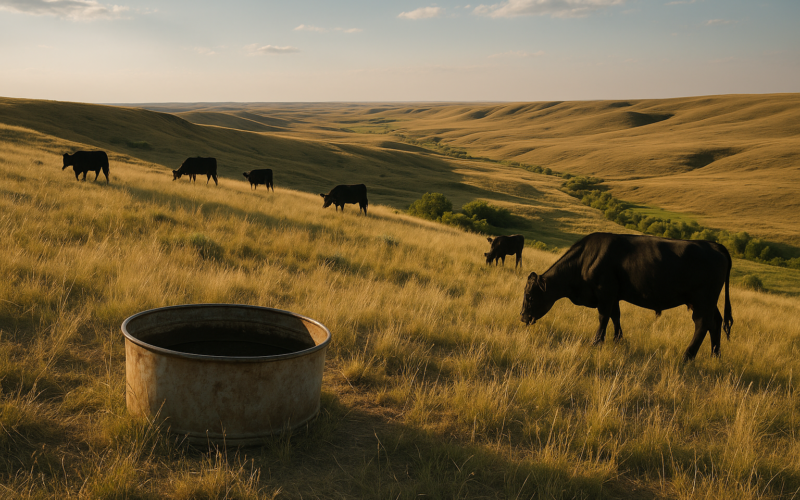
Both weeds are stealing grass whether you notice or not. A hillside that goes solid to spurge won’t carry the cows it did ten years ago, and knapweed puts out compounds that hold back the grasses trying to grow next to it. Cattle walk around both of them. That’s the tell — when your pairs graze a pasture unevenly and leave whole patches standing, look at what they’re avoiding.
Why the yellow flush is the moment to spray
Leafy spurge is a deep-rooted perennial with a root system that can run down past most of what a shovel will reach. You are never spraying the plant so much as trying to get chemical down into that root, and the plant only pulls it down at certain times. When the true flowers open in June — the small ones inside the showy yellow bracts everybody thinks is the bloom — the plant is moving sugars, and a herbicide application then travels down instead of just burning off the top. Hit it in that window and you set the stand back. Mow it or spray it too late in summer and you’ve cut off the top while the root sits fine and sends up a new crop next spring.
The other good shot at spurge comes in early fall, when it’s again moving reserves to the root ahead of winter. A lot of ranchers who are serious about a patch spray the June flush and come back in September, then repeat it for several years. One pass does not clean up leafy spurge. Anybody who tells you it does hasn’t fought it.
Spotted knapweed runs on a different clock. You get the best kill on it while it’s still a rosette or just starting to bolt, before it flowers and sets seed. By the time it’s purple and blooming in July and August, you’re mostly keeping it from seeding rather than killing the plant. Mid-June, catching it on the way up, is prime. And a single knapweed plant throws thousands of seeds that stay alive in the ground for years, so the whole game is stopping seed before it hits the dirt.
Chemical, but not chemical alone
Talk to your county weed district or Extension agent about what’s labeled and what’s working in your area — products change, restrictions change, and there’s no reason to guess. Read the grazing and haying restrictions on the label before you spray a pasture you’re about to turn cows into or cut. A few of the broadleaf herbicides also knock back clovers and other legumes you might want, so know what you’ve got growing before you blanket a field.
Spot spraying beats broadcast on most rangeland. Chasing the leading edge of a patch and the scattered outliers keeps the infestation from spreading and costs a fraction of treating solid acres. The satellite plants a quarter mile from the main patch are the ones that turn one problem into ten, so those get priority.
Leafy spurge is also one of the few weeds where biological control has genuinely earned a place. Flea beetles established on a spurge stand will thin it over years by feeding on the roots as larvae. They won’t wipe it out and they work slowly, but on rough country you’re never going to spray, a good beetle population beats doing nothing. County weed districts often help landowners get them started.
Grazing is a tool too
Sheep and goats eat leafy spurge and knapweed that cattle refuse, and running them ahead of or alongside cattle is a real management approach on infested ground, not a novelty. Even without small stock, keeping your grass healthy and not grazing a pasture into the dirt matters, because bare, beat-up ground is exactly where knapweed and spurge get their start. Weeds move into openings. Overgrazed slopes, blown-out water gaps, old corrals, and road edges are the front door.
None of this is a one-summer fix. What June asks of you is to spray the right thing at the right stage, keep after the edges, and quit letting the outliers get established. Miss the flowering window this year and the yellow wash up that coulee will be wider next June. It always is.