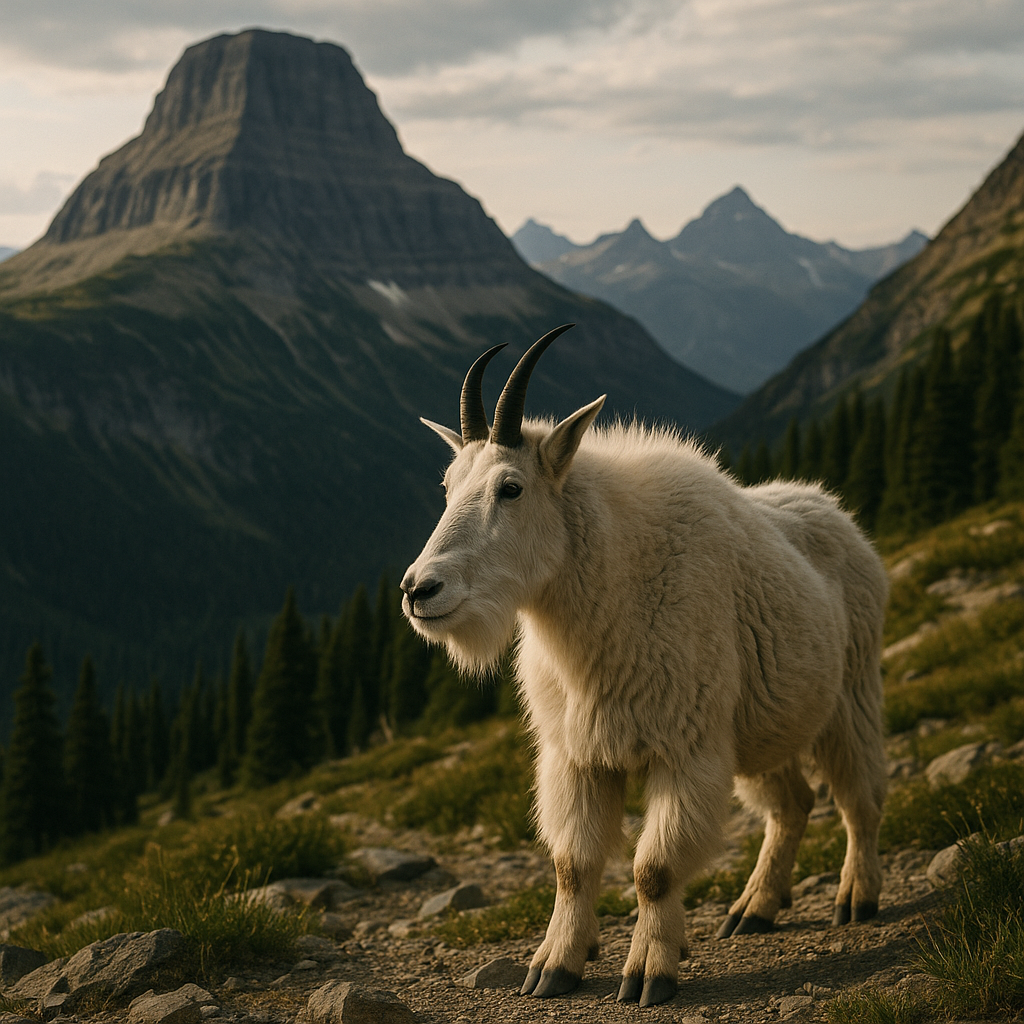
Folks who’ve spent time glassing high country in Northwest Montana tend to remember their first mountain goat: a white speck on a cliff band, somehow standing where it looks like nothing should stand. Lately, though, reports indicate those sightings may be getting harder to come by inside Glacier National Park. A recent news report has raised questions about whether the park’s mountain goat numbers are trending down—and what might be behind it.
Quick takeaways
- Reports indicate mountain goat sightings and/or numbers in Glacier National Park may be declining.
- Potential drivers discussed by wildlife managers in similar situations include disease, changing habitat conditions, predation, and human disturbance—often in combination.
- Goats are a slow-growing population: low reproductive rates can make recovery take time.
- Montana’s goat management is handled by Montana Fish, Wildlife & Parks (FWP); Glacier is managed by the National Park Service, but what happens in the park can still matter statewide.
Why this is getting attention now
Glacier’s alpine basins and cliffy headwalls are classic goat country. When regular visitors, backcountry rangers, and researchers start noticing fewer goats in places that used to produce reliable sightings, it raises a flag. One challenge: goats don’t lend themselves to easy headcounts. They live in steep terrain, spend time in timber pockets, and can shift between drainages depending on weather, pressure, and forage.
That means any single observation—“I didn’t see goats this year”—doesn’t prove a population crash. But when multiple lines of information point the same way, managers and the public pay attention. Reports about Glacier’s goats are prompting exactly that kind of conversation.
What could cause a mountain goat decline?
Wildlife population changes are rarely one-cause stories. In mountain goat country, the usual suspects tend to include a mix of biology, weather, and human footprint. Without overstating what’s happening in Glacier, here are factors biologists often evaluate when goat numbers appear to drop:
1) Disease and parasites
Respiratory disease has been a major issue for bighorn sheep herds across the West, and mountain goats can also be affected by respiratory pathogens and parasites. In some mountain ungulate populations, disease doesn’t always show up as a dramatic die-off; it can reduce kid survival or weaken adults so they’re more vulnerable to winter stress and predation.
Because goats live in rugged, remote terrain, carcasses can go unseen. That makes it hard to confirm disease impacts without targeted monitoring and necropsies when animals are found.
2) Winter severity and late-spring conditions
Goats are built for cold, but they’re not immune to tough winters—especially when deep snow and ice limit access to forage or increase the energy cost of moving. Late springs can be particularly hard on nannies and newborn kids. If green-up is delayed and snow lingers on traditional kidding areas, kid survival can take a hit.
Even in years that feel “normal” down in the valley, the high country can be dealing with a very different set of conditions.
3) Predation pressure
In many mountain ranges, predators such as mountain lions, wolves, and bears can influence goat survival, especially for kids. Predation is a natural part of the system, but shifts in predator numbers, prey availability, or travel patterns can change the pressure goats experience.
It’s also worth noting that predation impacts can be difficult to quantify in cliff terrain. A kill site may be inaccessible or quickly scavenged.
4) Habitat change in the alpine
Glacier’s landscapes are changing. Warmer temperatures, altered snowpack patterns, and shifting plant communities can affect alpine forage quality and timing. Goats rely on a seasonal buffet—spring green-up, summer forbs, and mineral sources—and changes in any part of that cycle can ripple through body condition and reproduction.
In some places, tree and shrub encroachment into formerly open slopes can also change how goats use terrain, affecting both forage and visibility (which matters for avoiding predators).
5) Human disturbance and recreation pressure
Glacier is one of the crown jewels of the National Park system, and visitation has been strong in recent years. Increased foot traffic, backcountry camping, and close-range wildlife encounters can push animals off preferred feeding areas or cause repeated stress, particularly during kidding season.
Most visitors mean well, but goats have a reputation for approaching people—often because they’re attracted to salt. That can lead to unsafe interactions and can also alter goat behavior in ways that aren’t good for the animals or the public. The Park Service regularly reminds visitors to give wildlife space and to properly manage food, sweat-soaked gear, and other attractants.
How wildlife managers figure out what’s really happening
If there’s one thing Montana hunters and stockgrowers understand, it’s that good decisions require good data. For goats, that can involve:
- Aerial surveys when conditions allow, often timed to maximize visibility.
- Ground observations from known vantage points, repeated over time.
- Trail cameras in travel corridors and mineral areas (where permitted).
- Collaring and GPS data to understand seasonal movements and survival.
- Health sampling when animals are handled or when mortalities are found.
Because Glacier National Park is federally managed, the National Park Service leads monitoring inside park boundaries. FWP manages wildlife in surrounding areas, and information-sharing between agencies can be important—especially when animals move across boundaries.
What this means for Montana
Even though you can’t hunt inside a national park, what happens to goats in Glacier can still matter to Montanans in a few practical ways.
- Regional population context: If Glacier’s goats are struggling, it may signal broader high-country challenges in the Northern Rockies—weather patterns, disease risks, or habitat shifts that don’t stop at a boundary line.
- Management decisions nearby: FWP sets mountain goat permit numbers and season structures based on population objectives and trend data. If adjacent herds are connected (even loosely), changes in one area can influence how cautious managers are elsewhere.
- Recreation expectations: Many Montanans visit Glacier to hike, pack, fish, and scout. Fewer goat sightings can change the experience—and can also change how visitors behave (sometimes leading to more aggressive “wildlife chasing” for photos).
- Public support for alpine conservation: Goats are a charismatic species that can draw attention to less-visible issues like disease monitoring, invasive plants at trailheads, and the cumulative impacts of heavy recreation in fragile alpine basins.
For hunters specifically, the bigger message is patience and perspective. Mountain goat populations tend to be conservative by nature—low reproductive rates, late maturity, and high sensitivity to adult female survival. That means managers often take a cautious approach when trends look negative.
What you can do if you’re in goat country
Whether you’re hiking, scouting, or running a pack string into the backcountry, a few common-sense practices help reduce stress on goats and improve safety:
- Give them room: Don’t crowd goats for photos. If a goat changes its behavior because of you, you’re too close.
- Manage salt: Store sweaty gear and keep camps clean. Don’t leave urine-soaked soil near camp in high-use areas; follow park guidance on waste disposal.
- Report unusual observations: If you see a goat that appears sick, unusually thin, or acting oddly, report it to park staff or FWP depending on location.
- Respect seasonal sensitivity: Kidding areas and early summer ranges can be especially sensitive to disturbance.
Bottom line
Reports indicate Glacier National Park may be seeing fewer mountain goats than in years past, but pinning down the “why” takes careful monitoring over time. The likely reality—if a decline is confirmed—is that multiple factors are interacting: weather, habitat shifts, disease risk, predation dynamics, and growing human presence in the alpine.
For Montana, the takeaway isn’t panic. It’s attention. Goats are one of the state’s most iconic high-country animals, and changes in Glacier are worth watching—especially for what they might tell us about the health of alpine ecosystems across the Northern Rockies.
Inspiration: “glacier national park” – Google News (link)