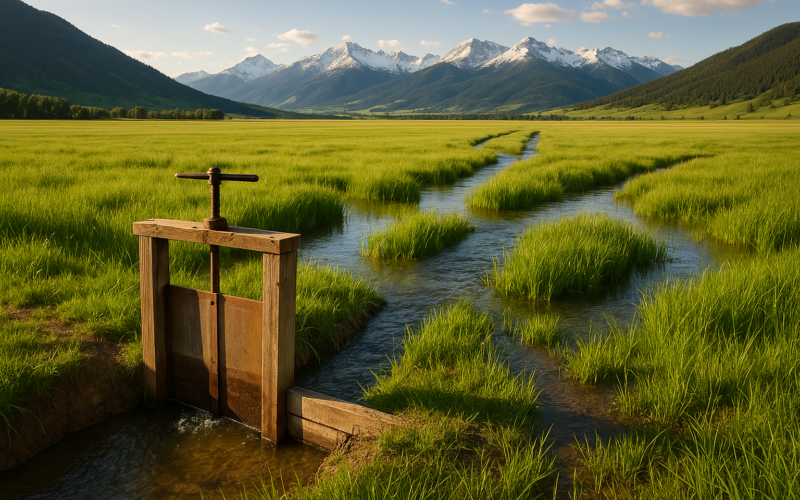
Every June the snow that piled up in the high country comes down the creeks, and the outfits in the Big Hole, the Ruby, the Madison and a hundred smaller valleys go to work spreading it across their meadows. Flood irrigating wild hay and pasture is old work, and it’s easy to treat it as something you do once and forget. But the meadow that greens up even and cuts heavy is almost never an accident. It’s a stretch of ground where somebody paid attention to where the water ran and when it quit.
The runoff doesn’t wait on you. In a lot of country you get the biggest flush of water for a short window before the creek drops off, and if your ditches aren’t ready to carry it, you watch half your year’s water go on down the valley. That’s the part people put off. Cleaning ditch is miserable, cold-footed spring work, and it always seems like there’s time. There isn’t as much as you think.
Get the water where you want it, not where the ground wants it
A meadow is never as flat as it looks from the pickup. Water finds the low run every time, and left alone it’ll pond in the bottom, drown out the good grass down there, and never reach the high side at all. You end up with sedge and slough grass in the wet spots and short, thin hay on the rises. The whole job of setting water is fighting that tendency.
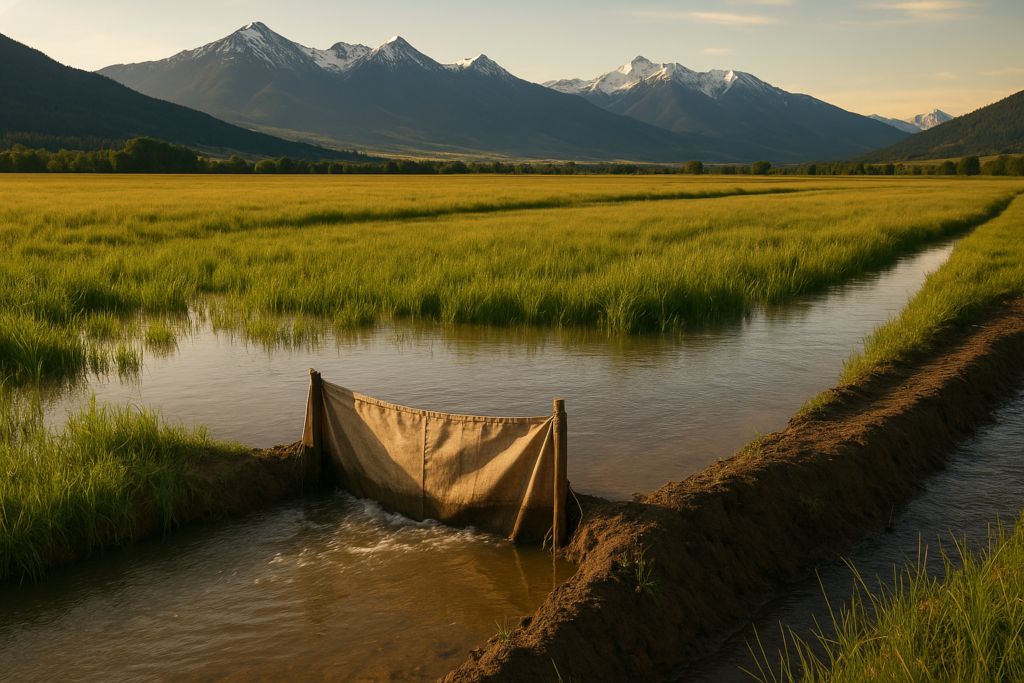
That means dams and checks that actually back the water up and push it out across the flat instead of letting it channel. Canvas dams, plastic, a shovel of sod, whatever you run, they have to hold. A check that leaks is a check that’s cutting a new ditch for you, one you didn’t want and will be filling next spring. Move your sets before the low ground gets soaked and before the high ground burns. On a big meadow that’s a lot of walking with a shovel, and there’s no shortcut to it.
Watch where the water actually goes the first day you turn it in. Gophers and ground squirrels tunnel all winter, and a pocket gopher run will carry your whole head of water off into the neighbor’s borrow pit if you let it. Badger holes do the same. The first irrigation of the season is when you find every leak, and it’s cheaper to plug them with a boot heel and a shovel than to lose the set.
Ditches carry water and they carry problems
A ditch that filled in with silt and grass over the winter can’t move the volume you need during peak runoff. Cattails and reed canarygrass choke a lateral down to a trickle. If you’re running the same ditches your granddad dug, they’ve been slumping and filling for decades, and a low spot in the bank is where the water leaves the system on its own schedule.
The other thing a ditch moves is weeds. Whitetop, hoary alyssum, houndstongue and Canada thistle all like ditchbanks, and every seed that drops in the water gets planted downstream in the wettest, most fertile ground you own. Walk your ditchbanks when you’re setting water. It’s the easiest scouting you’ll ever do, because you’re already out there.
Know when to shut it off
The mistake that costs the most doesn’t happen in June at all. It shows up on cutting day, when the swather sinks to the axle in a meadow you watered too late. Native hay ground needs time to firm up before you put iron on it. Depending on your soil and how hot it gets, that’s usually a couple of weeks or more of drydown after the last water comes off.
So you have to plan the last set backward from when you intend to cut. Water the low, slow-drying ground first and shut it off soonest. Save the high, gravelly ground that firms up fast for last. If you flood right up to cutting you either mire the equipment, tear up the sod, or bale hay with dirt and green slough in it that heats in the stack.
There’s a balance in it. Shut off too early and the crop quits growing before it’s made the tonnage it could have. Shut off too late and you can’t get on the ground to cut what you grew. Nobody hits it perfect every year, and a wet June or an early runoff moves the whole schedule. But the outfit that thinks about the shutoff in June, instead of finding out about it on the seat of a stuck swather in July, is the one that cuts a full, clean crop off firm ground.
The water’s only yours while it’s running. Spread it even, keep it in the ditch until you turn it out on purpose, and get it off in time to dry down. The meadow tells you next winter whether you got it right.