There’s an old temptation every June to let the alfalfa keep growing. It’s putting on height, the field looks heavy, and every day you wait it seems like more hay in the stack. Some of that is true. The rest of it is stem.
What happens after the bud stage is that the plant quits building leaf and starts building the coarse, fibrous stalk it needs to hold up flowers and set seed. Leaf is where the protein and the digestible energy live. Stem is filler. So the field that looks bigger at full bloom is heavier mostly because you grew a crop of stalks your cows will sort through and leave in the bunk.
Read the plant, not the calendar
The stand won’t hit the same maturity on the same date two years running. A warm, early spring pushes it fast; a cold, wet May holds it back. So you scout the field instead of circling a day on the calendar.
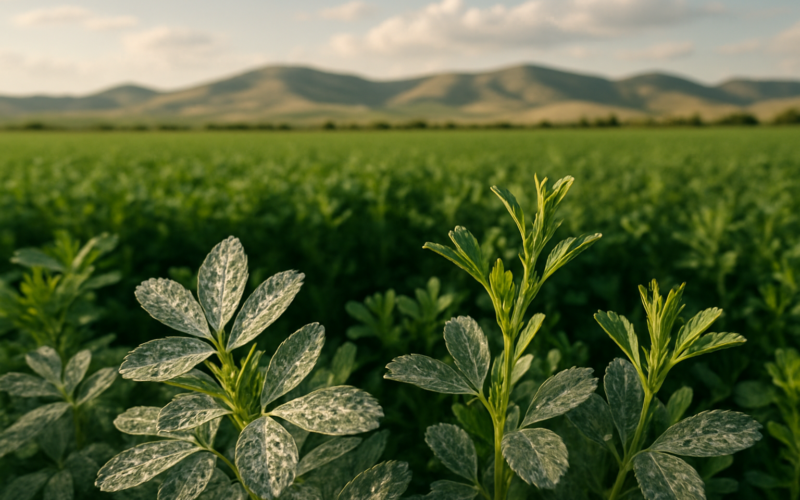
Walk out past the headland where the growth is typical, not the thin spots by the pivot track. Look at the top of the plant. In the bud stage you’ll see small green buds forming at the tips before any purple shows. That’s your window opening. Once you see open purple flowers scattered across the field, quality is already sliding, and by the time it’s blooming heavy you’ve given up the best of it.
Another tell is down low. When you see new shoots coming off the crown at the base of the plant, the alfalfa is ready to regrow and you can cut without setting back the next cutting. Cutting too early, before those crown buds show, can shortchange the plant’s energy reserves and slow the second growth.
The honest compromise most people land on is early bloom, or first flower. You give up a little of the very top-end quality you’d get cutting at late bud, and in exchange you pick up tonnage and give the stand a bit more room in the schedule. Where you sit on that line depends on who’s eating the hay.
Match the cutting to the cattle that get it
Dry cows in the middle of summer on decent grass don’t need dairy-quality hay. They need gut fill and enough protein to get by, and they’ll do fine on a first cutting taken a touch later. Save yourself the stress of chasing a narrow window on that field.
The hay that goes to bred heifers, thin cows in late winter, or anything you’re calving out is a different story. That’s where leaf and protein pay you back, and that’s the field worth cutting on the early side even if it costs you a little tonnage. If you sell hay, the buyer with dairy cows or backgrounding calves is paying for leaf, not stem, and the price spread between a green, leafy first cutting and a stemmy, sun-bleached one is real money.
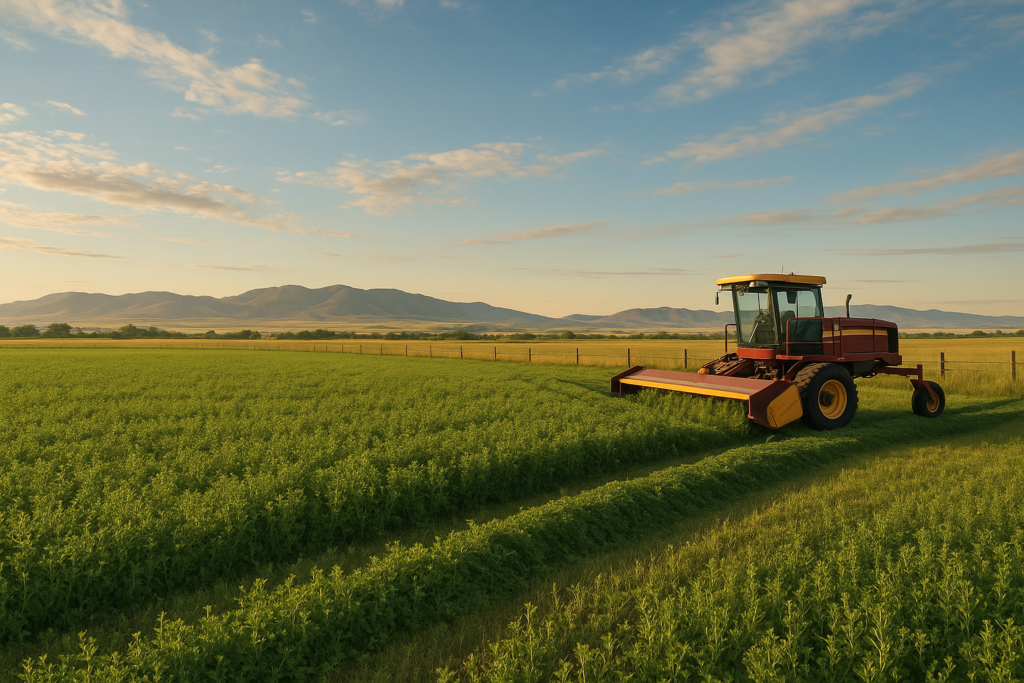
The trouble is you usually can’t cut everything at once. So set your priorities before the swather rolls: put the best ground and the earliest-maturing stand first, cut it at bud to early bloom, and let the fields headed for the dry cows come later in the rotation. Trying to hit peak quality on every acre at the same time is how you end up cutting all of it late.
Losing leaf after you cut it
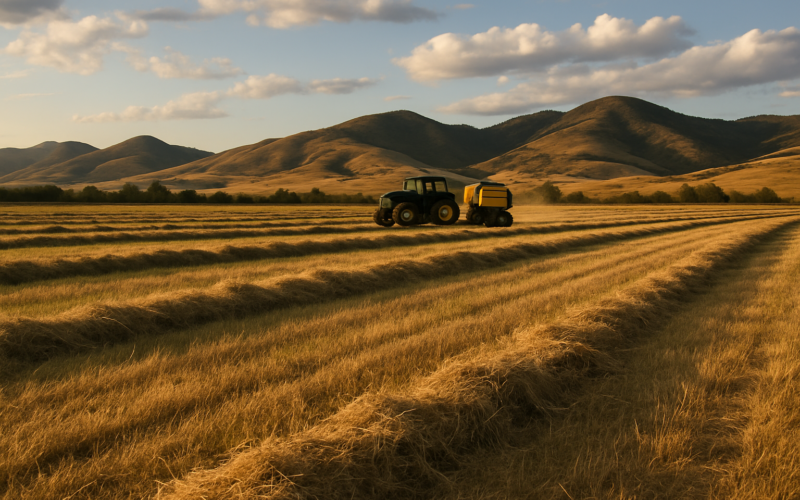
Getting the timing right at the swather is only half of it. All that leaf you protected by cutting early can shatter off in the field if you handle the crop dry. Alfalfa leaf dries faster than stem, and once it’s crisp it breaks and falls off during raking and baling, and it’s the leaf that’s laying on the ground.
Rake and bale when there’s a little moisture in the plant, early morning is usually best, so the leaves stay attached to the stem. That runs against the instinct to bale in the heat of the afternoon when everything’s dry, but bone-dry alfalfa going through a baler leaves the protein in the windrow. You’ll see it as green dust and shattered leaf on the ground behind the machine, and that’s the part you cut early to keep.
None of this is complicated. Watch for buds, get out ahead of the purple, cut your best hay first, and handle it with a little dew on it. The field that looks a week short of ready in mid-June is usually the one that fills the bunk in February.