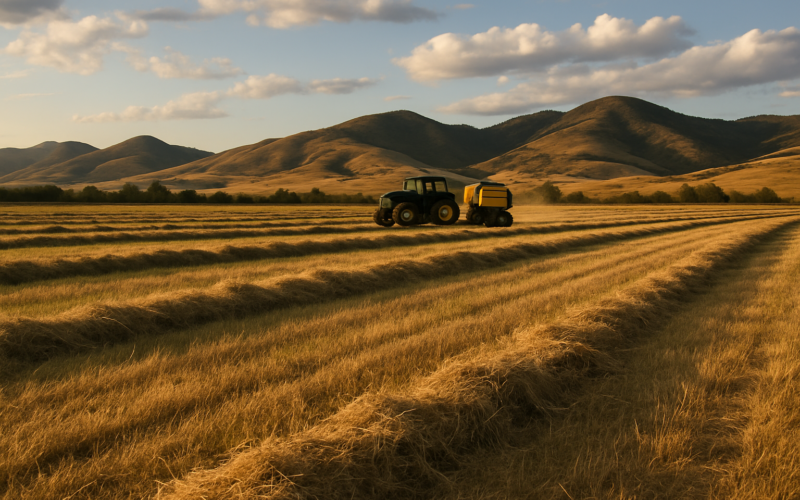
Everybody wants a heavy first cutting. The temptation in mid-June is to let it stand another week, let it fill out, and haul more bales off the field. The trouble is that the same days adding tonnage are pulling the quality out from under you. A stand of alfalfa gains weight as it heads toward bloom, but the leaves quit keeping pace with the stems. Stems are fiber. Leaves are where the protein and the digestible energy live. Wait long enough and you’re baling a lot of coarse stalk with a little feed hanging off it.
Grass hay works the same way. Once brome, timothy, or orchardgrass throws a seed head, it’s committed its energy to making seed instead of leaf. The plant coarsens fast after that. A field that tested like real feed in the boot stage can drop to something closer to filler in ten days of hot weather. You don’t get that back in the swather.
Read the plant, not the calendar
The date on the wall tells you less than the crop does. On alfalfa, the honest signal is bloom and bud. Cutting in the late-bud to first-flower window is the classic compromise — you give up a little tonnage to keep the leaf and the protein. Let it get to full bloom and you’ll cut more hay, but you’ve traded feed value for bulk, and the cows will tell you the difference when you’re rolling it out in a February wind.
Think about what the hay is actually going to do. If you’re feeding dry cows in decent condition through the winter, a heavier, more mature cutting will get them by, and the extra tonnage has real value. If that hay is going in front of first-calf heifers or lactating cows, or you’re planning to lean on it hard during calving, the quality matters more than the pounds. Match the cutting to the class of animal it’ll feed, and you’ll make better calls standing at the edge of the field.
There’s also the second cutting to think about. Cutting first thing on schedule, before the plant is too far along, sets you up for regrowth while there’s still moisture in the ground. Drag first cutting deep into July and the regrowth crawls out into hot, dry soil, and your second cutting suffers for it.
The weather window usually wins the argument
In this country you don’t always get to cut when the plant says it’s ready. You cut when you’ve got a stretch of dry days lined up. A crop cut at ideal maturity and then rained on in the windrow can lose more feed value than one cut a few days late in good curing weather. Leaching pulls the solubles out, the hay bleaches, and the leaves shatter when you finally get to rake dry stalks.
So watch the forecast as hard as you watch the field. If you’ve got a clean three or four days coming and the crop is close, take it. If the crop’s ready but the sky isn’t, sometimes the smart play is to wait for the window rather than mow into a wet forecast and pray. There’s no perfect answer — it’s a bet either way — but a decent cutting in the stack beats a great cutting rotting in the field.
Don’t shave it to the dirt
How low you set the cutterbar matters more than people give it credit for. On grass hay, scalping it takes the growing points and slows regrowth. On alfalfa, cutting too tight one year is one thing, but making a habit of it wears on the stand. Leaving a few inches of stubble protects the crown, holds a little moisture, and helps the next cutting come faster. You lose a hair of tonnage on the first pass and make it up on the second.
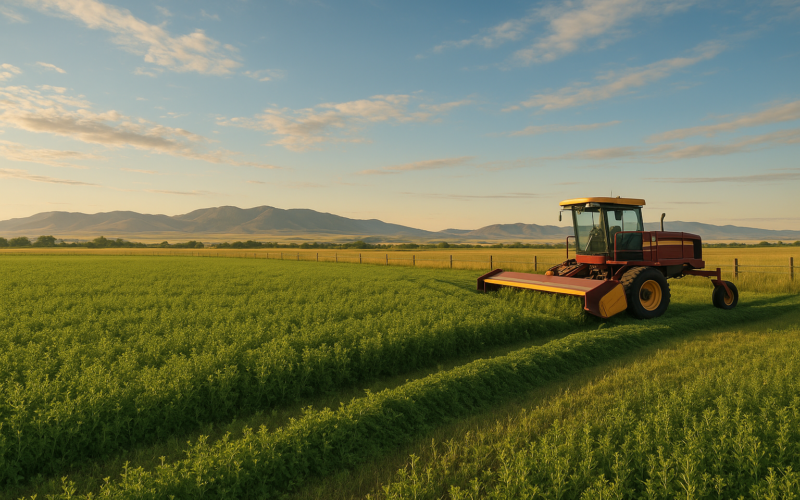
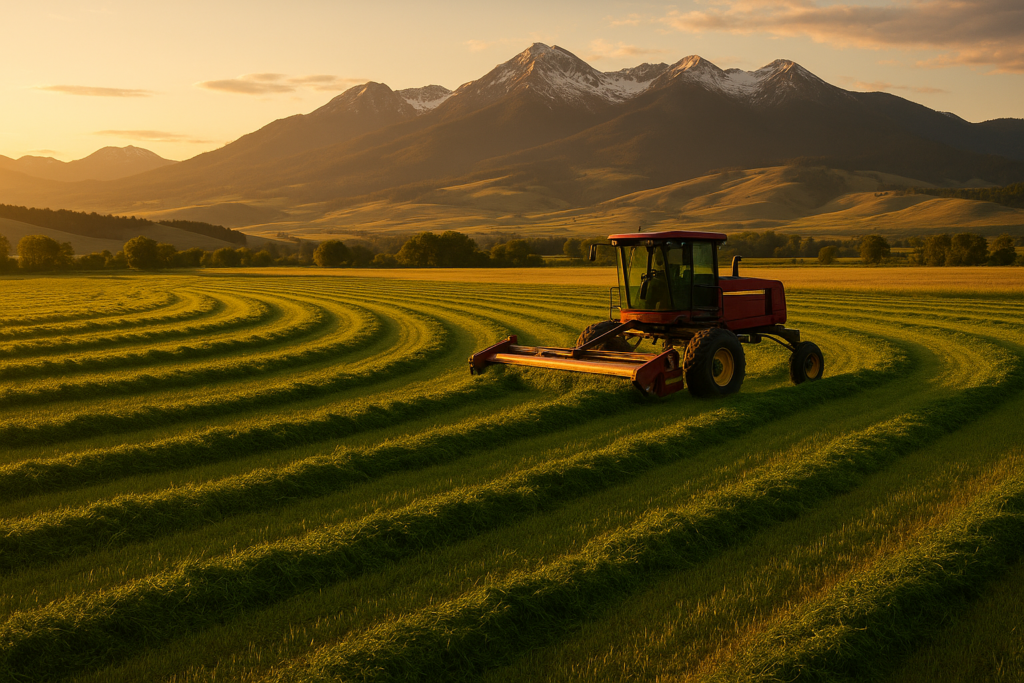
Same goes for running the swather too fast to beat the weather. A ragged, uneven cut doesn’t dry uniformly, and you’ll be waiting on the thick spots while the thin ones bleach out. Slow down enough to lay a clean, even windrow and the whole field cures together.
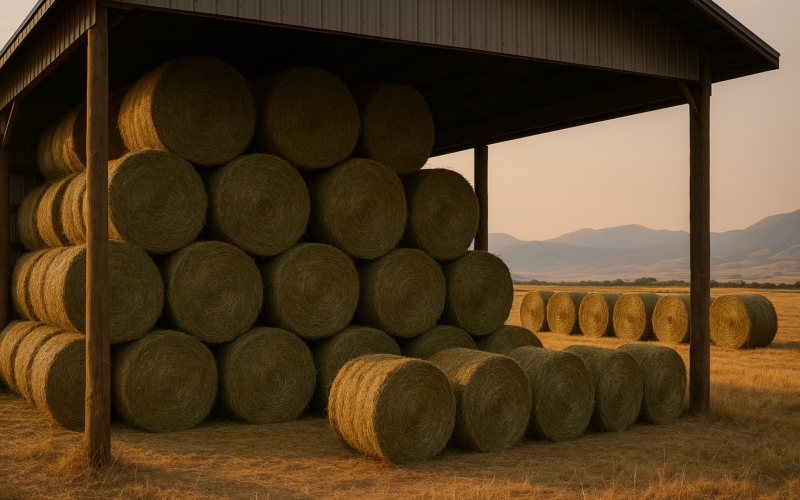
The hay you put up this month is the feed you’ll be pitching off the flatbed when it’s twenty below and the cows are stringing out behind the pickup. Cut it while the leaf is still on it, catch a dry window, and leave enough stubble to get your second cutting coming. Do that and the stack in the yard will actually feed cows instead of just filling the corral.