Montanans are used to taking a good dog just about everywhere—checking pivots, riding fence, chasing roosters, or riding along to town. Yellowstone National Park is different. If you’re headed south with a dog in the rig, it pays to know the rules ahead of time so you don’t end up turned around at the gate or stuck trying to improvise in a crowded parking lot.
Quick takeaways
- Dogs are allowed only in limited, developed areas—not on most trails, boardwalks, or in the backcountry.
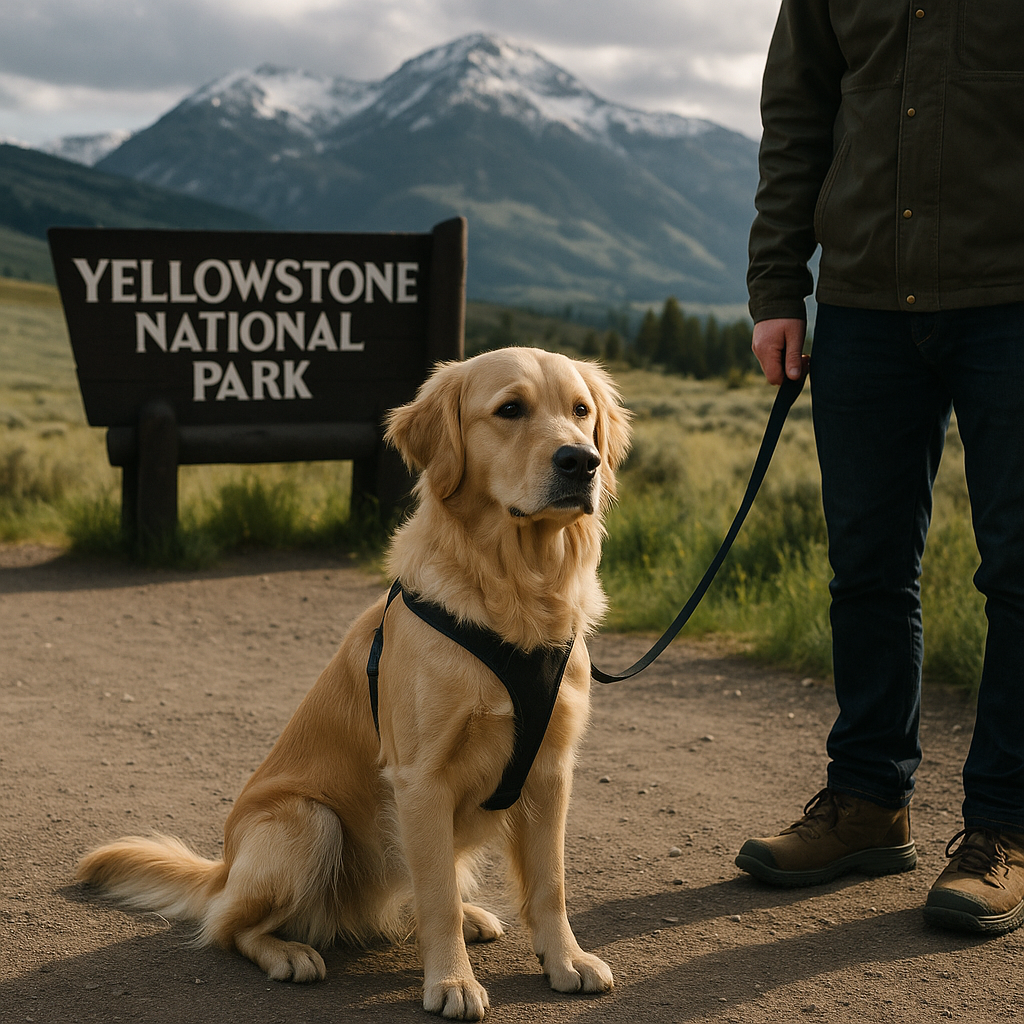
- Leashes are required and must be short (the park’s standard is typically 6 feet or less).
- Never leave a dog unattended—it’s unsafe and can be illegal depending on circumstances.
- Thermal areas and wildlife make Yellowstone uniquely risky for pets, even for experienced outdoor dogs.
- Plan for kennel/daycare options outside the park if you want to hike or spend time away from developed areas.
Where dogs are (and aren’t) allowed in Yellowstone
Yellowstone’s pet rules are designed to protect wildlife, visitors, and pets—and to reduce conflicts in some of the most heavily visited, high-risk areas in the West. In general, pets are restricted to developed areas and are not allowed on trails, boardwalks, or in the backcountry.
As a practical matter, if your plan includes hiking, wandering geyser basins, or covering ground away from parking lots, Yellowstone is not a “bring the dog along” destination. Most of the iconic experiences—Old Faithful boardwalks, Mammoth terraces, canyon viewpoints reached by trail, lakeshore walks—either prohibit pets outright or limit them to the pavement and parking areas.
For the most current, park-posted guidance, check Yellowstone’s official pets information before you leave:
https://www.nps.gov/yell/planyourvisit/pets.htm
Leash rules: short, attached, and under control
If your dog is in an area where pets are allowed, keep the leash on and keep it short. Yellowstone generally requires pets to be on a leash no longer than 6 feet and under physical control at all times. “Voice control” doesn’t count, even for a seasoned ranch dog.
That leash rule matters in parking lots and pullouts where bison, elk, and even bears can appear with little warning. A dog that bolts can trigger a wildlife response, create a public safety situation, or end up injured in seconds.
Wildlife conflicts: why Yellowstone is tougher than most places
Montana dog owners are used to wildlife country, but Yellowstone’s combination of dense wildlife, tight visitor spaces, and habituated animals raises the stakes. A dog can be perceived as a threat by bison, elk, moose, or predators—especially if it barks, runs, or approaches.
Even if your dog stays leashed, wildlife may approach roads and developed areas. The safest choice is to give animals a wide berth and leave if one is moving toward you. The National Park Service emphasizes keeping distance from wildlife; those guidelines apply doubly when you’ve got a dog with you.
For general park safety and wildlife distance guidance, see:
https://www.nps.gov/yell/planyourvisit/safety.htm
Thermal areas: a hidden hazard for dogs
Yellowstone’s thermal features are not just “hot water.” They include thin crust, scalding runoff, and unstable ground. Dogs don’t understand boardwalk boundaries, and a quick step off pavement can be disastrous. Even in developed thermal basins, pets are typically restricted from the boardwalk systems—one of the main reasons people visit.
If you’re thinking, “My dog’s careful,” remember that scent, steam, noise, and crowds can change behavior. The safest plan is to assume you won’t be doing thermal-area sightseeing with a pet.
Don’t leave your dog in the vehicle
Yellowstone’s summer traffic and sunny pullouts can turn a vehicle into an oven fast, even at elevation. In shoulder seasons, cold snaps can be just as dangerous. Add the reality of long bison jams and limited shade, and leaving a dog in the truck becomes a high-risk gamble.
Beyond the welfare issue, unattended pets can create enforcement problems and may draw complaints—especially in crowded lots. If your day’s plan includes stops where the dog can’t go, build in a kennel plan instead of relying on “just a few minutes” in the vehicle.
Practical options that work for Montana travelers
If you’re coming from Bozeman, Livingston, Billings, or anywhere in the state, there are a few realistic ways to do Yellowstone without breaking rules or shortchanging the trip.
Option 1: Split the day—dog-friendly morning, kennel for the park
Many families run a two-part plan:
- Morning: exercise the dog outside the park (forest roads, town paths, or a dog-friendly area).
- Midday: drop the dog at a kennel/daycare in a gateway community.
- Afternoon: do the boardwalks, short hikes, and sightseeing you came for.
Kennel availability can be tight in peak season. Call ahead and confirm vaccination requirements, hours, and whether they accept large or high-energy dogs.
Option 2: Choose dog-friendly public lands in Montana instead
If the main goal is getting outside with your dog, Montana offers plenty of places where your day won’t be limited to parking lots. Depending on the area and season, consider:
- National forests (leash rules vary; check local ranger district guidance).
- BLM lands where appropriate.
- State trust lands where access is open and conditions allow.
Always watch for seasonal wildlife closures, fire restrictions, and local leash requirements near trailheads and campgrounds.
Option 3: If you must bring the dog, keep expectations realistic
Some travelers still bring a dog for the road trip portion—camping outside the park, short walks in allowed areas, and time in the truck while one person runs a quick errand (not sightseeing). If you do this, keep the dog’s role limited and prioritize safety:
- Carry extra water and a collapsible bowl.
- Pack a shade tarp or reflective window covers.
- Keep a sturdy 6-foot leash and a backup slip lead.
- Have a plan for emergencies and after-hours vet care in nearby towns.
Camping and lodging: read the fine print
Rules can differ between campgrounds, lodges, and concessioner-managed facilities. Even if pets are allowed in some developed areas, they may not be allowed in certain buildings or cabins. If you’re staying overnight, confirm pet policies before you book, including any fees and restrictions.
What this means for Montana
Yellowstone is in our backyard, and plenty of Montana residents treat it like a weekend drive. But the park is managed differently than most of the places we hunt, fish, and work with dogs. The biggest takeaway for Montanans is that Yellowstone is not set up for “dog along for the day” recreation. The regulations are tighter, enforcement is more likely in busy seasons, and the hazards—thermal features and close-quarters wildlife—are not comparable to a typical forest trail.
For hunters, anglers, and ranch families used to a dog as part of the crew, the most Montana-practical approach is to either leave the dog at home or build a kennel plan so you can experience the park without constant restrictions. If the trip is really about time outdoors with your dog, you’ll often have a better day—and fewer headaches—choosing dog-friendly public lands on the Montana side.
Before you roll: a simple checklist
- Confirm current pet rules on Yellowstone’s official NPS page.
- Decide whether you’re sightseeing (no dog) or road-tripping (limited dog access).
- Line up kennel/daycare early if traveling June–September.
- Pack water, leash, waste bags, and a backup restraint.
- Have a plan for heat, cold, and traffic delays.
Inspiration: “yellowstone national park” – Google News (link)