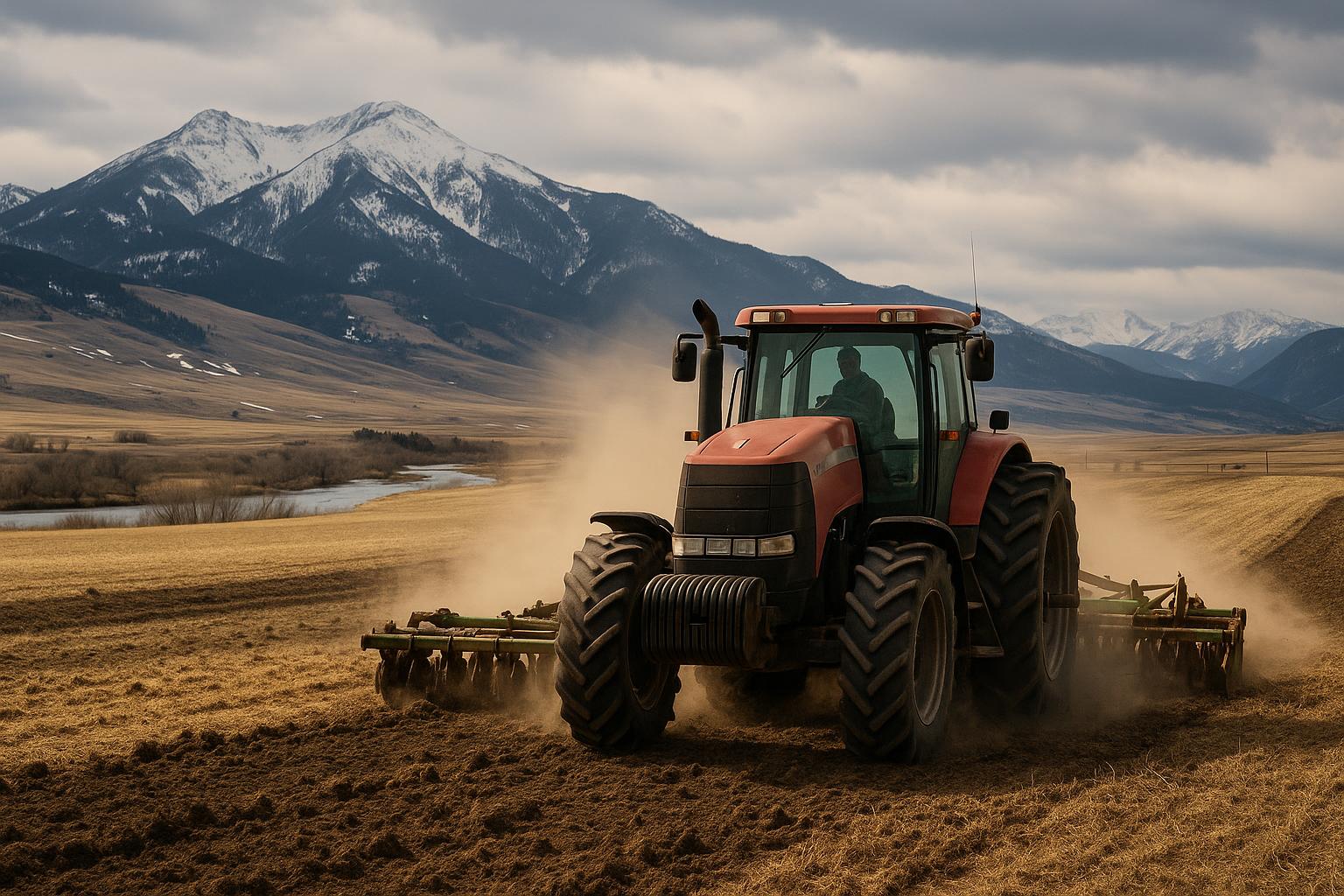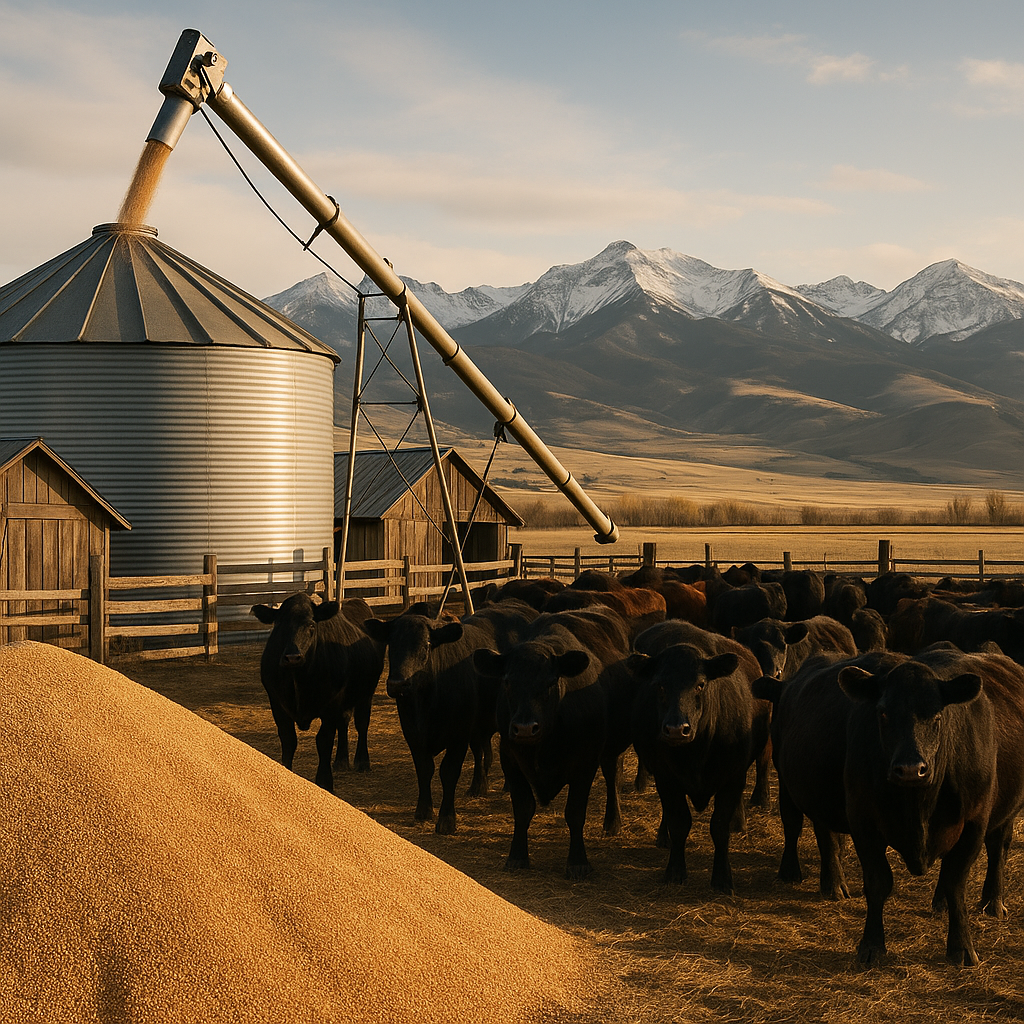
When grain markets get jumpy, Montana ranchers feel it fast—often through the feed bill before anything else. Even if you grow your own hay, grain prices can ripple into supplements, pellets, mineral mixes, and the broader cost of keeping cows in condition through winter. That’s why a newly released grain market benchmarks report from university Extension has caught the attention of producers who like to measure, not guess.
Benchmark reports don’t predict the future. What they do—when done right—is lay out reference points: typical price relationships, basis patterns, and marketing performance measures that help you compare your operation’s decisions against broader market behavior. For cattle country, that can translate into clearer decisions on when to lock in feed, when to stay flexible, and how to talk with your lender using shared numbers.
Quick takeaways
- Benchmarks are about context: they help you compare local cash prices and basis to a broader reference, not “call the top” or “call the bottom.”
- Feed costs drive cow-calf margins, especially for backgrounding, wintering, and drought-year supplementation.
- Basis matters in Montana: freight, rail availability, and local demand can swing cash prices away from futures.
- Risk tools are only useful if measured: benchmarks can help evaluate hedges, forward contracts, and “buy it when you need it” habits.
- Use benchmarks in planning meetings: with your nutritionist, feed supplier, and banker to stress-test your budget.
What a “grain market benchmark” is—and why ranchers should care
A benchmark is a yardstick. In grain marketing, it often means tracking how cash prices, futures prices, and basis (cash minus futures) behave over time. Some benchmark reports also look at historical seasonal patterns, price volatility, and marketing outcomes under different strategies.
For Montana livestock operations, grain benchmarks are less about selling corn or wheat and more about buying feed intelligently. If you background calves, finish cattle, or run a winter feeding program, you’re exposed to grain markets whether you want to be or not. Even on strictly forage-based outfits, drought years can force more purchased feed, and that’s when a bad buying plan can turn into a painful lesson.
The Montana angle: distance, basis, and the freight reality
Montana’s geography is both a strength and a constraint. We grow plenty of small grains and hay, but many operations still rely on delivered feed products that are priced off national markets plus transportation. That’s where basis becomes more than a textbook term.
Basis is influenced by:
- Freight and fuel (trucking availability, diesel prices, winter road conditions)
- Rail logistics (car availability, scheduling, regional congestion)
- Local demand (feedlots, dairies, ethanol plants, export pull through PNW)
- Weather and crop conditions (quality issues can tighten certain feed channels)
A benchmark report can help you recognize when your local delivered price is “normal” for the season—or when it’s unusually high or low relative to futures. That doesn’t automatically tell you what to do, but it can keep you from buying on panic or sitting on your hands when the market is offering a reasonable opportunity.
How to use benchmarks when you’re buying feed
Most ranchers don’t need a complicated trading strategy. What helps is a repeatable process that reduces surprises. Benchmarks can support that process in a few practical ways.
1) Build a feed-cost calendar
If you buy grain, pellets, or commodity byproducts, track your delivered price each time you purchase and note the month. After a few years, you’ll see your own pattern—then you can compare it to broader benchmarks.
Questions to ask:
- Do you tend to buy at the same time every year?
- Are you consistently paying above what peers report?
- Are there months when basis typically widens in your area?
2) Separate “price risk” from “basis risk”
Futures markets (like Chicago wheat or corn futures) are mostly about national and global supply-demand. Basis is local. When you lock in a delivered feed price, you’re often locking both at once. Benchmarks help you see which part is hurting you.
Example: If futures fall but your delivered price doesn’t, you may be dealing with freight or local tightness. If basis is stable but futures are swinging wildly, you’re looking at broader market volatility.
3) Evaluate forward contracts with a clearer eye
Feed suppliers may offer forward pricing. Sometimes it’s a good deal; sometimes it’s a convenience premium. Benchmarks can help you judge whether the offered basis and timing are in line with typical patterns.
Before signing, consider:
- What exactly is being priced (delivered, FOB, picked up)?
- Are there quality specs and shrink terms?
- What happens if you need to roll delivery or reduce tonnage?
- Does the contract price reflect normal seasonal basis—or an outlier?
4) Stress-test your calf and cow budgets
Many Montana outfits run tight, disciplined budgets. But budgets can still be fragile if feed is treated as a single line item. Benchmarks and historical ranges can help you run “what-if” scenarios.
Try three feed-cost cases:
- Low: favorable basis + average futures
- Middle: typical basis + typical futures
- High: wide basis + high futures (or drought-driven local scarcity)
Then ask: At what feed-cost level does your backgrounding program stop penciling? At what point do you change weaning date, sell earlier, or shift to a different ration?
Where this intersects with hay, pasture, and drought decisions
In Montana, hay and pasture are often the foundation. But grain benchmarks still matter because grain prices can influence what hay is worth, what supplements cost, and how aggressively neighbors bid for feed in a short year.
When moisture is short and hay inventories tighten, reports indicate the market can move quickly—especially for tested, cow-quality hay and for products that replace forage in a ration. A benchmark mindset helps you avoid making the whole year’s feed decision in one rushed week.
If you’re staring at drought conditions, benchmarks can support a structured approach:
- Calculate how many days of feed you truly have on hand.
- Price replacement feed options (hay, pellets, grain, byproducts) on a cost per unit of energy/protein basis, not just $/ton.
- Compare today’s delivered prices to historical ranges and seasonal norms.
- Decide what portion to lock in now versus later.
What this means for Montana
Montana producers don’t need a Michigan or Midwest playbook. But a solid benchmark report can still be useful because it reinforces the discipline of measuring basis, tracking marketing outcomes, and separating emotion from decisions.
Here’s the practical Montana takeaway: use benchmarks to improve your “buying habits” the same way you use production records to improve your calving or grazing plan. If you can identify the months when your delivered feed prices tend to be most competitive—and the times when basis typically works against you—you can spread purchases, negotiate more confidently, and reduce the odds of getting caught in a freight-driven spike.
For ranchers who are already juggling cattle prices, pasture conditions, and input costs, the biggest value may be communication. Shared benchmarks can make conversations with feed reps, nutritionists, and lenders less subjective. That can matter when you’re deciding whether to retain ownership, background longer, or sell calves at weaning.
A simple next step: start tracking three numbers
If you want to put this to work without adding a lot of paperwork, start a one-page spreadsheet and track:
- Delivered feed price (what you actually paid, including freight)
- Reference futures price (corn or wheat, whichever your feed is tied to)
- Basis estimate (delivered cash minus futures, adjusted as best you can)
After a season or two, you’ll have your own benchmark history—customized to your county, your supplier network, and your delivery realities. That’s often more valuable than any headline about grain markets.
Inspiration: “grain market” – Google News (link)