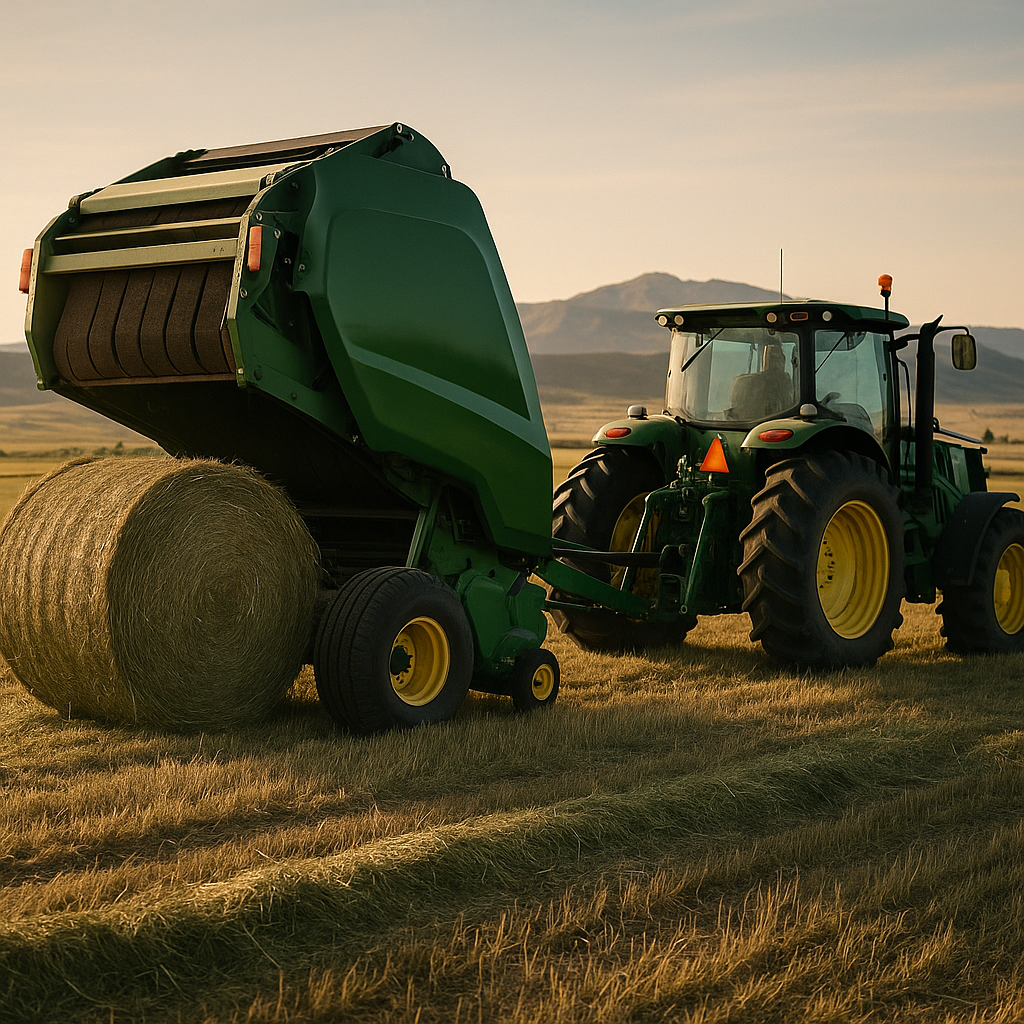
As hay season planning starts long before the first windrow hits the ground, equipment announcements tend to catch Montana producers’ attention—especially when they promise more flexibility and fewer headaches in the field. Reports indicate John Deere has introduced a new round baler aimed at versatility and dependable performance, a combination that matters when you’re chasing weather windows from the Hi-Line to the Yellowstone Valley.
- Quick takeaways:
- Reports indicate Deere’s newest round baler is positioned around versatility—useful for mixed hay types and changing conditions.
- Dependability is a central theme, which could translate to less downtime during short Montana curing windows.
- Before buying, match baler capacity and features to your acreage, bale handling setup, and the way you feed.
- Dealer support, parts availability, and service response time can matter as much as the spec sheet.
A new baler in a familiar Montana reality: short windows and long days
Montana haying isn’t one-size-fits-all. Some operations are putting up tight alfalfa on irrigated ground; others are baling native grass, mixed stands, or regrowth that can be unpredictable. Add in elevation changes, afternoon winds, and the kind of pop-up storms that can turn a good cut into a race, and the “best” baler is often the one that keeps rolling when conditions aren’t perfect.
That’s why new equipment pitched as both versatile and dependable gets producers talking. If the machine can handle a range of crops and moisture conditions while minimizing plugging and breakdowns, it can protect forage quality and keep labor from stretching even thinner.
What “versatility” can mean on a round baler
Manufacturers use the word “versatility” a lot, and it can mean different things depending on the model and options. Reports about Deere’s new round baler suggest it’s designed to be adaptable for a range of operations. For Montana producers, here are the practical ways versatility typically shows up:
- Crop range: A baler that performs in both alfalfa and grass (and mixed stands) without constant adjustment can reduce frustration across the season.
- Variable vs. fixed chamber choices: Depending on the model, variable-chamber balers can let you adjust bale diameter for different feeding systems, while fixed-chamber machines can be favored for consistent bale shape and density.
- Density control: The ability to build a firm bale helps with weather resistance, hauling efficiency, and storage—particularly important when bales may sit outside.
- Feeding compatibility: Bale size and density should match your feeders, processor, or unroller. A “versatile” baler isn’t helpful if it produces bales your equipment can’t handle.
- Operator adjustments: Simple, intuitive settings matter when multiple people run the machine or when you’re switching fields and windrow sizes.
In practical terms, versatility is less about a buzzword and more about whether the baler fits your rotation and your feeding plan without requiring constant tinkering.
Dependability: the feature you can’t see on the brochure
Reports indicate dependability is a key selling point of the new baler. That’s not surprising—downtime is expensive, and it’s not just about repair bills. In Montana, a breakdown can mean losing a narrow curing window, taking rain on cut hay, or burning extra fuel and time trying to get caught back up.
When producers talk about dependable balers, they often mean:
- Consistent feeding: Smooth crop flow from pickup to chamber, especially in heavy windrows or uneven stands.
- Fewer plugs: Plugging can happen with any baler, but design details and maintenance access can make the difference between a quick fix and a half-hour fight.
- Durable wear components: Pickup teeth, belts/rollers, chains, and bearings take a beating in dusty conditions and on rough ground.
- Easy maintenance: Grease points, chain access, and clear service intervals help keep the machine running through long stretches.
One thing Montana ranchers consistently emphasize: dependability isn’t only the machine. It’s also the dealer network—parts on the shelf, mechanics who can get to the field, and a service department that understands the urgency when hay is down.
Questions to ask before you consider a new baler
If you’re evaluating a baler—Deere or any brand—asking a few direct questions can help you avoid buying more machine than you need, or worse, buying the wrong tool for your system.
- What are you baling most of the time? Alfalfa, grass, straw, and mixed stands can behave very differently through a pickup and chamber.
- How many bales per year? Your annual volume should drive how much you value higher capacity, heavier-duty components, and premium features.
- What’s your storage plan? If bales are stored outside, density and consistent shape can matter more for weathering and tarping.
- How will you move bales? Bale diameter and weight need to match your loader, spear, trailer, and any stackyard layout constraints.
- Who runs the baler? If multiple operators are involved, user-friendly controls and clear diagnostics can reduce mistakes and downtime.
- How far are you from service? In many Montana counties, “nearby” can still mean an hour or two. Ask about parts availability and in-season response time.
It’s also worth requesting a realistic walk-through of daily maintenance and common wear items. The best time to learn where the grease points are is not at 10 p.m. with a headlamp and a storm line building to the west.
Where new baler features can pay off on Montana operations
Even without diving into model-specific claims, there are a few areas where modern round balers can offer real value—especially for producers trying to do more with the same crew size.
- More consistent bales: Uniform bales stack and haul better, and they feed more predictably—important when winter feeding stretches for months.
- Reduced operator fatigue: Better monitoring and simpler adjustments can keep an operator productive during long days.
- Faster field-to-stack workflow: Anything that reduces stops—whether from plugging, twine/net issues, or adjustments—helps keep the whole hay crew moving.
- Better crop protection: If a machine helps you finish ahead of weather, the payoff shows up in forage quality, not just the equipment budget.
What this means for Montana
For Montana ranchers and hay producers, a new baler positioned around versatility and dependability is less about brand news and more about risk management. When hay is a cornerstone input—either as a cash crop or as winter feed—equipment reliability directly affects feed costs and herd performance.
Here’s the Montana angle: our weather swings and geography reward operations that can capitalize on short windows. A baler that reliably handles variable windrows, changing moisture, and long field days can help protect quality and reduce the stress that comes with trying to beat a storm.
At the same time, the best “upgrade” might be a service relationship. If you’re considering any new machine, talk to your dealer about parts stocking, loaner options (if available), and what in-season support looks like in your county. In a state where distance is a real factor, that support can be as valuable as any new feature.
Bottom line
Reports indicate John Deere’s newest round baler is aimed at operators who want a machine that can adapt to different conditions while staying dependable under pressure. For Montana producers, the decision should come down to fit: your crop mix, your bale handling system, your annual volume, and the level of local dealer support you can count on when hay is on the ground.
If you’re in the market, bring your real-world details—acreage, typical yields, storage, feeding method, and labor—to the conversation. That’s how you turn “versatility” and “dependability” from marketing terms into practical value.
Inspiration: "john deere" – Google News