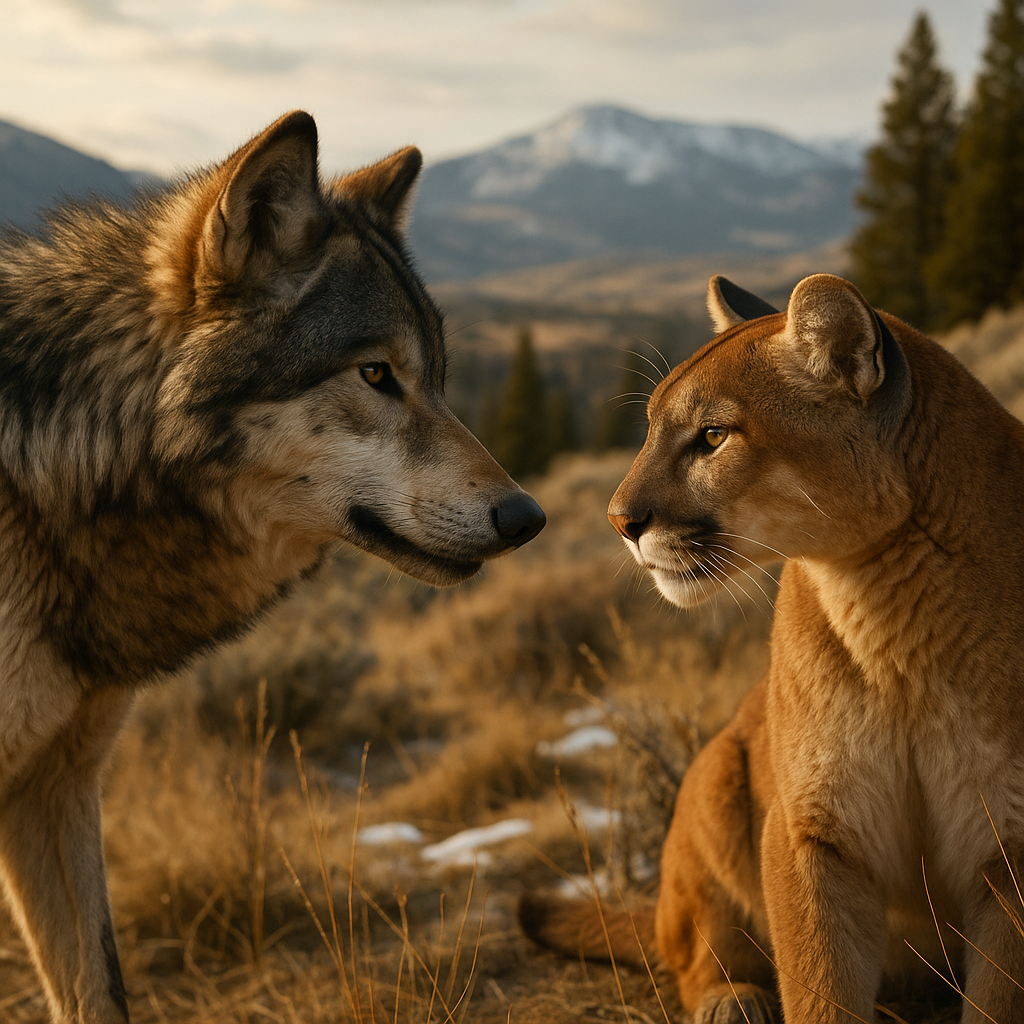
Predator talk in Montana usually starts with elk numbers, ends with winter severity, and includes plenty of strong opinions about wolves and mountain lions (cougars). A recent study circulating in the Yellowstone news cycle adds new detail to that debate, suggesting that in parts of the Greater Yellowstone Ecosystem, wolves may influence where and how cougars hunt more than many people assume.
As with any wildlife research, it’s worth keeping expectations grounded. These studies often focus on specific areas and time frames, and predator-prey relationships can swing year to year with snowpack, prey distribution, and human pressure. Still, the findings are a useful lens for hunters, livestock producers, and anyone who spends time in lion country.
Quick takeaways
- Reports indicate wolves can displace cougars from kills and may alter cougar hunting patterns in shared habitat.
- Cougars remain highly effective ambush predators, especially in broken terrain and timber where wolves are less efficient.
- Predator “dominance” isn’t a single scoreboard—season, landscape, prey density, and pack/lion density all matter.
- Shifts in predator behavior can ripple to scavengers and may affect where hunters find sign.
- For Montana, the practical questions are about elk/deer distribution, conflict risk near homes and ranches, and management flexibility.
Why this question matters in the Northern Rockies
Wolves and cougars overlap across much of western Montana, from the Bitterroots to the Rocky Mountain Front and into the Greater Yellowstone area. Both predators can take deer and elk, but they do it differently:
- Wolves are endurance hunters that often work in packs, pushing prey in open country and snow conditions that favor pursuit.
- Cougars rely on stealth and short bursts, using cover, rimrock, and timber to get close before the hit.
Because their hunting styles differ, they can share the same landscape without directly competing every day. But when they do collide—especially at a carcass—the interaction can be costly for one side. Research in and around Yellowstone has long documented wolves taking over kills made by other predators and forcing them off. The newer work being discussed suggests those interactions may be common enough to shape cougar decisions about where to hunt and how long to stay on a kill.
What the new study appears to be saying
Based on coverage of the study, researchers examined how wolves and cougars interact in the Yellowstone region and how those interactions affect feeding opportunities. Reports indicate wolves may have an advantage in direct contests at carcasses, particularly when a pack arrives at a kill a cougar has made.
That doesn’t mean cougars are “losing” across the board. It suggests a more specific dynamic: wolves can impose a cost on cougars by:
- Stealing kills or forcing cougars to leave earlier than they otherwise would.
- Changing where cougars hunt, potentially pushing them toward rougher terrain, thicker cover, or areas with different prey availability.
- Increasing risk for cougars when wolves are nearby, which can influence movement and feeding behavior.
In plain terms: even if a cougar can kill efficiently, losing meals to wolves can mean more hunting to make up the difference. That can translate into more time on the move, more kills over a season, and potentially more interactions with people and livestock—though those outcomes depend heavily on local conditions and are not guaranteed.
“Dominance” depends on terrain, season, and numbers
Montanans know the country matters. A wolf pack on a windswept bench above the Madison Valley is playing a different game than a cougar in a steep, timbered drainage off the Bitterroot. Here are a few factors that can tip the balance:
- Snow and winter travel: Deep snow can favor wolves, especially if prey are bogged down and packs can travel efficiently. But snow can also concentrate deer and elk into cover where cougars excel.
- Pack size vs. solitary hunting: Wolves arriving as a group can be hard for a single cougar to stand off. A lone predator often chooses caution over conflict.
- Prey distribution: When elk or deer are clustered, wolves may encounter cougar kills more often. When prey are dispersed, overlap can drop.
- Human pressure: Hunting seasons, road access, and recreation can shift how both predators move. In some places, cougars may use thicker cover or steeper terrain to avoid people, which may also reduce wolf encounters.
So while the study coverage frames the question as “who dominates,” the more useful takeaway is that wolves can meaningfully influence cougar behavior in shared landscapes—especially around carcasses.
Ripple effects: scavengers, other predators, and carcass use
One underappreciated angle is what happens after a kill. When wolves take over a cougar kill, the timing and pattern of carcass use changes. That can affect:
- Ravens, eagles, and other scavengers that key in on wolf activity.
- Bears (seasonally), which can also claim carcasses and change how long meat remains available.
- Where you see sign: wolf tracks, scat, and bed sites may cluster around carcasses more than they would if a cougar fed undisturbed for days.
For hunters and trappers, this is less about academic food webs and more about reading the ground. If wolves are frequently displacing cougars, the sign you find might reflect a moving target: cougars making quicker kills and leaving, wolves arriving later, and scavengers piling in behind.
What this means for Montana
Yellowstone research doesn’t automatically translate to every drainage in Montana, but it’s relevant because much of our western landscape mirrors the same mix of timber, breaks, and open parks. Here are a few practical implications worth watching:
- Big game distribution may shift locally. If wolves increase pressure in open country, elk may spend more time in timbered security cover—places where cougars are more effective. That doesn’t mean elk numbers will drop everywhere, but it can change where animals spend daylight hours and where hunters find them.
- Cougar behavior near people could change. If cougars are displaced from kills more often, they may travel and hunt more frequently. In some settings, that could increase the odds of lions showing up near edges of towns, subdivisions, or calving pastures. That’s not a prediction—just a risk pathway managers often consider.
- Livestock conflict is context-dependent. More movement and more hunting effort could elevate conflict potential in some areas, but livestock practices, carcass disposal, fencing, guardian animals, and turnout timing still matter a lot. Producers should continue to document losses and work through established channels with Montana Fish, Wildlife & Parks (FWP) and local conflict specialists.
- Management needs flexibility. If predator interactions are shifting where and how predation occurs, season structures and response tools may need to stay adaptive. Montana already manages wolves and mountain lions with different frameworks; research like this can inform how those frameworks evolve.
For hunters, the immediate “so what” is simple: if you’re chasing elk in wolf country, don’t assume cougars are absent. And if you’re lion hunting, don’t assume wolf sign means lions have vacated. The overlap can be real, and the timing can change fast.
How to use this information without overreading it
Wildlife studies can be valuable, but they’re not crystal balls. A few ways to keep the conversation grounded:
- Look for the “where” and “when.” Predator dynamics in Yellowstone’s core can differ from heavily roaded national forest or private-ag interfaces in Montana.
- Separate behavior from population trends. A study showing displacement at kills doesn’t automatically mean cougar numbers are declining—or that wolves are increasing. It’s about interaction, not necessarily abundance.
- Watch your local data. Harvest reports, conflict reports, and field observations from your area matter. FWP’s regional updates and season-setting materials can provide context.
If you want to follow the broader Yellowstone conversation, the National Park Service maintains background on wolf restoration and ongoing monitoring at nps.gov/yell. For Montana-specific management and reporting, start with Montana Fish, Wildlife & Parks.
The bottom line
The emerging picture from the Yellowstone research coverage is that wolves may shape cougar decisions more than many people think—especially around carcasses and in areas where encounters are frequent. Cougars still thrive as ambush predators, and in Montana’s steep, brushy, timbered country, they have plenty of home-field advantage. But where wolves and cougars overlap tightly, wolves can change the cost of doing business for a solitary cat.
For Montana hunters, anglers, ranchers, and rural homeowners, the value of this research isn’t in picking a winner. It’s in understanding that predator interactions can shift patterns on the landscape—sometimes in ways you’ll notice first as changed animal movement, changed sign, or changed conflict hotspots.
Inspiration: “yellowstone national park” – Google News (link).