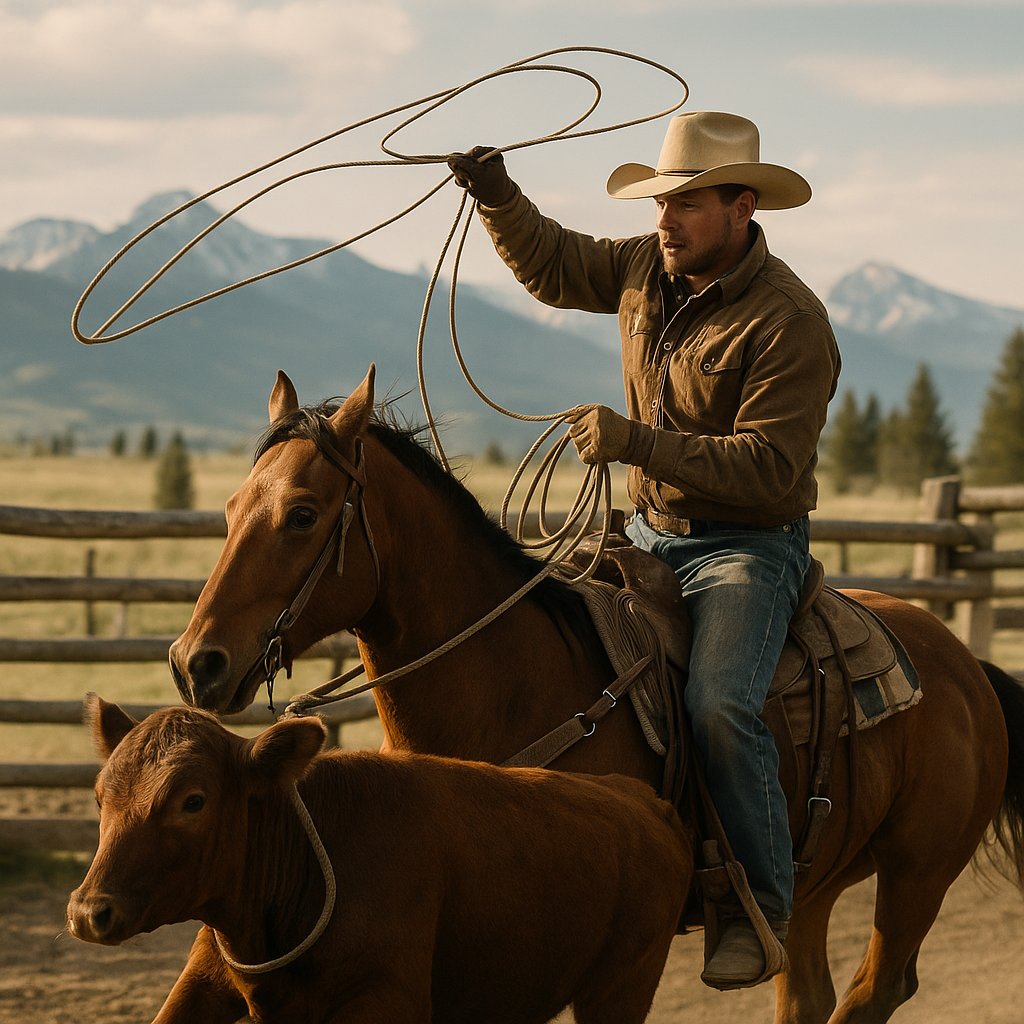
From branding pens to big outdoor arenas, Montana riders are showing up in growing numbers for ranch roping and team roping clinics. The draw isn’t just competition—it’s practical, ranch-ready skills: handling cattle efficiently, reading a cow, staying safe in tight quarters, and getting a horse confident around livestock.
Quick takeaways
- Clinics can speed up the learning curve for safe, efficient cattle handling—especially for newer hands and young riders.
- Good instruction emphasizes horsemanship first: position, timing, and stock sense before speed.
- Montana’s mix of ranch work and rodeo culture makes clinics a natural fit for families and working outfits alike.
- Expect a focus on fundamentals: dallying, rope handling, box etiquette, and cattle flow.
- Choosing a clinic comes down to goals (ranch vs. arena), stock quality, and instructor approach.
Reports indicate more clinics are being offered around the Northern Rockies as producers, weekend ropers, and 4-H families look for instruction that translates to real-world stock work. In a state where many folks still need a rope for day-to-day ranch tasks, the clinic format offers something valuable: structured reps under a coach’s eye, without the pressure of a jackpot clock.
Why clinics are catching on
Montana ranching has always been a “learn by doing” culture. But there’s a difference between figuring it out on the job and building a foundation that keeps people, horses, and cattle safer.
Clinics typically compress years of trial-and-error into a weekend of focused practice. A good instructor will fix the small things that cause big wrecks: where your hands are, how you step off, when you swing, how you rate, and how you dally. Those details matter whether you’re doctoring a yearling in a pasture or backing into the box at a roping.
Many clinics also emphasize stockmanship—how to read cattle and set up a run so you’re not forcing it. That’s a ranch skill first and a roping skill second.
Ranch roping vs. team roping: what’s the difference?
Not every roping clinic is built the same. In Montana, you’ll see both “ranch roping” and “team roping” offerings, and the goals can be different.
- Ranch roping clinics often focus on practical catches, rope handling, and horsemanship that would apply to sorting, branding, and doctoring. You may see more emphasis on controlling the cow and less on speed.
- Team roping clinics usually break down heading and heeling mechanics, box work, scoring, and how to be a good partner. Timing and consistency are the priority.
- Ranch sorting / team sorting instruction (sometimes offered alongside roping) builds cattle-reading skills, position, and communication—useful for anyone moving pairs or working a gate.
There’s overlap, of course. Plenty of Montana ropers want both: a rope that works on the ranch and skills that hold up in the arena.
What a well-run clinic typically covers
While every instructor has their own program, most clinics that draw repeat attendance share a similar backbone: fundamentals first, then building speed and complexity as riders demonstrate control.
- Horsemanship and position: rating cattle, keeping your horse’s shoulders up, riding to your hand, and staying balanced through the throw.
- Rope handling basics: coil management, building a consistent swing, delivering the loop, and recovering cleanly.
- Dallying and safety: correct wrap, glove use, horn management, and when to let go. Many instructors stress that a “pretty dally” isn’t worth an injury.
- Box and arena etiquette: scoring rules, barrier awareness, and how to set up so cattle get a fair start.
- Stock sense: reading a steer’s line, not over-pushing, and learning to win with position instead of panic.
Some clinics also include targeted sessions for headers vs. heelers, practice on the Smarty or heel-o-matic, or slow-work drills that build muscle memory without burning up horses.
Picking the right clinic in Montana
With more options on the calendar, the best clinic is the one that matches your needs and your horse’s current level. Before you pay an entry fee, ask a few practical questions.
- Is it ranch-focused or arena-focused? If you want skills for branding season, look for ranch roping and stockmanship emphasis. If you’re chasing consistency in the box, choose a team roping program.
- What’s the rider-to-instructor ratio? Smaller groups often mean more direct coaching and more meaningful reps.
- What kind of cattle will be used? Good clinics prioritize cattle flow and animal welfare, and they won’t run stock into the ground.
- Is it appropriate for your horse? A young or green horse may benefit from slower exposure and confidence-building, not high-speed runs.
- What’s the safety culture? Look for clear rules on dallies, helmets (especially for youth), warm-up space, and how runs are managed.
If you’re new, it’s also worth asking whether the clinic welcomes true beginners. Some do; others assume you can already swing and deliver a loop.
Horse welfare and soundness: the hidden ROI
Montana riders know horses are too valuable—financially and personally—to “just see what happens.” Clinics that emphasize correct mechanics can help reduce the wear-and-tear that comes from bad habits: pulling from the wrong angle, taking hits in the shoulders, or running cattle in a way that creates hard stops and awkward turns.
A clinic that teaches riders to rate, ride correctly to the catch, and finish a run under control can be easier on horses over the long haul. It can also build confidence in horses that are new to the rope or uneasy around cattle.
That said, any roping activity carries risk. Riders should be realistic about their horse’s conditioning, feet, and mental readiness—especially early in the season when many horses are coming off winter downtime.
Youth, family, and the “community” factor
In many Montana towns, roping is as much social as it is sport. Clinics often draw families—parents who rope, kids who are learning, and neighbors who just want to handle cattle better. The clinic setting can be a comfortable on-ramp for youth who are not ready for the pressure of a competition pen.
For young riders, the best programs keep things structured: safe spacing, clear turn-taking, and instructors who can explain the “why” behind each drill. Many clinics also encourage riders to practice on the ground first—building rope skills before adding speed and horsepower.
What this means for Montana
Montana’s working landscapes make roping more than an arena hobby. When clinics improve horsemanship and stock handling, the benefits can ripple out beyond the weekend:
- Safer ranch work: Better rope handling and better cattle-reading can reduce wrecks during doctoring, sorting, and branding.
- More capable help: Clinics can bring newer hands up to speed faster, which matters when labor is tight and the work still has to get done.
- Stronger local events: More confident ropers often translate into healthier participation at community ropings, benefit events, and fair-week competitions.
- Horse development: Riders who learn to train and ride with feel—rather than force—tend to produce steadier, longer-lasting ranch horses.
It also underscores a Montana reality: the line between “ranch” and “rodeo” has always been thin. A clinic can be a place where practical stock work and competitive skills sharpen each other, and where newcomers find a path into a tradition that still matters on the ground.
Before you go: a practical checklist
- Bring a rope that fits your goal (ask ahead about recommended length and lay).
- Check your saddle and horn wrap; bring gloves and basic first-aid supplies.
- Condition your horse for stops and turns—don’t make the clinic the first hard work of the year.
- Be honest about your level so instructors can place you appropriately.
- Plan to learn one or two key fixes you can practice at home.
Clinics won’t replace time in the saddle, but they can make that time count. In Montana, where a good horse and a good rope are still tools of the trade, that’s reason enough for many riders to circle a weekend on the calendar.
Inspiration: “team roping clinics” – Google News (link)