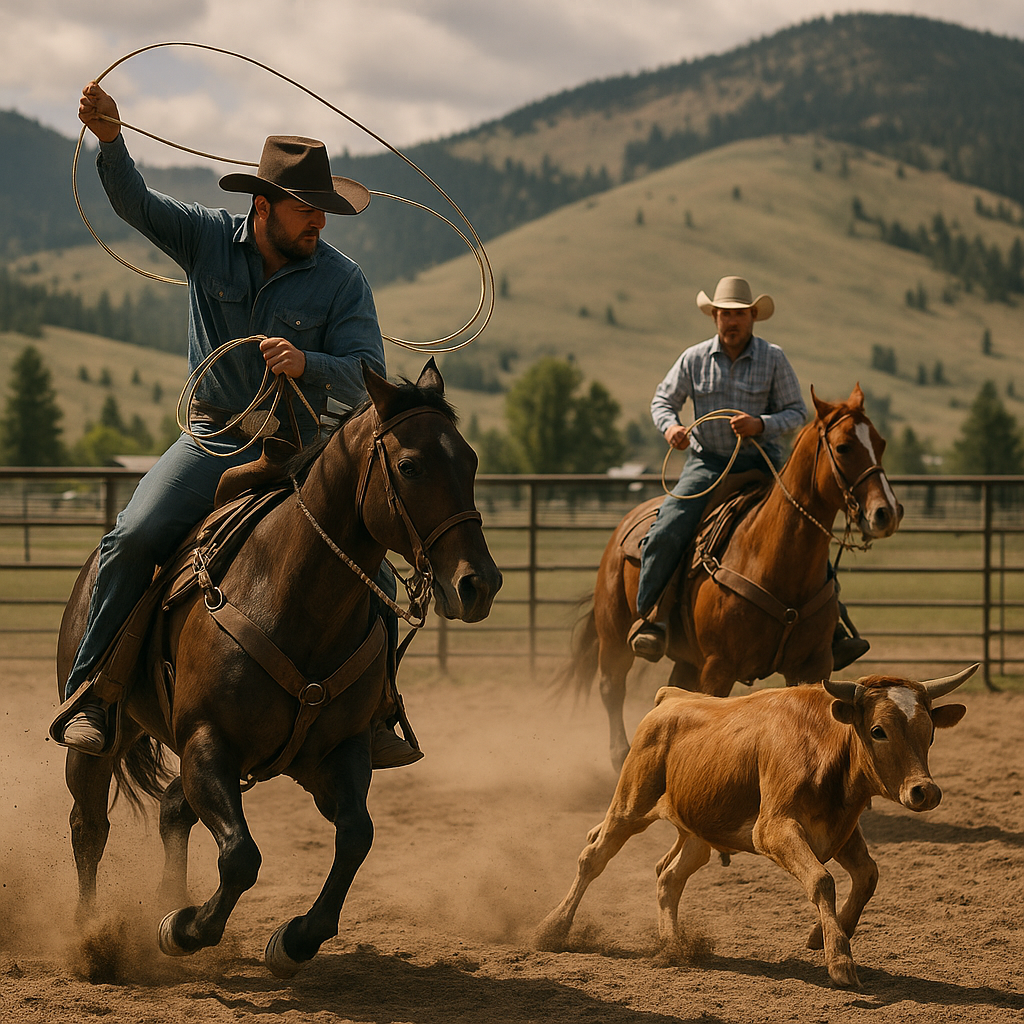
Across Montana, team ropers are finding more ways to stay sharp between big weekends—practice nights, small jackpots, and traveling clinics that focus on fundamentals. The common thread isn’t just getting more runs; it’s getting better runs. With fuel and entry fees still adding up, many ropers are looking for practice setups that build timing and confidence without souring a good horse.
Quick takeaways
- Quality beats quantity: plan short, focused sessions instead of running your horse into the ground.
- Clinics can fast-track fundamentals: a good instructor can spot small issues in position and timing before they become habits.
- Jackpots are practice with pressure: smaller events can help dial in start-box and barrier nerves.
- Horse care is the limiter: legs, feet, and recovery time determine how often you can rope—more than your calendar does.
Reports and regional event calendars indicate a steady stream of roping opportunities in the Northern Rockies, from local arenas that host weeknight practice to weekend series that blend jackpots with instruction. For Montana ropers, the best approach often comes down to matching the event to the goal: is it a tune-up, a confidence-builder, or a true test?
Practice nights vs. jackpots vs. clinics: picking the right tool
Not every run does the same job. The smartest ropers treat practice, jackpots, and clinics like different tools in the box.
- Practice nights are for repetition and problem-solving: slow things down, fix the track, clean up the delivery, and make sure the horse is reading the steer.
- Jackpots add pressure and pace: the box feels different when there’s money on the line, even if it’s a small payout. That pressure can reveal weak spots quickly.
- Clinics are for diagnosis and fundamentals: a good clinician watches what you do every run, not just the one you remember.
Many Montana arenas and stock contractors also try to balance steer numbers, footing, and run counts to keep things safe. Still, the responsibility lands on the roper to know when to quit for the night—especially with younger or freshly tuned horses.
What a solid clinic should actually cover
Clinics vary, but the best ones tend to hit the same core pieces. Whether you’re healing, heading, or doing both, these are the topics that usually pay off the fastest:
- Box fundamentals: body position, rein management, and leaving flat instead of lunging.
- Rate and track: letting the horse get to the right spot without over-riding the face.
- Rope mechanics: swing plane, delivery, and how to miss “better” when you do miss.
- Team communication: who calls what, how to recover after a bobble, and how to avoid the “both fix the same problem” wreck.
- Horse management: warm-up routines, when to rest, and how to keep a horse mentally fresh.
A good instructor can also help a roper separate human problems from horse problems. A horse that feels “stiff” might be sore—or it might be getting pulled out of shape by hands and feet that aren’t matching. Clinics that include video review or slow-motion feedback can be especially helpful for that.
Building a practice plan that doesn’t sour a horse
It’s easy to fall into the trap of “one more run.” Over time, that’s how horses get dull in the box, start anticipating, or begin to resent the job. A simple plan keeps you honest.
Try a three-part session:
- Warm-up (10–15 minutes): walk, trot, lope, change directions, and get the horse soft in the face and ribs. If you can’t steer and rate, roping won’t fix it.
- Focused reps (3–8 runs): pick one goal—leaving flat, better handle, cleaner delivery, stronger dally position—and stop when you get it right a couple times.
- Cool-down (10 minutes): long rein, let the horse breathe, and check legs/feet before you load.
If your horse is young, coming back from time off, or you’re roping on harder ground, reduce the run count. It’s also worth mixing in “dry work” days—tracking the dummy, boxing drills without a steer, or just riding outside to keep a horse’s mind right.
Footing, weather, and Montana reality
Montana ropers deal with a wider range of conditions than most: early-season mud, mid-summer hard ground, fall temperature swings, and winter indoor dust. Each one changes how much your horse can safely do.
- Hard ground: shorten the session, avoid aggressive stops, and pay attention to soreness the next day.
- Deep or inconsistent footing: it can strain soft tissue; keep speed under control and focus on form.
- Cold snaps: extend warm-up time and consider light wraps or quarter sheets until the horse is loose.
- Dusty indoors: watch for coughs and consider dampening hay, improving ventilation, or limiting time in heavy dust.
If an arena posts footing changes or run limits, take them seriously. Those rules are often written after someone paid a price.
Jackpots as “practice with consequences”
Small jackpots can be a smart bridge between practice and bigger rodeos, especially for new partnerships. They help you learn what falls apart when the pace picks up.
Ways to use jackpots strategically:
- Enter fewer rounds: one or two solid runs can be better than four tired ones.
- Set a goal beyond winning: clean barrier, correct track, or a calm box leave.
- Keep notes: what did your horse do in the box, after the catch, and on the way out?
If you’re hauling a long distance, plan for recovery. Hydration, a good cool-down, and a quieter day after hauling can keep legs and attitude where they need to be.
Safety and stockmanship: the part that doesn’t get enough ink
Good roping culture is built on safe handling—of cattle, horses, and people. Even at a casual practice, things can go sideways fast.
- Check your gear: horn wrap, latigo condition, cinch, and reins. Replace worn ropes before they break at the worst time.
- Talk through the run: especially with new partners—who calls the steer, who calls the handle, and what to do if it goes wrong.
- Respect the cattle: avoid unnecessary hot laps; keep the flow moving and minimize stress on steers.
- Know your horse’s limits: a horse that’s getting anxious in the box is telling you something.
Many arenas also rely on volunteers and a small crew. Being the person who helps, gates, and keeps things smooth matters—especially in rural communities where events run on neighbor power.
What this means for Montana
For Montana’s ranch and rodeo communities, more clinics and organized practice opportunities can strengthen the pipeline of capable ropers—people who can step into branding season, ranch day-work, or the weekend pen with better horsemanship and safer habits.
It also supports local arenas and fairgrounds that depend on consistent participation to keep lights on and footing maintained. When ropers choose structured practice and education—rather than just chasing runs—it can reduce horse wear-and-tear, improve cattle handling, and keep families coming back to the same facilities year after year.
The bottom line: Montana doesn’t need more hype to build good ropers. It needs more intentional reps, better horse care, and events that make it easy for newcomers to learn the right way.
How to find a good fit close to home
If you’re looking to plug in, start local and ask questions:
- Check your nearest fairground, indoor arena, or roping pen for posted practice nights and seasonal series.
- Ask who is putting on the clinic and what the format is (ride time, steer numbers, skill levels).
- Look for clear expectations on safety, run order, and stock care.
- If you’re bringing a young horse, ask whether there’s room to slow things down.
And if you’re the one organizing, consistency matters more than size. A well-run practice with good footing and clear rules will outlast a bigger event that feels chaotic.
Inspiration: “team roping clinics” – Google News (link)