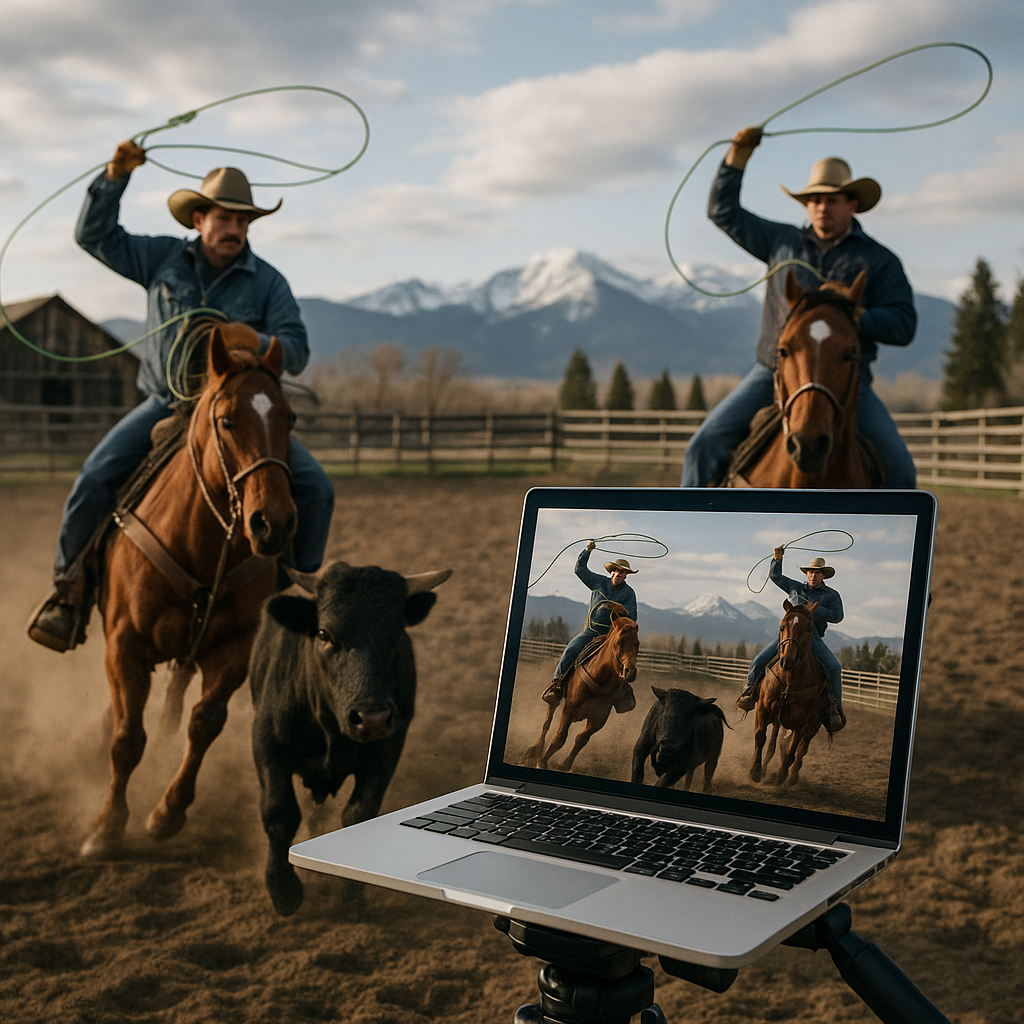
In a state where winter roads can shut down a weekend haul and calving season eats the calendar, it’s no surprise Montana ropers are taking a harder look at online education. Reports indicate a new streamed team roping clinic featuring Ryan Motes is being offered through Roping.com, adding to the growing menu of subscription-based instruction aimed at helping ropers sharpen fundamentals without leaving home.
Streaming a clinic isn’t the same as a day in the box with a good coach watching every swing—but for plenty of ranch families, it can be a practical tool between jackpots, brandings, and the next chance to ride with a mentor in person.
Quick takeaways
- Convenience wins: Streamed clinics can fit Montana schedules when weather, work, or distance make travel tough.
- Use it as a supplement: Video instruction helps with concepts and drills, but it won’t fully replace eyes-on coaching.
- Safety still matters: Practice plans should match your horse, your arena setup, and your stock access—don’t force drills beyond your situation.
- Best value comes with structure: Take notes, set goals, and rewatch specific segments instead of letting it play in the background.
Why online roping clinics are showing up now
Team roping has always been a sport of repetition and timing. Traditionally, that meant hauling to a clinic, a practice pen, or a buddy’s place and roping until your arms gave out. But the realities of Montana geography—long distances between towns, limited indoor arenas in some regions, and seasons when daylight is short—make consistent instruction hard to come by.
Online clinics are trying to fill that gap by packaging a full program into watchable segments. Reports indicate the Ryan Motes clinic is presented as a comprehensive course. In general, these programs tend to focus on the same building blocks you’d hear at a good in-person clinic: positioning, rope handling, horsemanship, and a repeatable system that holds up under pressure.
For ropers who already have a foundation, video can be a way to tighten details—especially if you’re the kind of learner who benefits from seeing the same move explained multiple ways.
What you can realistically learn from a streamed clinic
A well-produced video clinic can do a strong job teaching concepts: where to be, why timing matters, and how small adjustments change your outcome. It can also be useful for building a practice plan when you don’t have a coach handy.
Here are areas where streamed instruction often helps Montana ropers most:
- Roping mechanics: Dally basics, rope management, and understanding how your swing affects tip and delivery.
- Positioning and angles: Head and heel positioning that reduces panic moves and improves consistency.
- Horse preparation: Common-sense approaches to getting a horse softer, calmer in the box, and more responsive in the run.
- Troubleshooting patterns: Identifying why you miss left, pull, or get tight and what to try next.
One of the big advantages of streaming is replay. If you’ve ever left a clinic thinking, “I should’ve written that down,” video solves that problem. You can pause, rewatch, and compare what you’re doing to what’s being taught.
What video can’t fix (and where Montana ropers should be cautious)
No matter how good the instructor is, a streamed clinic can’t watch you. It can’t see that your horse is dropping a shoulder, that your delivery is late because you’re bracing, or that your arena footing is causing your horse to hesitate. Those are the moments where an in-person coach earns their keep.
It’s also worth being realistic about stock access. Many Montana ropers practice on what’s available—sleds, dummies, or occasional cattle. A program might demonstrate drills on fresh steers in a controlled setting, which doesn’t always translate to a small-town practice pen with limited runs.
Keep these cautions in mind:
- Don’t chase speed early: If you’re rebuilding fundamentals, slow is usually faster in the long run.
- Match the drill to your horse: A finished rope horse and a ranch gelding that’s new to the box need different steps.
- Protect your cattle: If you’re practicing on ranch cattle, avoid overusing the same animals and watch for stress and soreness.
- Mind your setup: Good footing, safe panels, and a clear alley matter more than squeezing in “one more run.”
How to get the most out of a streamed clinic
Montana folks are practical: if you’re paying for something, you want it to work. The biggest difference between “I watched it” and “I improved” is having a plan.
Try this approach:
- Watch once without practicing: Get the overall system before you start changing everything at once.
- Pick one theme per week: For example: box position, rate, or delivery. Don’t overhaul your whole run in a day.
- Film your runs: A phone video from behind the box and one from the side can reveal a lot.
- Build a drill ladder: Start on the ground, then the dummy, then slow cattle, then competition pace.
- Schedule a check-in: Even one lesson with a local coach can help you interpret what you’re seeing online.
If you’re a header and your heeler is also learning, watch together. Shared language—“get your feet underneath you,” “stay square,” “let the run happen”—can reduce the frustration that shows up when partners are trying to fix different problems at the same time.
Cost, access, and the subscription question
Subscription platforms are becoming common across the western horse world. The tradeoff is straightforward: instead of paying travel, stall fees, and clinic entry, you’re paying for a library of instruction you can access any time.
Before you subscribe, it’s worth checking details like:
- Whether the clinic is included in a membership or sold separately
- How long you have access to the content
- Whether there are printable practice plans or drill lists
- Compatibility with your internet connection (a real issue in rural Montana)
For some households, the best value is seasonal—subscribing during winter when you’re riding less and using the time to study, then focusing on hands-on practice when arenas thaw and jackpots start filling up.
What this means for Montana
Montana’s roping culture is tied to ranch work as much as it is to the arena. Many of the state’s best ropers learned by doing: doctoring calves, sorting pairs, and riding good horses day after day. But modern roping is also more technical than it used to be, and the competition level at jackpots and rodeos keeps climbing.
Streamed clinics are one more tool that can help bridge the gap between “I can catch” and “I can catch under pressure.” For a ranch kid in Garfield County who can’t haul three hours for weekly lessons, a structured video course might be the most consistent instruction they get all month. For an older hand in the Hi-Line country, it can be a way to revisit fundamentals without beating up a body that’s already done its share of post-hole fencing and winter feeding.
That said, Montana is still Montana: horsemanship is local, conditions vary, and there’s no substitute for time in the saddle. The best outcome is when online learning supports real-world practice—especially when it keeps horses quieter, cattle healthier, and ropers safer.
A practical bottom line
If you’re looking at a streamed clinic like the one reports indicate is available through Roping.com, treat it like a set of tools, not a magic fix. Watch with intention, practice with a plan, and don’t be afraid to ask a trusted local coach to help translate what you’re seeing into what your horse needs.
In a place where the nearest indoor arena might be an hour away and the weather doesn’t care about your entry fees, that kind of flexible learning can be the difference between showing up rusty and showing up ready.
Inspiration: “team roping clinics” – Google News (link)