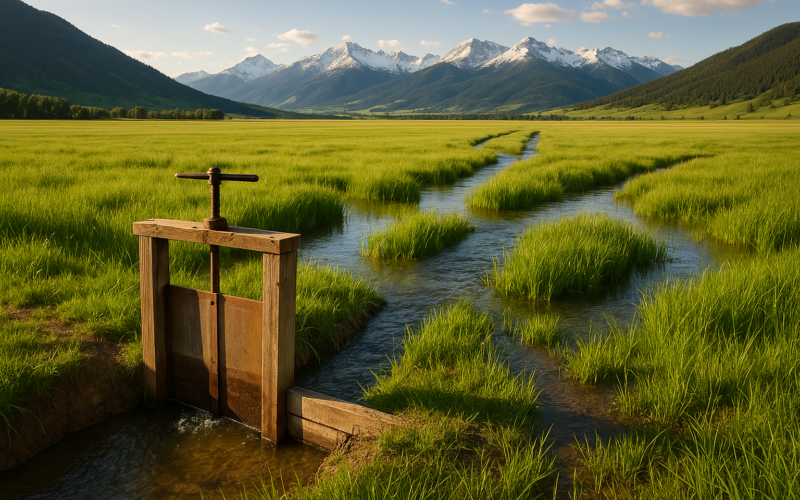
In the flood-irrigated valleys—the Big Hole, the Ruby, the upper Madison, the Beaverhead bottoms—the water you get in June is the water that makes your hay. Snowmelt fills the creeks and ditches now, and it doesn’t hang around. A warm week high in the drainages will run the peak off in a hurry, and by mid-July a ditch that was bank-full is a trickle you’re fighting over with everyone downstream of you.
So the meadow work you do in the next couple weeks matters more than most people give it credit for. Get the water spread wide and even while you’ve got plenty, and the grass fills in behind it. Miss the high water, and you’re trying to irrigate on short supply when it’s least effective and the plants need it most.
Walk the ditches before you turn much water
Head ditches and laterals shift over the winter. Muskrats dig, banks slough, gophers punch holes right where the water sits deepest, and the trash from last fall packs against your checks and dams. Before you’re depending on that ditch, walk it. It’s easier to shovel out a slump or pull a plug of willow roots when the ditch is low than after it’s running full and cutting a hole through your bank at two in the morning.
Pay attention to grade. Wild-hay meadows flood-irrigate off a hair of fall, and if a stretch of ditch has silted in or a gopher mound built up, the water quits going where you want it and piles up somewhere you don’t. A stuck spot doesn’t look like much until it’s washing out the low corner and starving the ridge above.
Spread it wide, not deep
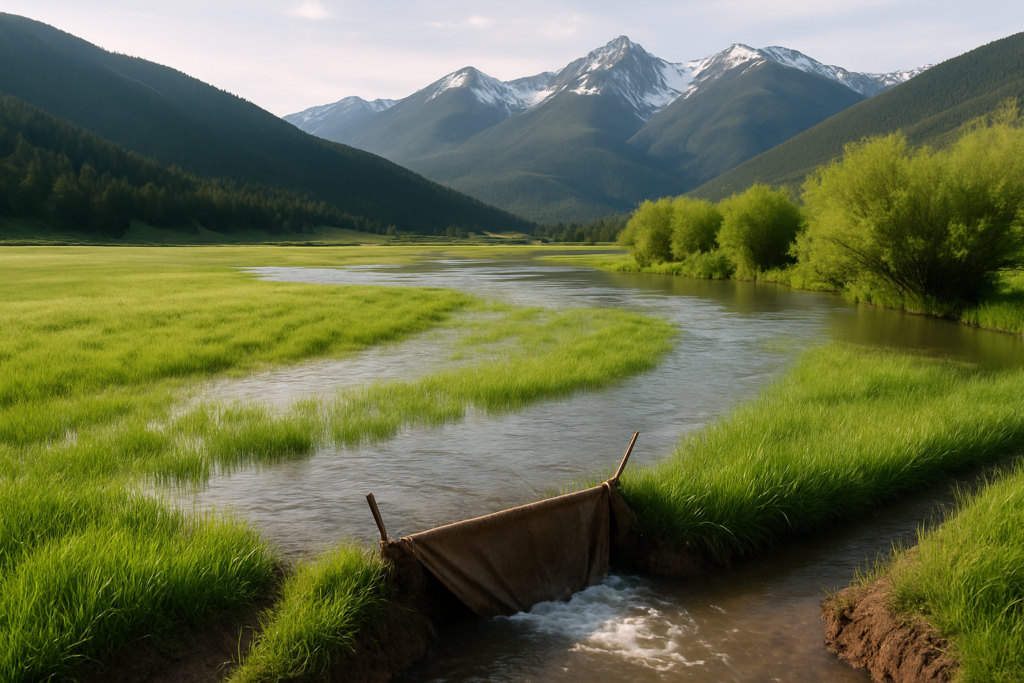
The whole point of flood irrigating a hay meadow is to sheet water thin across as much ground as you can, not to pond it up in the low spots. Standing water drowns the grass and leaves you with sedge and hummocks in the wet holes while the higher ground stays dry. You want it moving—a slow sheet that soaks in as it travels.
That means setting your dams and canvas dams so each check floods its stretch and then you move on. Chasing the water is the job. A meadow that gets one good, even flooding on the front of the runoff will carry a lot further into the summer than one that got hit hard in patches and skipped everywhere else. Cover the far corners first if you can, because those are the ones that dry out first and the ones you’ll never get water to once the creek drops.
- Set the top checks first and work down, so you’re not fighting water that’s already gotten ahead of you.
- Watch where it wants to run on its own—old channels and low ground—and dam those off so the water is forced to spread instead of cutting a ditch across your meadow.
- Move dams before the ground below them puddles up. If it’s ponding, that check has done its work.
Know when to shut it off
There’s a point where more water quits helping. Once a stretch is soaked and the grass is greened up and growing, standing water past that just delays your cutting and softens the ground. You want the meadow firmed up and dry enough that a swather and baler can get across it without leaving ruts and without the crop lodging in soft spots.
That’s the balancing act in a flood system: you can’t hold the high water back for later, but you also don’t want the meadow so wet you can’t get on it when the grass is ready. Most years that means pushing hard to get everything flooded during the runoff peak, then letting the ground dry down ahead of first cutting. If you’re running short and can’t cover it all, water the ground that’ll pay you back—the productive bottoms—and let the thin gravelly rises go.
Water rights matter here too. In a dry year the calls come early, and if you’re junior on the creek you may lose the water sooner than you’d like. That’s all the more reason to get every acre you can flooded while the water is physically there and nobody’s calling it. The hay you grow off June runoff is cheap. The hay you buy in September because the meadow burned up isn’t.