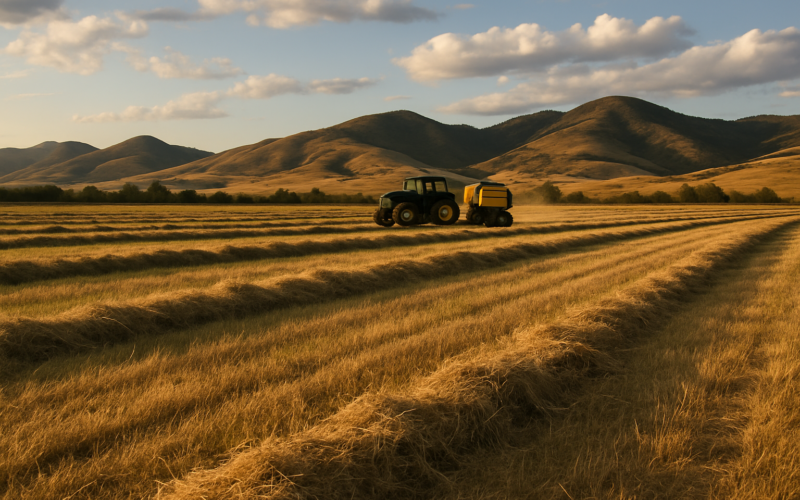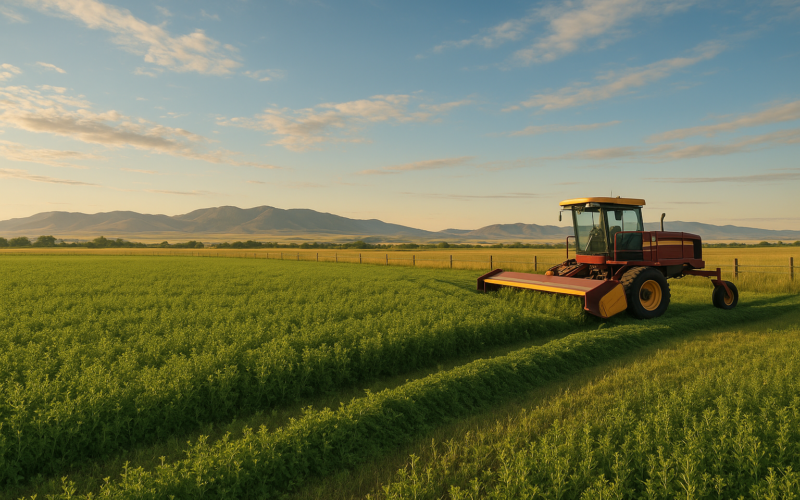
The first cutting is the one everybody watches the calendar on. You want tonnage, the weather won’t hold, and there’s always a reason to wait one more week. But hay quality doesn’t wait. An alfalfa plant that looks a little taller and heavier every day is quietly moving its value out of the leaf and into the stem. By the time it’s in full bloom, you’ve grown more pounds and less feed.
For most of Montana, first cutting lands anywhere from early June in the warmer valleys to the first part of July up on the higher, later ground. The exact date matters less than what the plant is doing when the swather rolls.
Watch the plant, not the calendar
Alfalfa quality tracks with maturity, plain and simple. In the bud stage, before any flowers open, the plant is loaded with leaf and the protein and energy run high. Once it hits early bloom—flowers showing on maybe a tenth of the stems—you’re at the spot most people aim for. It’s a fair trade: you’ve given up a little of that peak quality for a real bump in tonnage, and the feed is still strong enough to winter a cow without much help.
Push past that into full bloom and the math turns on you. The stems get coarse and woody, the leaf-to-stem ratio drops, and relative feed value falls off steadily every day. You end up with more bales that test lower, which means you feed more of them and buy protein to make up the difference. On a straight grass meadow the same rule applies at a different marker: cut when the seed heads are just emerging, before they fully head out and the stems go to stalk.
If you’re selling hay, the buyer is going to pull a core sample and pay off the test, not off how tall it stood. If you’re feeding it yourself, your cows run the same test with their body condition all winter. Either way, the plant tells you when. Get out and look at the stand instead of trusting last year’s cutting date.
The weather window is the whole game
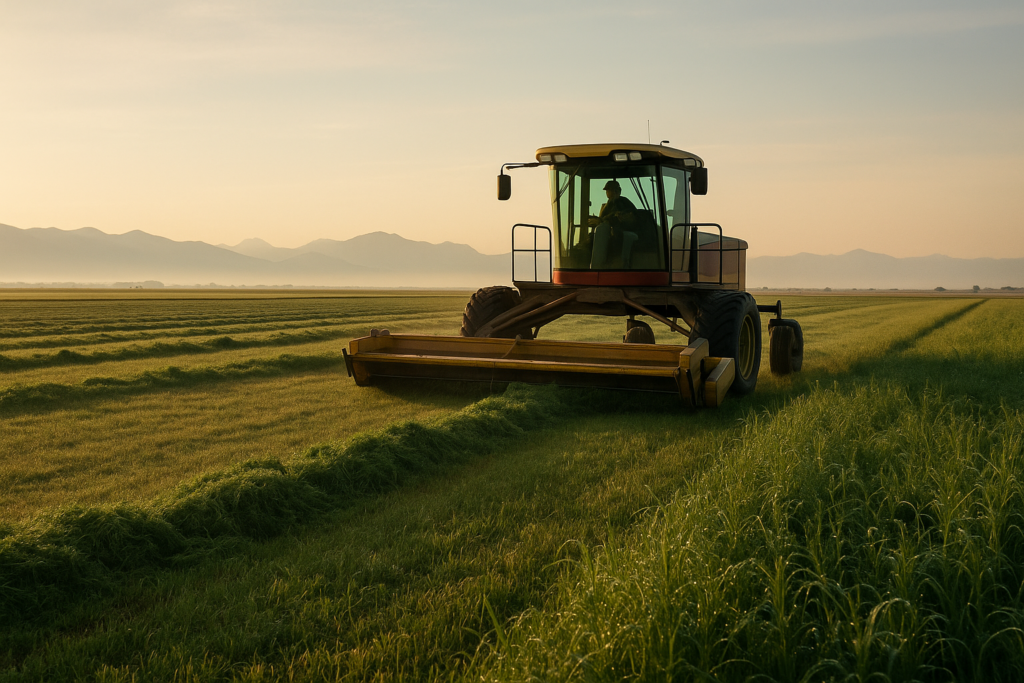
The hard part isn’t knowing when to cut—it’s cutting when the sky lets you. Alfalfa laid down in the swath needs a stretch of dry, and a good three or four days is worth more than a single hot afternoon. A June thunderstorm on a half-cured windrow bleaches the color, leaches out the sugars, and knocks the feed value down about as fast as letting it get overmature would have.
That’s the balancing act. Cut a hair early into a solid window, or gamble on more tonnage against a forecast you don’t trust. Nine times out of ten the early cut into good weather beats the late cut into a shower. You can always make up ground on tonnage in the second and third cuttings if the moisture holds. You can’t un-rain on a windrow.
This is also why the machinery check pays off before the window opens, not during it. A swather down for a bearing while the one clear stretch of the month burns off is how a good cutting turns into a mediocre one.
Save the leaf you already grew
Most of the protein in an alfalfa bale lives in the leaf, and the leaf is the first thing you lose to rough handling. When hay dries down too far before you rake or bale, the leaves shatter and blow off, and you’re left baling stems. Rake and bale when the stems are dry but the leaves still have a little pliability to them—early morning, once the worst of the dew is off but before the whole windrow goes crispy in the afternoon sun, is usually the sweet spot for holding leaf.
A few things worth keeping in mind through the whole run:
- Set your cutting height to leave a few inches of stubble. Scalping the crown slows regrowth and drags dirt and ash into the windrow, which shows up in the test as poor-quality forage.
- Watch the moisture at baling. Too dry and you shatter leaf; too wet and the stack heats, molds, and in a bad case catches fire weeks later.
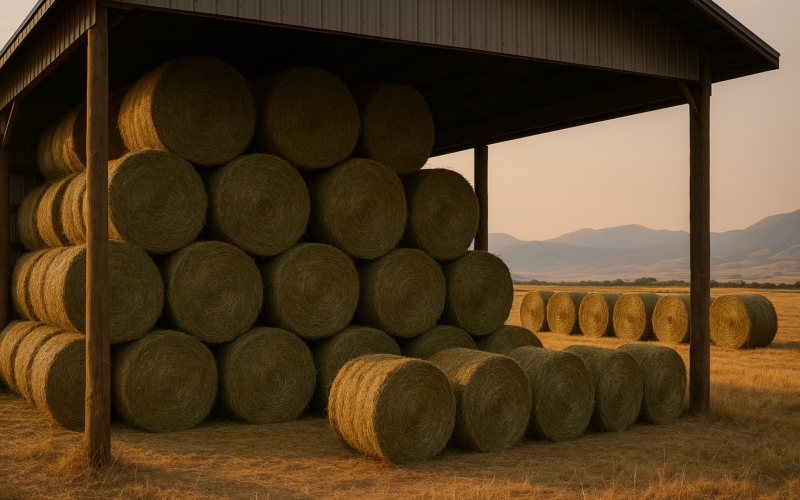
- Get it stacked and covered or under a roof reasonably quick. Bales left sitting out shed value from the outside in, and a good first cutting deserves better than a weathered rind.
The stand you’re cutting this month is the feed you’ll be forking off a sled in January. A day or two of patience on the weather is worth it. A week of patience on the bloom stage usually isn’t. Look at the plant, watch the sky, and cut the first one while it’s still worth hauling.