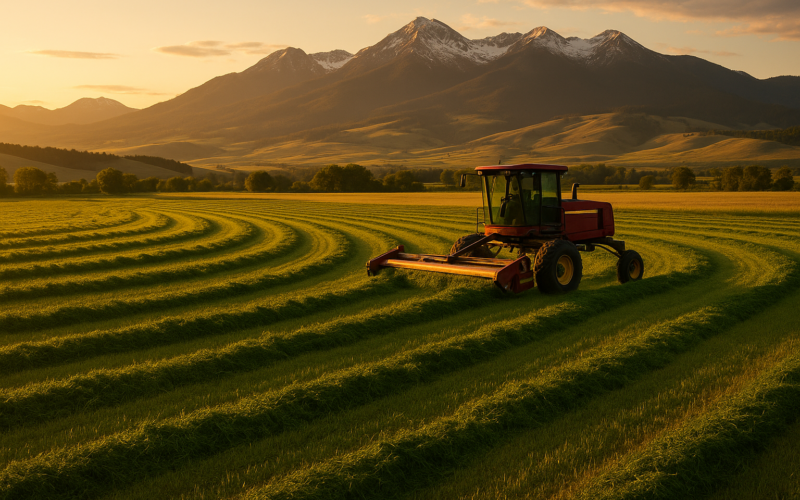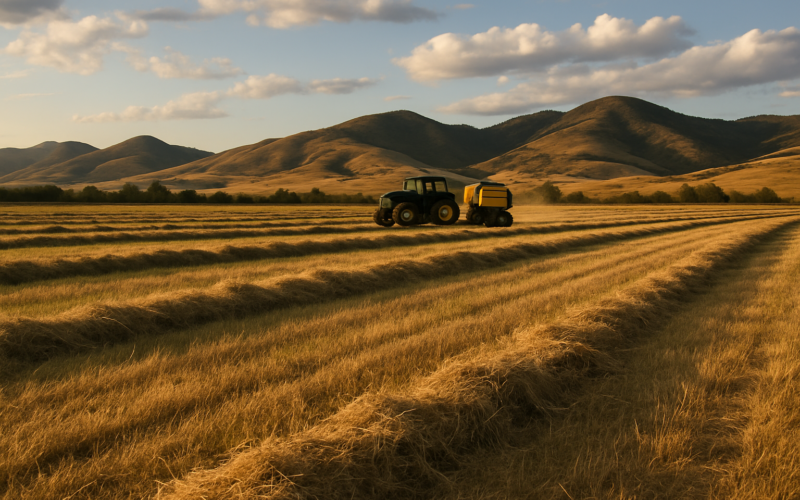
First cutting is a race in Montana. You wait on the alfalfa, you watch the sky, and the minute you get three or four dry days lined up you swath, rake, and bale like the rain is coming that afternoon—because half the time it is. The trouble is the same hurry that beats the weather also puts hay in the stack before it’s ready. A bale that feels fine on the outside can still be carrying enough moisture in the middle to heat, mold, and in the worst case burn a stackyard down in the middle of July.
Green hay isn’t dead hay. The plant cells keep respiring after baling, and bacteria go to work on the sugars. Both throw off heat. In a properly cured bale that heat bleeds off and quits. In a wet one it builds, and once the temperature climbs the reactions speed up and feed the fire that’s making them. You end up with brown, tobacco-smelling hay that’s lost protein and energy—or, if it goes far enough, a bale hot enough to ignite.
Know your moisture before you commit the whole field
The number that matters is moisture at baling, and you can’t read it by squinting at a windrow. Small square bales generally need to be down around 18 to 20 percent. Large rounds and big squares pack tighter and hold heat better, so they want to be drier—closer to the mid-teens for the big squares. Above those ranges you’re gambling.
A hand-held moisture probe is cheap next to a stack of ruined hay, and it beats the old twist-and-guess test. Check a few bales from different parts of the field, not just the headland that dried first. Low spots, the north side of a shelterbelt, and anywhere the swath laid thick will run wetter than the rest. If part of the field tests high, bale the dry ground and give the wet ground another day rather than averaging the whole thing into trouble.
If you’re pushing the window because weather’s coming, that’s exactly when a preservative—propionic acid or a buffered product—earns its keep. It lets you bale a few points wetter without the same mold risk. It’s not a license to bale slop, but it buys you the couple hours between a dry windrow and a thunderhead.
Watch the stack for the first six weeks
Hay does most of its heating in the first two to three weeks after baling, and it can keep climbing for a month or more. That’s the stretch to pay attention, and it’s usually the stretch when you’ve already moved on to second cutting or turning bulls out and quit thinking about it.
A stack that’s working will smell sweet and caramel-like at first, which fools people into thinking it’s fine. Learn the temperatures instead of the smell:
- Under 120°F: normal. Hay heats a little, then settles.
- 130 to 140°F: keep an eye on it. You’re losing some quality but it’s not dangerous yet.
- 150°F and climbing: trouble. Check it daily.
- Over 175°F: pull bales apart if you safely can and get air to them, and call the fire department before you go poking around.
You can drive a long-stem compost thermometer or a probe into a big bale to read the core. On a stack, a length of pipe pushed into the pile with a thermometer dropped down it works. Don’t climb on top of a hot stack—fire burns cavities inside, and the crust over one will drop you straight into it. If a stack is hissing, steaming, or throwing off a sharp acrid smell instead of that sweet caramel, treat it as an emergency, not a curiosity.
Stack and store so heat has somewhere to go
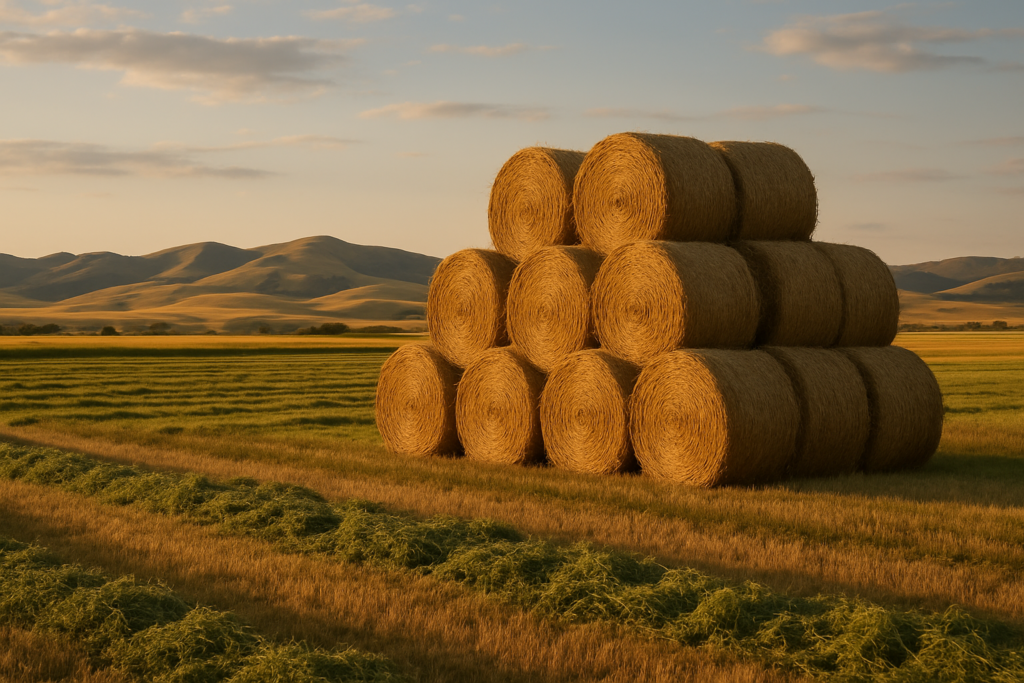
Where and how you stack changes how hay behaves. Bales set on well-drained ground, up off the dirt on a pole or old tires, wick less moisture from below. Leave room between rows so a wet bale isn’t insulated by all its neighbors—air moving through a stack carries heat away. Cramming freshly baled rounds into a tight shed with no airflow is how a marginal bale becomes a hot one.
Keep your green bales and your dry bales separate if you can, and don’t stack the questionable ones inside a barn full of good hay and equipment. If something’s going to heat, you want it where losing it means losing a few bales, not the whole winter’s feed and a building.
None of this means you should let first cutting stand until it’s overripe stems and no leaf. Cut on time, put it up right, and check it after. Hay that goes in the stack a little too green pays you back slowly all winter as it comes out brown and gutless—or all at once, some hot night, as a glow you see from the house.