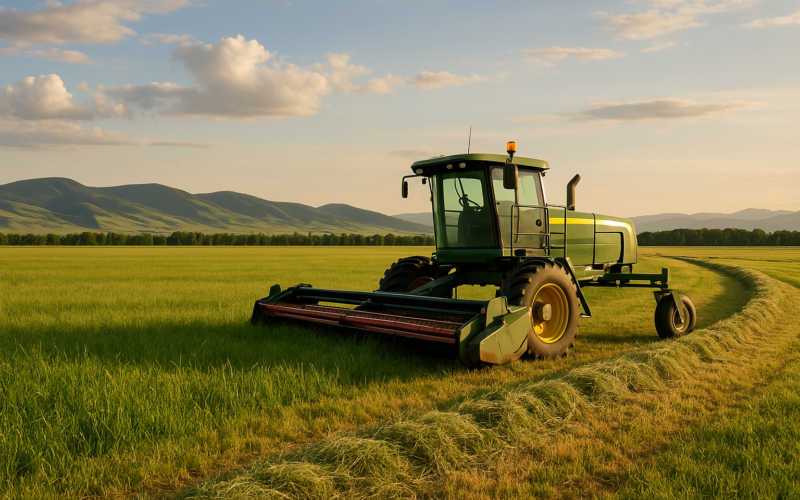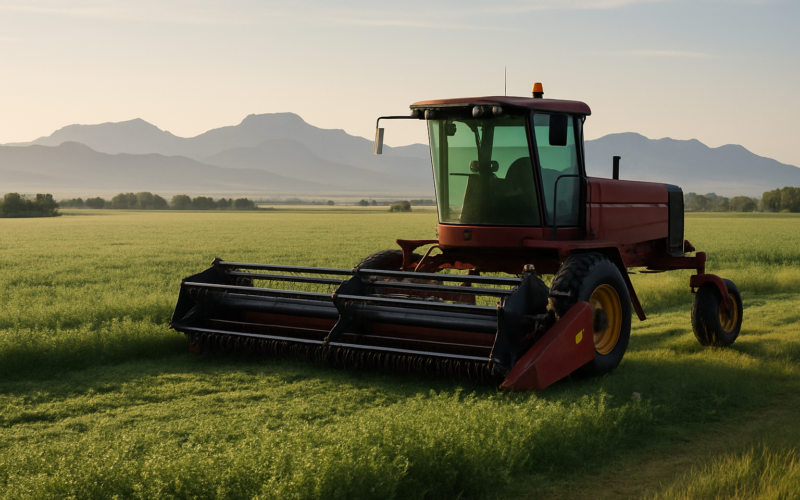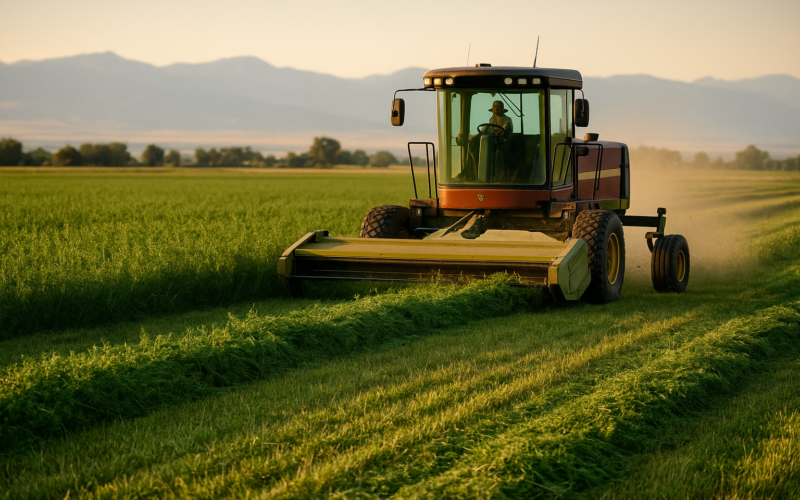
Every June the same thing happens on outfits that are otherwise run tight. The grass is ready, the forecast finally shows a stretch of dry days, and the swather won’t stay in the field past the first round. A section bolt shears, a guard bends, a header belt splits, and the operator is back in the shop chasing parts while the good weather burns off. The alfalfa keeps blooming. The window you waited all spring for closes a little more every afternoon.
Haymaking equipment is the worst-treated machinery on most ranches. It parks in a shed or a fencerow for three-quarters of the year, then gets asked to run hard, dawn to dark, through the only stretch of weather that matters. The time to find its problems is now, on a rainy day or an evening before the grass is fit, not on the headland with the sun already climbing.
Start with the cutting parts
Pull the sickle and look at it honestly. Chipped or rounded sections don’t cut, they tear, and torn stems dry unevenly and rake up rough. Replace the worn sections and any bent or grooved guards while the bar is out on the bench, because doing it in the field with the header up is miserable and slow. Check the wear plates and hold-down clips and set the register so the sections center in the guards. A sickle that’s out of time hammers itself apart by the second field.
On a disc mower or mower-conditioner, spin every disc by hand and listen. A dry or notchy bearing is telling you it won’t finish the season. Look the blades over, keep them balanced in pairs, and check the module oil. Conditioner rolls or flails matter more than people give them credit for on alfalfa, since that’s what cracks the stem so it dries down close to the same speed as the leaf. Worn or misadjusted rolls leave you baling stems that are still green inside dry leaves.
Belts and drive components are the other early failure. Header drive belts, deck belts on a draper, and the main drive all stretch and crack sitting in the heat. Carry the spares you know that machine eats. If you don’t know, the machine will teach you, usually at the far end of the field.
Grease, chains, and the things that seize
Hit every zerk. That sounds obvious until you count them on a modern baler and realize a third of them get skipped every year because they’re behind a shield or up under the pickup. Pull the shields and get to all of them. The pickup teeth, the pickup bearings, the roll or belt bearings, the plunger on a square baler, the driveline U-joints on the PTO shaft. A dry U-joint on a swather header or a baler pickup is a common midsummer breakdown and an expensive one.
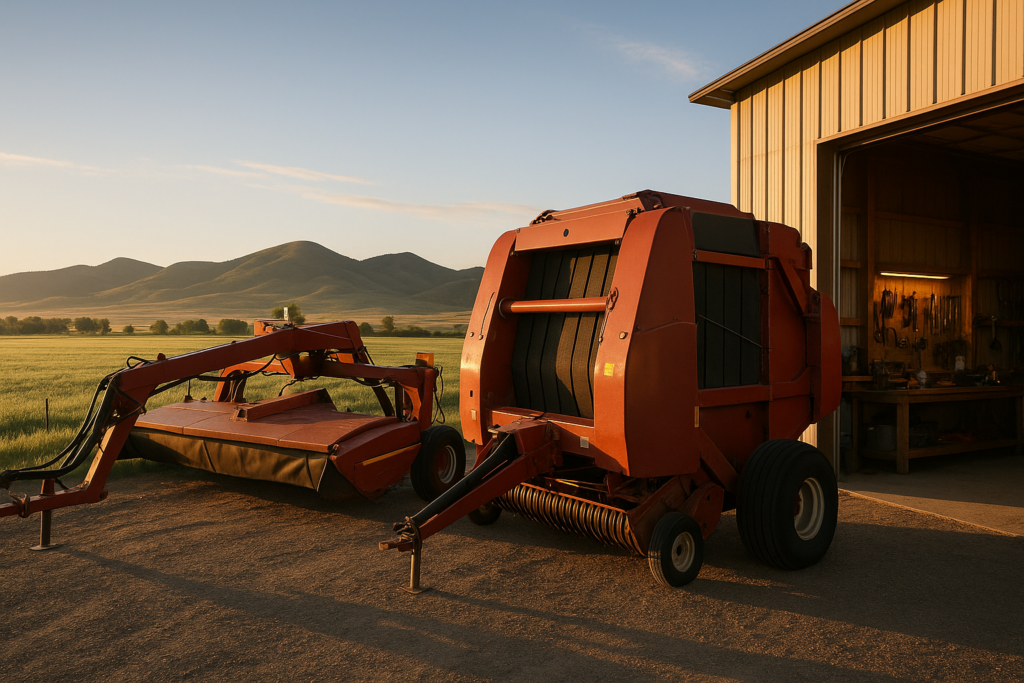
On a round baler, check the belts or rollers for tracking and wear, look at the pickup tines for missing or bent teeth, and test the twine or net wrap system before you’re standing over a finished bale that won’t tie. On a square baler, set the knotters and check the twine discs and knife. Knotter trouble in the middle of a hot afternoon will age a man fast. Run a few test bales through if you can, even in a rank spot of last year’s regrowth, just to see it tie clean.
Don’t forget the mundane stuff that grounds a machine as surely as a broken knotter. Check the tires, including the ones on the header transport and the baler, because a flat in the field on a machine you can’t easily jack is half a day gone. Top off and inspect the hydraulic hoses for cracks and weeping fittings. Change oils and filters that are due. Clean the packed chaff and old windrow off the engine and out of the belly of the machine, because that dry trash against a hot bearing or exhaust is how baler fires start.
Line up parts and a plan before you drop the header
Have the fast-moving spares on the shelf before you cut an acre: sections, a few guards, the belts that machine is known to break, twine or net wrap, spare knotter parts, hydraulic fittings, a roll of baling wire for the stuff you can’t plan for. The parts house in town runs thin on hay season consumables exactly when everybody needs them, and a two-day wait on a bearing during a dry stretch is grass you’ll never cut at bud stage.
None of this is glamorous, and it’s easy to tell yourself the machine ran fine when you shedded it last August. It probably did. But it’s been sitting since, mice have been in the wiring, the rubber has cracked, and the grease has walked out of the bearings. An afternoon in the shop in June buys you the whole cutting window running clean. Skipping it buys you a breakdown at the worst possible hour, every time.